

“AI Can Be a Real Game Changer”: Anne Rigail Takes the Stage at the Matins HEC
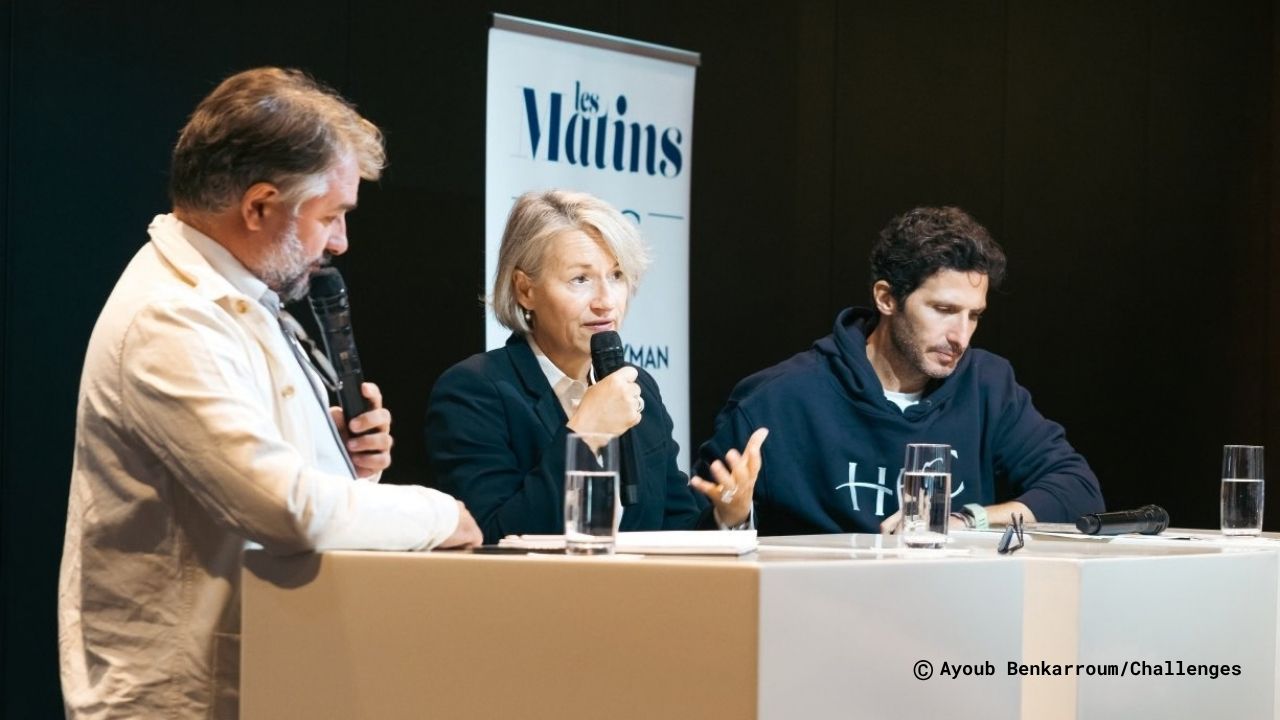
She is steering Air France through skies disrupted by geopolitical crises and the rise of AI. Speaking at the Matin HEC on Friday, the airline’s CEO explained how the French flag carrier climbed into the global top 10 of the Skytrax rankings — and how it is preparing for what comes next.
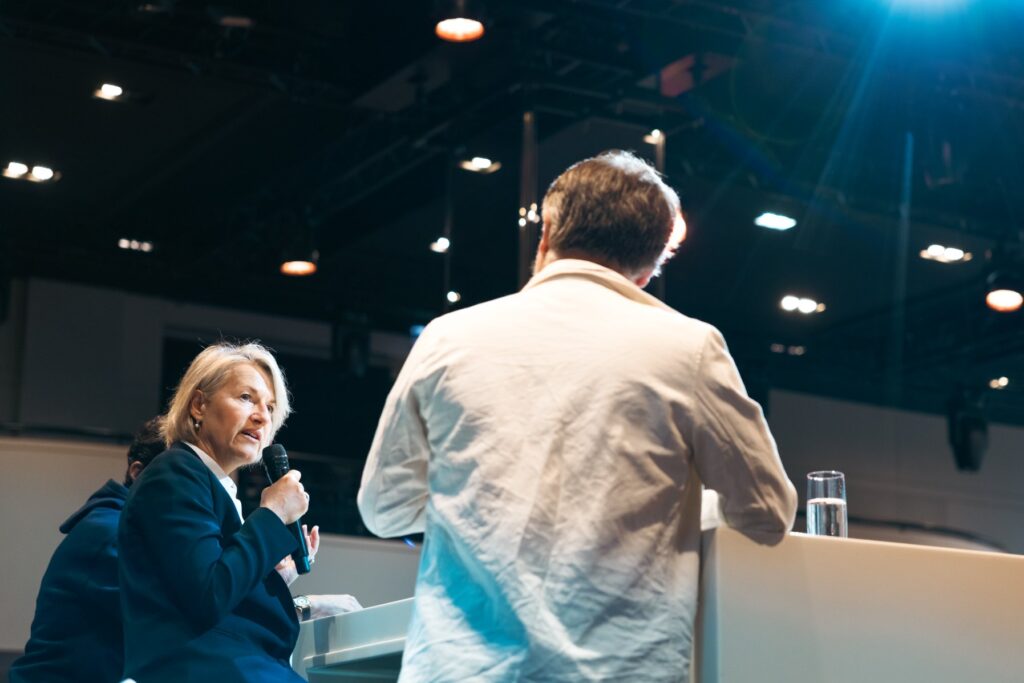
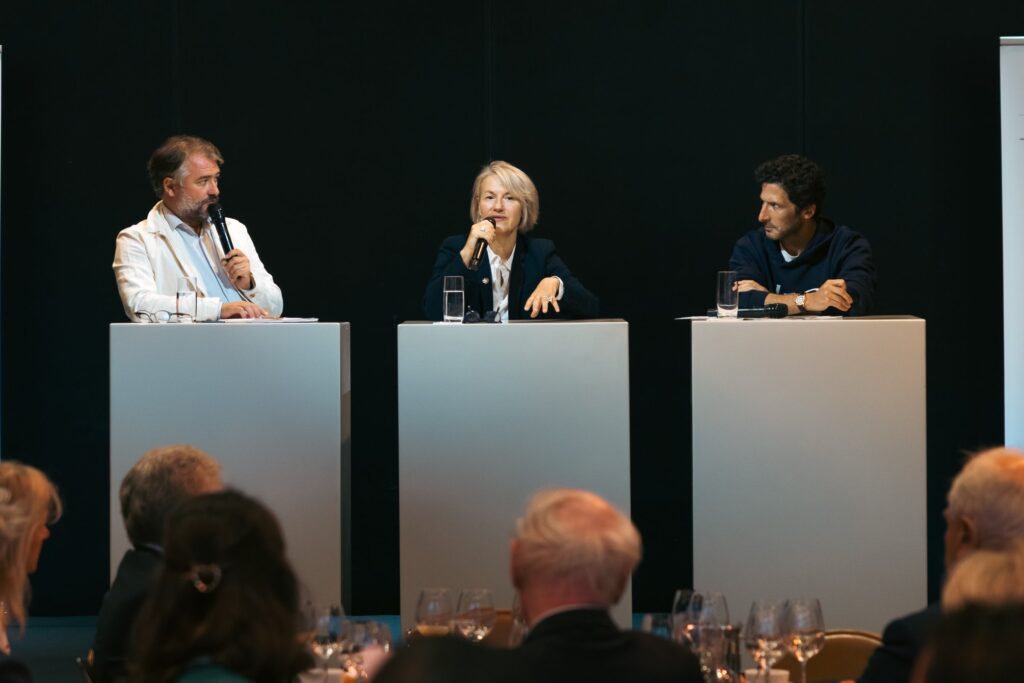
Between soaring jet fuel prices, logistical challenges and the rise of artificial intelligence, Air France, like all airlines, is navigating a period of turbulence. Against this backdrop, it is hardly surprising that CEO Anne Rigail drew a full house at the latest Matin HEC. An engineer by training who entered the aviation industry in 1991, she answered questions from Emmanuel Duteil, Editor-in-Chief of Challenges, before taking questions from the audience. With precision and clarity, she demonstrated a thorough command of the issues facing the airline.
When she took the helm of Air France in December 2018, becoming the first woman to lead the airline since its creation in 1933, she certainly had her work cut out for her. “Crisis management is part of our daily lives,” she often says. “You have quite an ambitious definition of the word ‘daily’,” joked Adrien Nussenbaum (H.01), President of HEC Alumni, as he opened his first Matin HEC.
“With Covid, the war in Ukraine and now the conflict in the Middle East, the frequency of crises has clearly intensified,” observes Rigail. The conflict involving Iran is putting pressure on jet fuel prices. Yet the CEO remains reassuring. Fears of shortages did not materialize over the summer. Supply flows have been reorganized, with Europe importing more from the United States and Africa. “We see absolutely no risk of shortages,” she says.
Fuel, which accounts for more than a third of the price of an airline ticket, is only one part of the logistical puzzle. Since Covid, the aerospace supply chain has never fully regained its balance. “Spare engines, APUs — auxiliary power units located in the tail of aircraft — computers: I have never seen so many aircraft unable to fly because the parts simply weren’t arriving,” says Anne Rigail. The airline has had to increase the number of reserve aircraft in its fleet, bringing additional costs with it.
From 25th to 7th in the world
Before taking the helm of the airline, Rigail built a highly operational career. She worked in customer service, handling connections and baggage, before going on to manage airport operations at the Paris-Charles de Gaulle hub, flight crews and, ultimately, Customer Experience. She has spent nearly 35 years within essentially the same company, having started her career at Air Inter before it was absorbed into Air France.
That operational background did not prevent her from orchestrating a remarkable move upmarket. In 2018, Air France ranked just 25th in Skytrax, the international benchmark for airline rankings. Eighth last year, the airline has now climbed another place to rank seventh worldwide, behind a leading group dominated by Asian and Gulf carriers.
The formula? First, refusing to sacrifice the long term in response to successive crises. At the height of Covid, when Air France-KLM was losing several million euros a day, the Group, under the leadership of CEO Ben Smith, chose to invest heavily in renewing its fleet and upgrading its premium offering. “It was a gamble. Today, we can see that it was the right one,” says Anne Rigail.
The airline is currently investing more than €1 billion over five years in the customer experience, in addition to around €1 billion a year in its fleet. The program includes new seats across all cabins — notably Business Class seats equipped with privacy doors — renovated airport lounges and free high-speed Wi-Fi. All part of Air France’s efforts to compete with the Gulf carriers.
AI, meanwhile, promises a major leap in productivity. The aviation industry already has one advantage: airlines spend much of their time optimizing. Ticket prices, aircraft utilization, routes, fuel consumption, maintenance, flight schedules… “We optimize everything, and we have enormous amounts of data. What changes the game is the arrival of generative AI and, now, agentic AI,” says Rigail.
Air France has identified around “120 use cases” with very practical applications, including a chatbot that allows technicians to quickly retrieve a specific part reference. “When faced with a rare failure, the tool can search for a comparable incident that occurred two years earlier and show how the teams resolved it,” adds the Mines Paris graduate.
The CEO points to a striking return on investment: around €200,000 spent on a generative AI development project has reportedly already generated €30 million in gains by accelerating optimization processes previously carried out using more conventional models. That represents an ROI of 150x. “The airlines that win will be those that adopt these solutions before the others,” she predicts.
But the most strategic battle may take place elsewhere: in ticket sales. Airlines have relied on yield management for decades, continuously adjusting prices according to demand and competitors. Over the years, they have also unbundled their offers: baggage or no baggage, seat selection, flexibility, additional services and more. AI could simplify the experience by presenting travelers not with a maze of fares, but directly with the offer that best matches their needs. “AI can be a real game changer,” says Anne Rigail.
More importantly, customers are beginning to plan their trips directly through assistants such as ChatGPT or Claude. For Air France, this creates a strategic challenge: how can the airline be present at the very moment a consumer asks an AI assistant where they should go on holiday, and then accompany them all the way through to booking — without allowing new intermediaries to capture most of the value?
AI could also help the airline reduce its climate footprint. Air France is testing models capable of identifying areas where contrails are likely to form and suggesting alternative flight paths, provided that the additional fuel required to avoid them does not outweigh the resulting climate benefit.
The race for scale is back
Technology alone, however, will not be enough. In an industry where fixed costs are considerable, “scale matters,” Rigail stresses.
Air France-KLM currently owns just under 20% of Scandinavian carrier SAS and aims to take control of the airline by the end of the year, subject to approval by competition authorities. The Group is also eyeing Portuguese carrier TAP, which is currently undergoing privatization and could notably strengthen its access to passenger flows to South America.
Facing its two main European competitors — Lufthansa Group and IAG, the parent company of British Airways, Iberia and Vueling — Air France-KLM fully intends to remain one of the industry’s major global players.
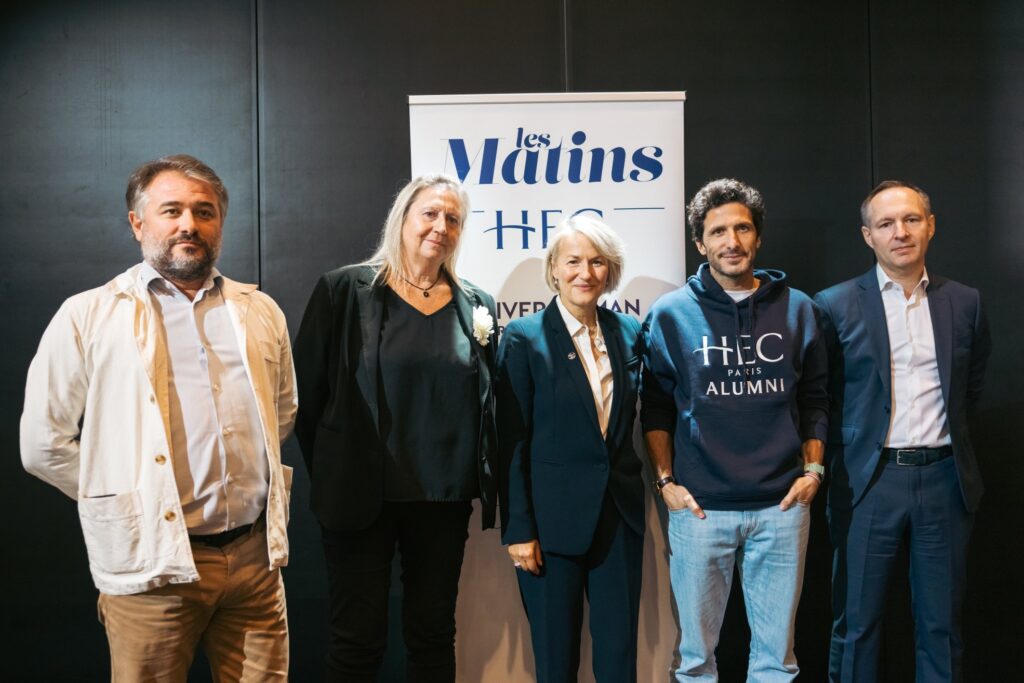
From left to right: Emmanuel Duteil, Editor-in-Chief of Challenges; Karine Bertrand, Deputy CEO of Les Petits Chaperons Rouges; Anne Rigail, CEO of Air France; Adrien Nussenbaum (H.01), President of the HEC Alumni Association; and Bruno Despujol, Partner and Head of Oliver Wyman’s Paris and Brussels offices.
Les Matins HEC are organized in partnership with:


Published by Thomas Lestavel