Since taking office in 2021, he has been committed to refocusing Danone on its mission, “health through food,” with a model “rooted in science” and oriented toward “the consumer or the patient.” A way of reminding us that the company—one of the French public’s favorites—does not only sell yogurts (Activia, Danone) and mineral water (Evian, Volvic), but also medical nutrition products (Fortimel, Nutrison), infant nutrition (Gallia, Blédina), and solutions related to aging (Fortifit).
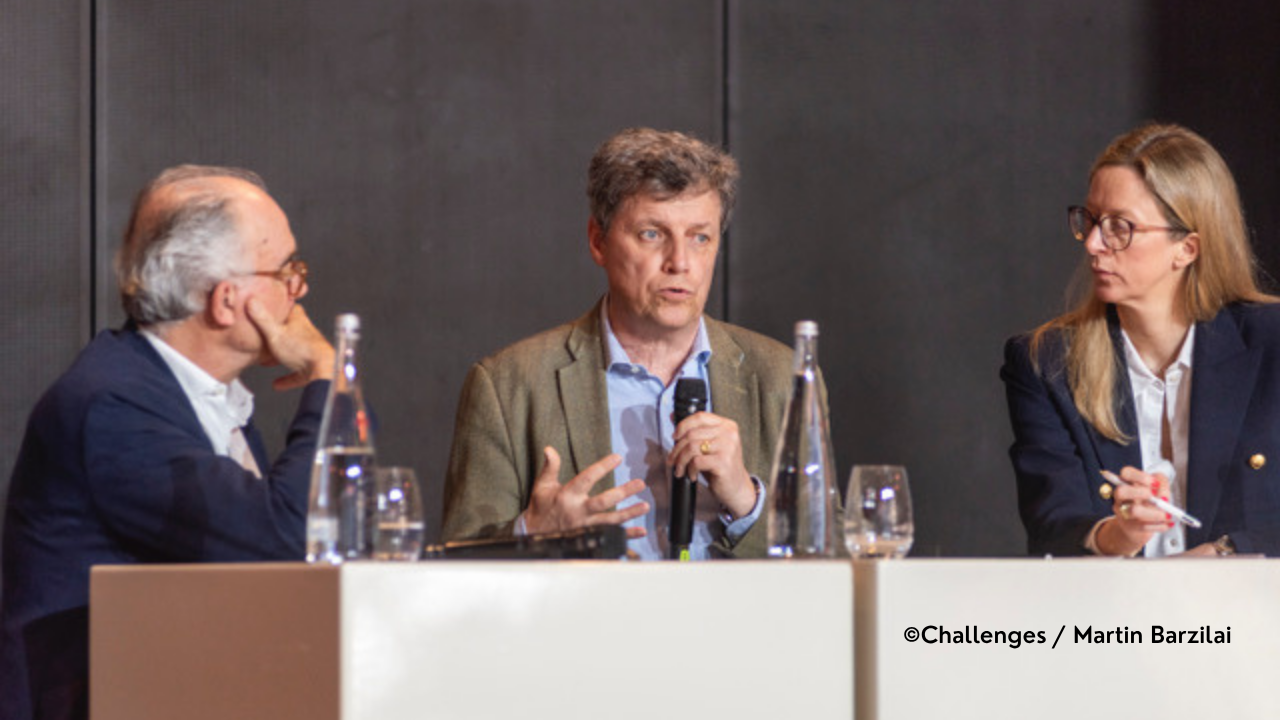
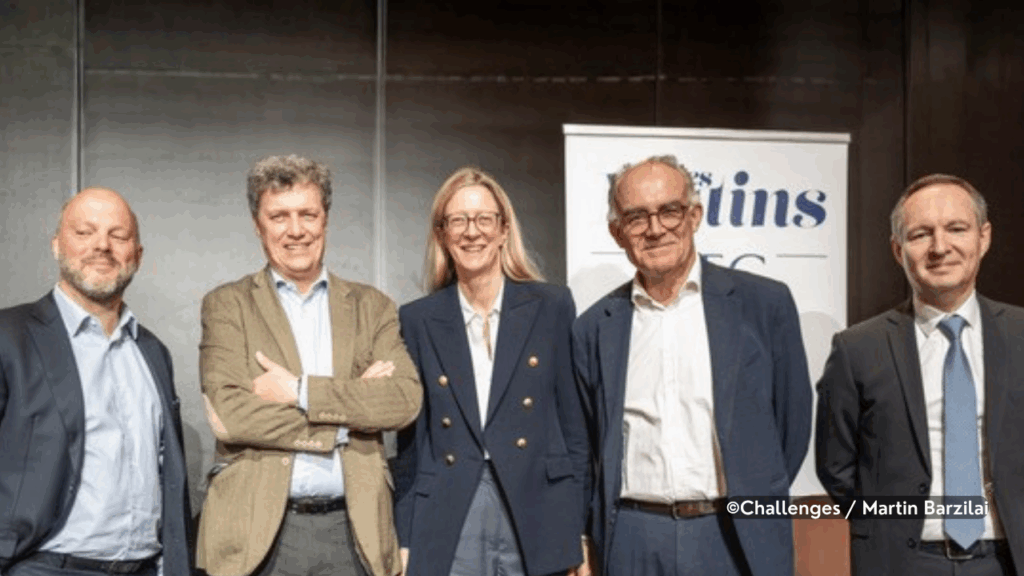
Pierre-Henri de Menthon, Editorial Director of the weekly magazine Challenges, who moderates the discussion, looks back at the turbulence that marked the end of Emmanuel Faber’s tenure. How do you rebuild a company as disoriented as Danone was in 2021? Antoine de Saint-Affrique highlights three best practices. First, listen—extensively—to teams, partners, and also those who rarely speak up. Then, clarify: set a clear and understandable direction. Above all, keep your composure. “A leader must be countercyclical—that is, challenge teams when they grow complacent, but bring calm when everything spirals out of control,” summarizes the 61-year-old CEO.
Long recognized for its B-Corp commitment, Danone now operates in a climate less favorable to strong ESG narratives, as illustrated by the shift among major asset managers such as BlackRock. Nevertheless, the ESSEC and Harvard Business School graduate believes that sustainability is not merely a moral stance, but a strategic necessity for his company. “If in five years there is no water, we no longer exist.” The environment as a condition for industrial survival.
The same humility applies to relationships with suppliers: “without farmers, there is no more Danone.” The group highlights the implementation of multi-year contracts that provide better income visibility, support for the transition to regenerative agriculture, and assistance for young farmers setting up their operations. Here again, the logic is less philanthropic than economic: protecting upstream to secure downstream.