
From Utility to Design Icon: How Hugo Volpei (H.17) Turned the Toilet into a Luxury Object
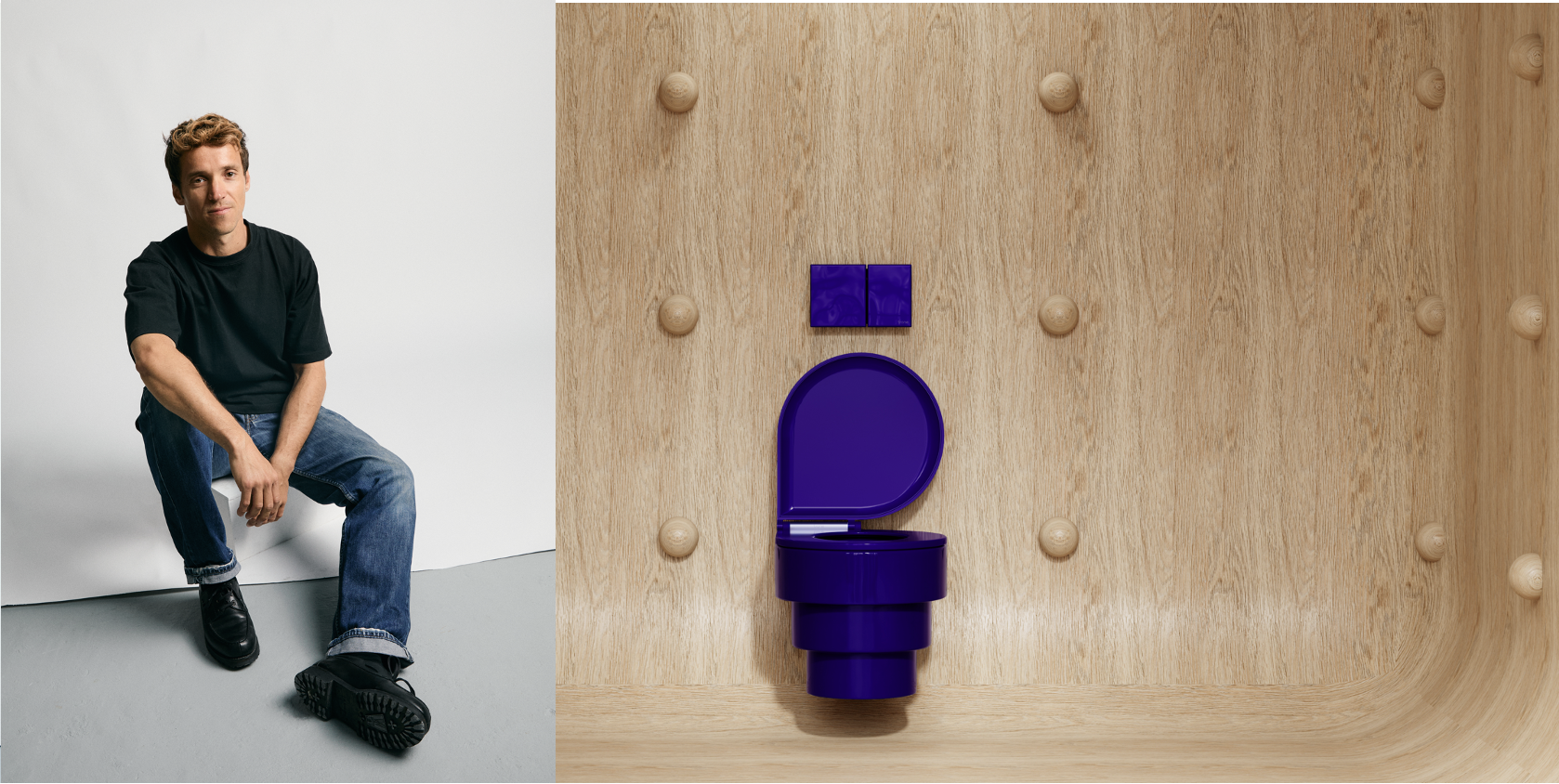
For decades, toilets were little more than functional fixtures, rarely considered part of the design conversation. With Trone, Hugo Volpei set out to change that. In just eight years, the entrepreneur has created an entirely new category: premium toilets designed as statement pieces of furniture. The story of Trone is one of bold industrial ambition, craftsmanship, and an unexpected vision of luxury.
Some ideas seem obvious only once they exist. Yet when Hugo Volpei founded Trone in 2018, almost no one imagined that designer toilets could become a desirable market. Turning one of the most discreet objects in a home into a centerpiece of interior design bordered on provocation. That, however, was precisely what appealed to the founder: bringing beauty where no one expected to find it.
Before reinventing toilets, Hugo Volpei followed a more conventional path. After graduating from HEC Paris’ Grande École programme in 2018, he discovered the entrepreneurial world and gradually developed a clear ambition: to build a brand capable of disrupting an established industry. “When I started this company, I knew absolutely nothing about the sector,” he recalls with a smile from Trone’s showroom in Paris’ 3rd arrondissement. That self-confessed naivety ultimately became one of the company’s greatest strengths.
Rather than relying on years of experience in the sanitary industry, Volpei was driven by a simple conviction: the objects that surround us deserve greater attention. Just like a sofa, a lamp or a dining table, a toilet is an integral part of an interior. So why should it remain merely a technical fixture?
That intuition became the starting point for an ambitious challenge: creating a premium toilet brand capable of appealing to both design-conscious homeowners and hospitality professionals looking to offer a distinctive customer experience.
The Sketch Revelation and the Big Mamma Opportunity
As is often the case in entrepreneurial stories, everything began with a simple observation. While visiting London’s iconic Sketch restaurant, the Corsican entrepreneur was struck by the attention devoted to every detail of the customer experience—including the restrooms. Sketch had already understood that even the smallest spaces could leave a lasting impression. For Volpei, it was a revelation. If a restaurant could transform its bathrooms into a memorable destination, why couldn’t beautifully designed toilets become desirable products everywhere?
Turning that intuition into reality was another challenge entirely. Unlike furniture or decorative objects, toilets are highly technical industrial products, requiring moulds, ceramic expertise, engineering precision and flawless functionality.
Volpei admits that the years following the launch proved far more demanding than he had expected.
“We were able to produce our first prototypes very quickly, but what took much longer was developing products that worked perfectly while generating healthy margins.”
Behind Trone’s striking aesthetics lies an extensive engineering process. The company’s first model required nearly ten months of development, illustrating the reality of an industry where innovation is painstakingly built piece by piece.
At the time, Hugo Volpei was looking for partners who could help showcase his concept. He introduced the project to Victor Lugger (H.08), co-founder of Big Mamma, who immediately saw its potential but remained cautious—until a meeting that has since become part of Trone’s own legend.
Big Mamma was preparing to open La Felicità, its flagship restaurant at Station F. During their meeting, Lugger appeared distracted, glancing repeatedly at his phone before claiming he had to leave for another appointment. Volpei assumed the conversation had come to an end. Then, just before walking away, Lugger turned around and said:
“We’ll take them… but for zero euros.”
For a 25-year-old entrepreneur with no industrial experience and nothing more than a drawing of the toilets he hoped to build, the vote of confidence was extraordinary.
“He trusted me even though I was 25, had no experience whatsoever in manufacturing—let alone sanitary products—and Big Mamma was about to open its biggest restaurant ever.”
Equipping a 4,500-square-metre venue that would welcome thousands of visitors every week was undeniably risky. Yet Volpei immediately understood the opportunity. La Felicità was exactly the kind of highly Instagrammable destination where people came as much for the atmosphere as for the food—and where even the restrooms could become part of the experience.
The seven toilets were completed almost miraculously, just two weeks before the opening.
On inauguration night, attended by journalists and industry guests, long queues quickly formed outside the restrooms—and the toilets malfunctioned.
Victor Lugger approached Hugo with a smile.
“So… looks like there are a few issues with the toilets?”
“Yes, but we’ll sort them out this week,” Hugo replied.
“Don’t worry. I know what it’s like to be an entrepreneur. I trust you.”
That trust endured. “We’ve maintained a fantastic relationship ever since,” says Volpei. “Victor even supported us during our first fundraising round.”
The collaboration marked a turning point. Visitors discovered that Trone’s products were not simply functional fixtures—they were experiences. The toilets became conversation pieces, widely shared on social media. Trone had achieved its original ambition: bringing toilets out of the shadows and turning them into design objects.
Today, the company equips restaurants, hotels and landmark venues across Europe, counting Big Mamma, Paris Society and numerous independent chefs and hospitality groups among its clients.
“The product has become an experience,” Hugo sums up.
Building an Industrial Brand Without Compromising Design
Behind Trone’s playful image lies a highly demanding industrial reality. Manufacturing ceramic toilets requires significant investment.
“Every toilet begins with a mould, and each mould costs around €20,000. Then you need the seat, the lid and every other component. Before long you’ve invested around €50,000 simply in tooling.”
From the outset, Volpei made a strategic decision. Trone would not produce one-off artistic pieces, but scalable industrial products.
“Otherwise we would have ended up making works of art selling for €15,000 or €20,000 each. Our ambition was to create a real product.”
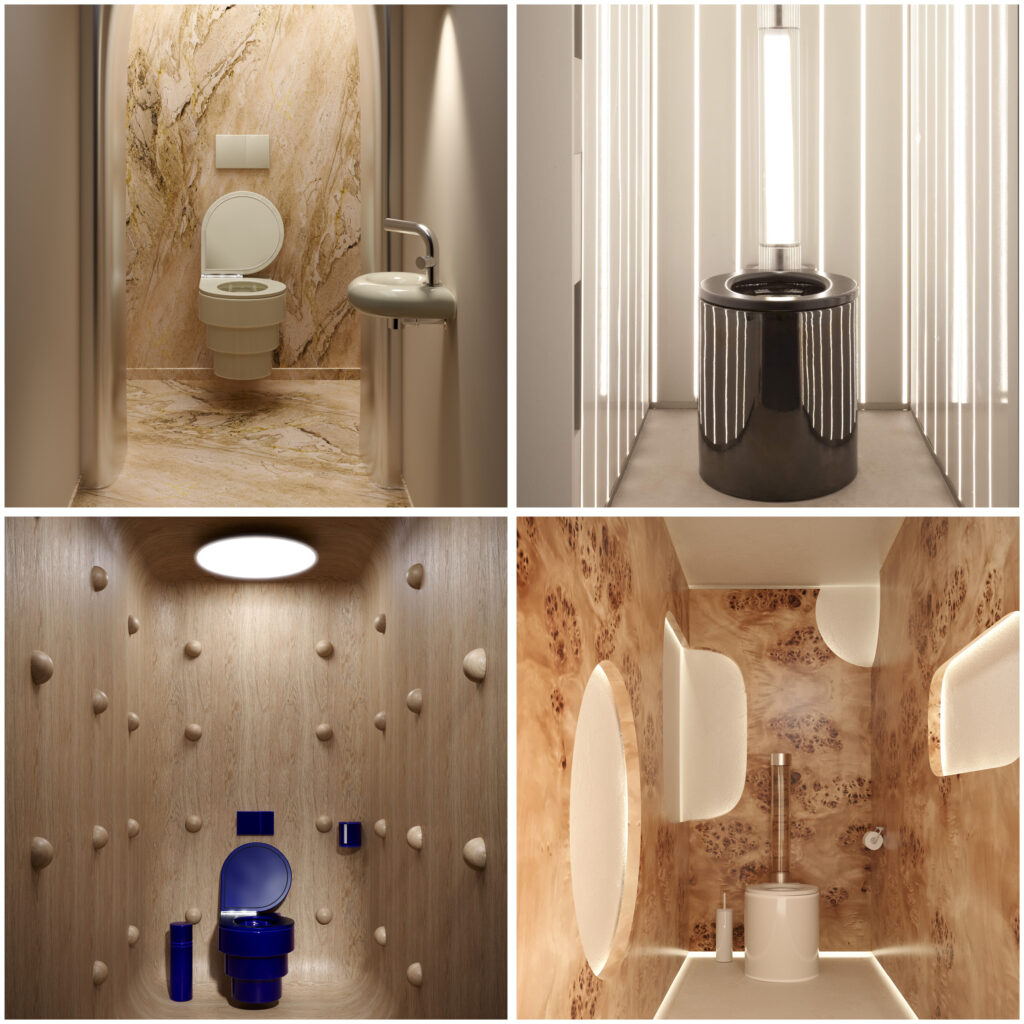
Today, production relies on European craftsmanship: ceramics are manufactured in France and Italy, accessories come from Portugal, while seats and other components are produced in Spain.
This long-term approach explains why the company has evolved gradually. Although Trone launched its first model in 2018, every new collection requires years of research, development and refinement. For Volpei, that is precisely what distinguishes a genuine design house from an opportunistic brand.
From a Single Product to a Complete Bathroom Collection
Trone’s first model, Icone, perfectly embodies the company’s original vision. Its transparent water tank allows users to watch the water flow when flushing—an almost magical detail that transforms an ordinary action into an experience.
“It’s an incredibly playful product,” says Hugo.
The model is particularly popular in restaurants, hotels and hospitality venues looking to surprise their guests.
The company later introduced Callipyge, a wall-mounted model distinguished by sculptural lines and meticulous craftsmanship, from its ceramic glaze to its custom-designed metal hinges.
With Altesse, Trone entered the Japanese toilet market—but with a different philosophy.
“Japanese toilets often come with remote controls featuring 35 buttons. We wanted something simpler, more compact and more beautiful.”
Most recently, Orgueil introduced a more architectural aesthetic with reimagined cubic forms, further demonstrating Trone’s determination not simply to follow existing standards but to redefine them.
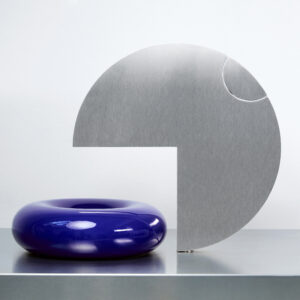
Around these flagship products, the brand has progressively built an entire bathroom universe, including ceramic flush plates, toilet paper holders, brushes, bins, basins, sinks and taps.
The objective is clear: Trone no longer wants to be known solely as a toilet manufacturer, but as a comprehensive bathroom design house.
A Niche Market with International Reach
Eight years after its launch, Trone has reached a new dimension.
The company now operates in around thirty countries, with most of its business generated across Europe. France remains its largest market, followed by Belgium, the Netherlands, Germany, the United Kingdom and Spain.
By 2026, Hugo Volpei expects to sell around 3,000 toilets annually, alongside nearly 10,000 products including accessories.
Yet the clearest sign of success lies elsewhere.
Some customers now include Trone toilets on their wedding registries or Christmas wish lists.
“For me, that’s probably the greatest achievement of all,” Volpei says. “We’ve turned toilets into something people genuinely enjoy buying.”
Preserving the Boldness to Keep Innovating
Looking ahead, Hugo Volpei has no intention of slowing down.
His ambition is to build a complete bathroom design house, expanding into showers, bathtubs, mirrors, tiles and new tapware collections.
But one principle remains non-negotiable.
“Our biggest challenge is to keep innovating. Every product we launch should make people think: ‘That didn’t exist before.'”
Even the company’s most unexpected projects reflect that philosophy. Trone is currently exploring fragrances and scent-based experiences, extending its sensory approach beyond ceramics alone.
Ultimately, this is perhaps Trone’s defining philosophy: refusing to accept that an object should be limited by its function.
A toilet can become a design statement.
A bathroom can become a living space.
And an HEC Paris entrepreneur can reinvent an industry that no one was paying attention to—provided they are bold enough to push open the door.

Published by Daphné Segretain