

Tellers.ai aims to automate video editing with AI agents
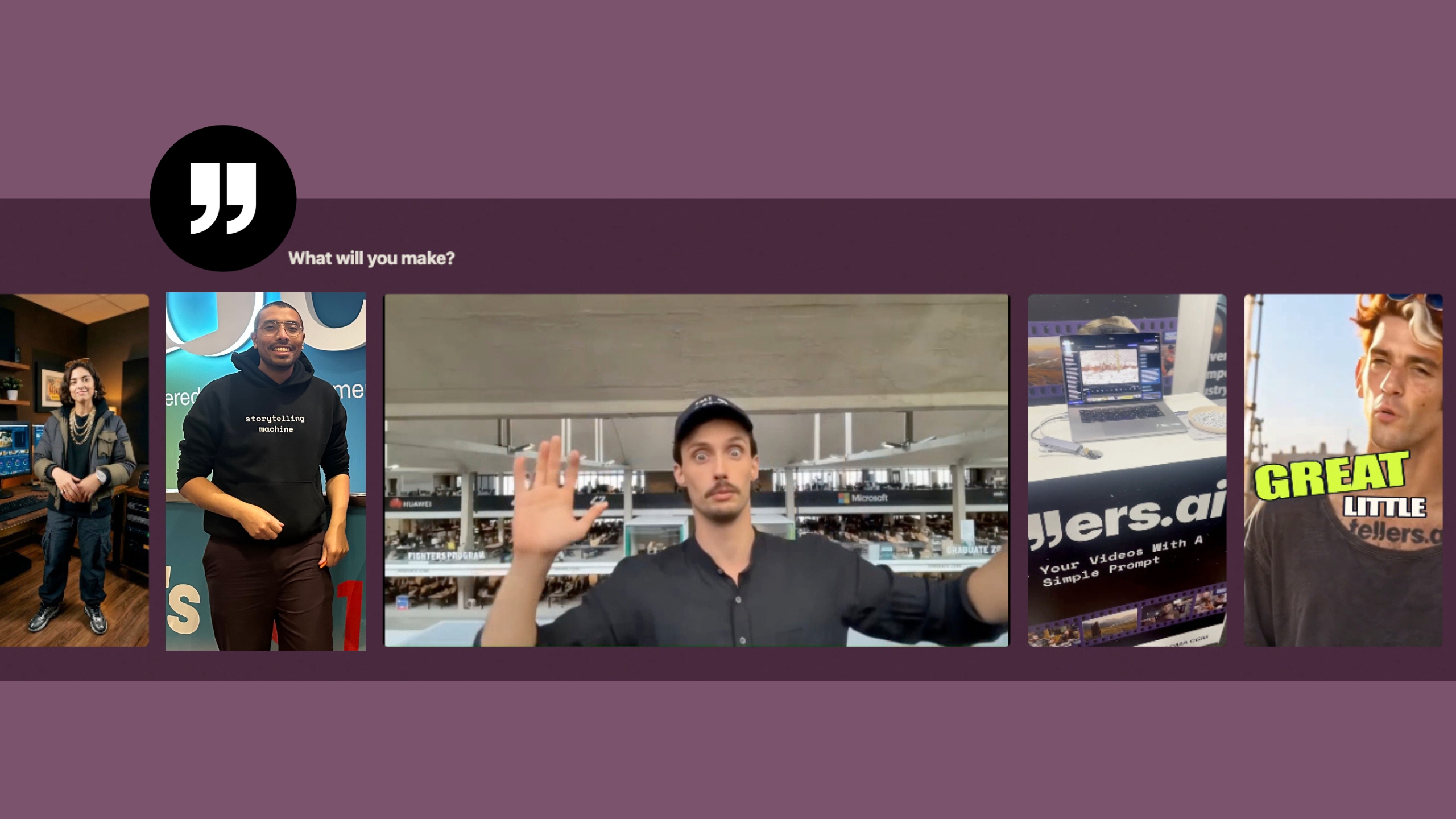
Finding a sequence buried in hours of raw footage, assembling clips around an editorial angle or turning a single shoot into multiple social media videos: Tellers.ai is developing a platform that delegates part of the video editing process to artificial intelligence agents. Co-founded by Robin Guignard-Perret, whose startup was incubated at Station F through the HEC Launchpad, and Bjay Kamwa Watanabe, the company targets media organizations, businesses and production teams in particular.
Video editing remains a meticulous process. It involves reviewing raw footage, identifying relevant sequences, synchronizing audio tracks, cutting unnecessary sections, adding titles and music, and adapting the final result to the intended distribution format. For organizations that regularly produce content, these tasks require considerable time and resources. Tellers.ai focuses on this stage of the production process, with a platform designed to delegate some of these tasks to AI agents.
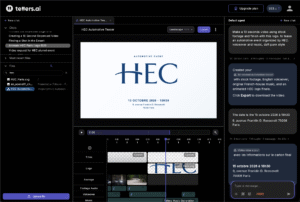
The principle is straightforward: provide an instruction in natural language, upload a video or a library of files, and let the tool analyze the content and suggest an edit. Users can specify an editorial angle, ask the system to find particular passages or generate several clips from the same shoot. “Our expertise is video editing,” says Robin Guignard-Perret.
This distinction matters in a market where video generation tools are proliferating. Tellers.ai is not simply seeking to create artificial images from text prompts. Instead, the platform focuses on working with existing content, whether interviews, filmed footage or audiovisual archives. The goal is to make this material easier to reuse and repurpose into new formats without having to repeat the entire process manually.
From Full-Length Videos to Short Clips, Without Starting from Scratch
To work effectively, the system must first understand the content available to it. Videos are analyzed, indexed and stored so that agents can quickly retrieve relevant sequences. The platform examines both what appears on screen and what is being said. This dual analysis makes it possible to search for a passage based on a topic or a specific phrase, rather than reviewing a recording from beginning to end.
A company can upload its audiovisual library and request an edit around a particular theme. A media organization can extract sequences from an interview or bring archival footage back into circulation. A content creator can ask the tool to turn a long shoot into several short clips for social media.
Robin Guignard-Perret cites an example from his own experience: a five-episode series featuring multiple microphone tracks, screen recordings and recording interruptions. After initial testing, he estimates that he was able to produce the YouTube episodes using approximately two prompts per episode. The system had to identify the relevant passages and assemble material from different sources. This figure remains an estimate based on that specific case: the number of prompts alone is not enough to measure the total time saved.
Another possibility is to extract ten or so short clips from a single shoot. The agent can identify interesting moments and isolate sequences suited to social media. During the interview, the co-founder describes how the tool found a passage in which he announced that he would speak first in French and then in English. It was an impromptu moment he wanted to keep, and the system successfully identified it in the recording.
The aim is to reduce the time spent searching for and assembling footage without eliminating the need for editorial judgment. The relevance of an excerpt, the choice of angle and the pacing of a video remain decisive. An edit that is technically coherent is not necessarily one that will engage its intended audience.
A Post-Production Tool Rather Than an Image Generator
The platform goes beyond selecting shots. It can also add motion graphics and incorporate or generate music, depending on the project’s needs. It can analyze the dynamics of a musical track and adjust certain cuts to match its rhythm. These features rely on different tools that agents can call upon as required.
The ambition is to bring these capabilities together in a single environment, rather than forcing users to switch between multiple specialized services. Image or sound generation can complement the editing process when needed, but it is not the core of the product.
Tellers.ai is also exploring specialized agents capable of applying the rules specific to each organization, including visual identity guidelines, logos, colors and editing instructions. For a marketing team, this could simplify the regular production of content that adheres to its brand guidelines. For a media organization, the main advantage lies in the ability to retrieve specific passages and repurpose existing editorial material into different formats.
The platform is designed to fit into professionals’ existing workflows. Edits can be exported to software such as Adobe Premiere Pro or Avid, where they can be refined further. The idea is therefore not necessarily to replace editors and their tools, but to enable them to delegate certain operations before taking control of the final result.
A Usage-Based Pricing Model
Tellers.ai operates on a subscription model supplemented by credit-based usage. According to Robin Guignard-Perret, entry-level plans start at $16 per month, while a subscription costing around $100 provides access to more features and credits. Costs depend in particular on the volume of video analyzed and the operations requested.
The co-founder estimates the cost of analysis at around $3 per hour of video, depending on the parameters used. An hour-and-a-half conference would therefore cost a few dollars for this initial stage, before any additional editing operations. Once the content has been analyzed and indexed, users can search for and extract different passages without necessarily repeating the initial analysis in full.
This model could appeal to companies with extensive audiovisual libraries. However, the economic equation depends on how the platform is used: its cost must be weighed against the working time saved, the volume of content produced and the amount of manual refinement required. The actual savings cannot therefore be determined from the cost of analysis alone.
The platform operates in a sector where major artificial intelligence players are investing heavily. Its positioning is based on specialization: equipping agents to work with existing video content, understand it and transform it, rather than limiting their capabilities to generating new images.
Tellers.ai has also conducted demonstrations for Agence France-Presse (AFP). Robin Guignard-Perret clarifies, however, that the relationship has not yet led to a commercial deployment. The example illustrates the interest in repurposing archival material, but does not, at this stage, demonstrate large-scale adoption.
A Venture Born Out of a Production Challenge
Robin Guignard-Perret discovered programming in middle school and quickly developed an interest in neural networks. Between his first and final years of high school, he joined École 42, where he trained in software development. He subsequently worked in the tech industry, including at Sonos, before developing several projects of his own.
A freelance assignment for a media organization led him to examine the challenges of video production. The growing volume of content to be produced, combined with the time required for editing, brought a concrete problem into focus. When the media outlet lost its funding, he decided to develop a solution to address it. He initially launched a product on his own before a former colleague joined him. Their collaboration gradually led to the current platform, which goes beyond a simple editing tool to provide an environment where agents can draw on a range of technical capabilities.
This background explains the decision to focus on a practical, operational problem. Artificial intelligence is not an end in itself: it must make it possible to carry out tasks that still consume significant amounts of human time. Yet automation does not resolve every challenge. Source quality, the precision of instructions and the relevance of the final edit remain essential.
As agents become more autonomous, professionals’ roles could shift toward greater editorial direction and oversight. Editors will not necessarily disappear from the process; instead, they may spend less time searching for and assembling sequences and more time shaping the narrative and reviewing the final result. It is this division of labor between humans and machines that Tellers.ai aims to redefine.

Published by Daphné Segretain