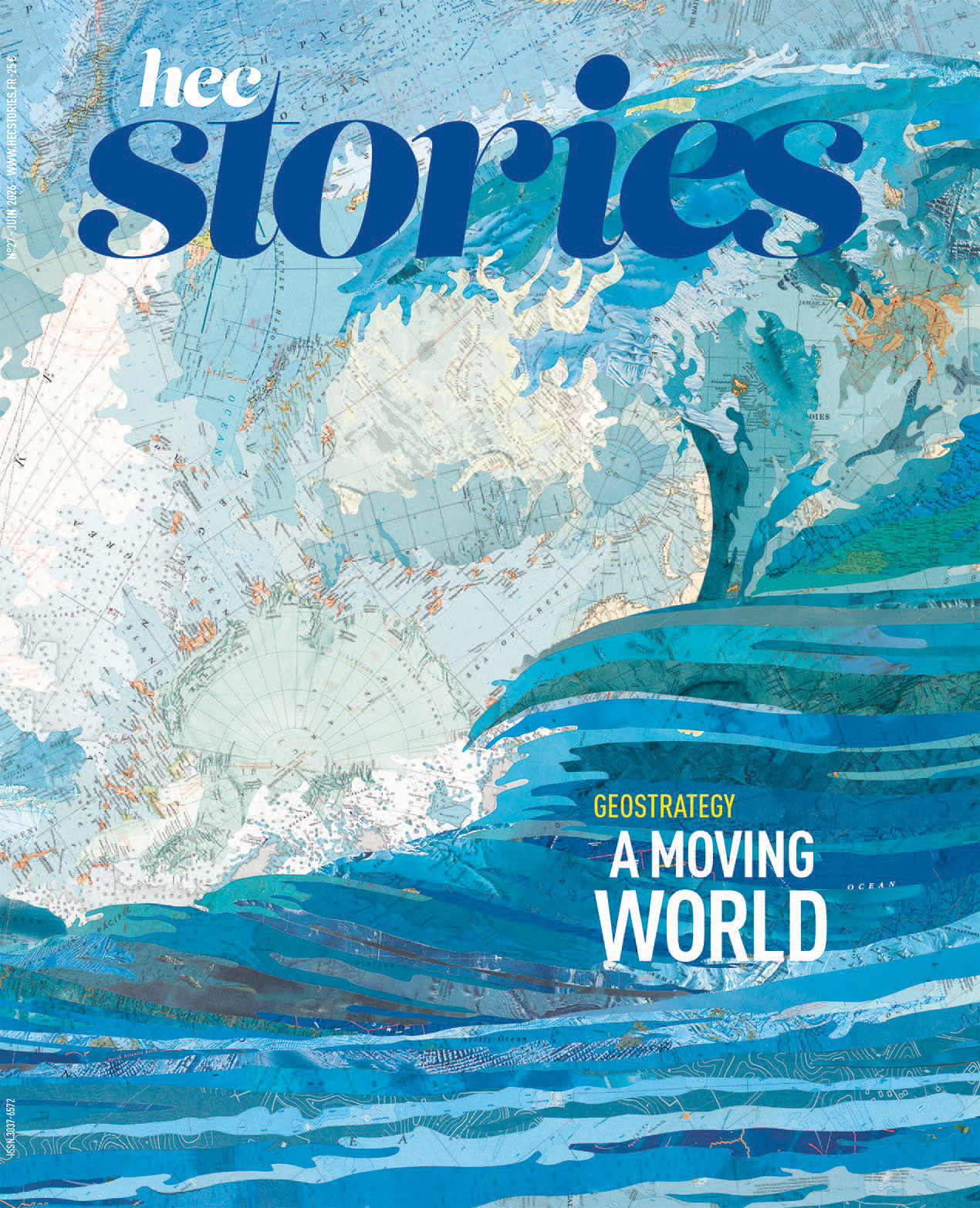

Mechanics of global flows
Tariffs, conflicts, supplier diversification: trade flows are being reshaped. At the helm of QIMA, Sébastien Breteau (M.97) observes these transformations up close.
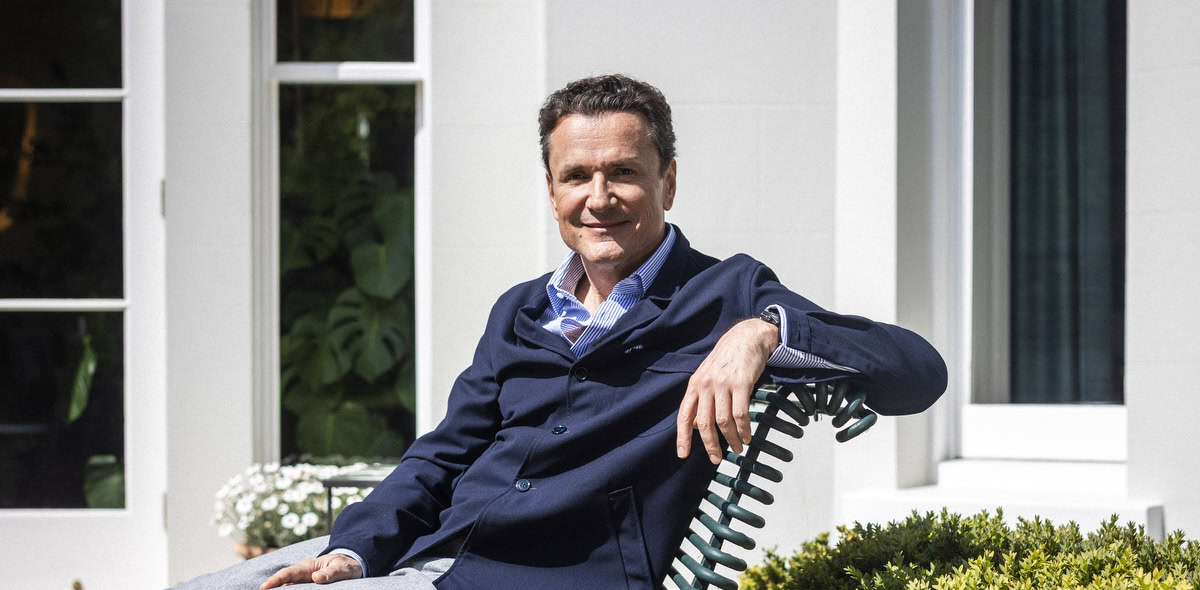
in recent years, one topic has imposed itself at board meetings of QIMA, a global player in quality control: geopolitics. “It’s a theme that comes up constantly at board level. Ten years ago, such a level of volatility was unthinkable,” says founder Sébastien Breteau, welcoming us into his elegant office in Paris, near the National Assembly. Tariffs, trade tensions and conflicts between states are disrupting corporate decisions when it comes to supply chains. At 54, the CEO is ideally positioned to observe the upheavals of global logistics. His company operates upstream of trade flows: QIMA inspects goods, audits manufacturing and agricultural production sites, and tests regulated products in its laboratories. When its inspectors travel to a production site in Bangladesh, Turkey or Mexico, it means that the goods are about to be shipped. “Our business is a leading indicator of global trade,” says Sébastien Breteau.
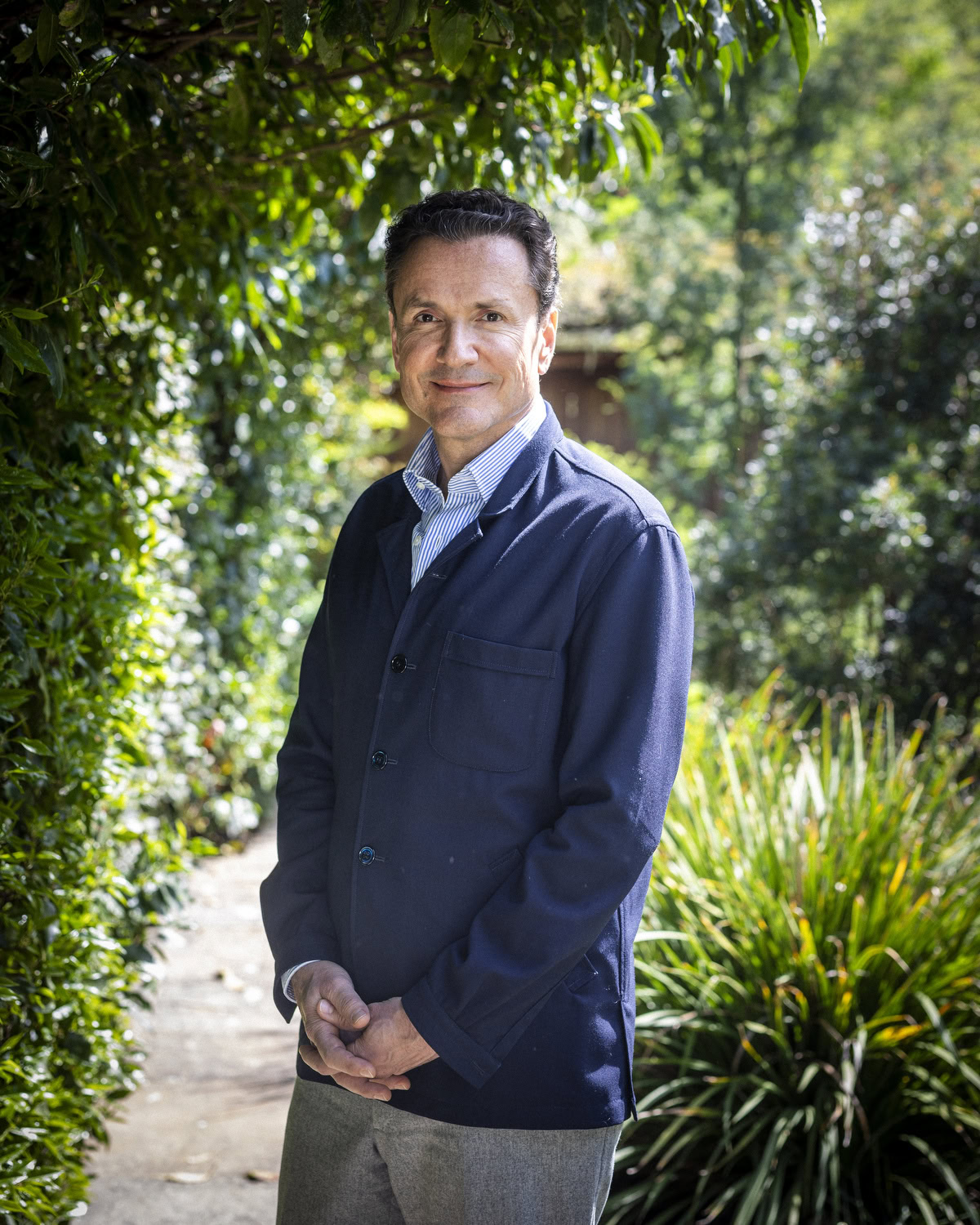
© Ed Alcock / MYOP
Strong flows, shifting directions
Globalization, he notes, is not doing so badly despite current tensions. According to the United Nations Conference on Trade and Development (UNCTAD), global trade (goods and services) even grew by around 7% in 2025, reaching a new record of $35 trillion. But the direction of flows is evolving rapidly. “Fifteen years ago, many companies had a ‘China-only’ strategy,” explains Sébastien Breteau. The first term of Donald Trump and the rise in Sino-American trade tensions triggered an initial shift: “China + 1.” Multinationals added another sourcing country to the equation—often Vietnam, Bangladesh or Mexico. Since Trump’s return, political and economic risks have increased, and sourcing diversification has continued. Companies want to be able to transfer production from one country to another very quickly. “We are now in the era of dynamic supply chains,” he explains. “A major retailer such as Costco, for example, may decide to source jeans from China, but wants to be able, within three weeks, to shift production to Turkey if conditions change,” he continues. Likewise, Ralph Lauren recently moved part of its sourcing from Europe to Mexico in order to benefit from zero tariffs when exporting to the United States. QIMA’s inspections reflect this trend. Last year, controls carried out in Vietnam, Bangladesh and Cambodia increased by around 25%. Another major development is the growing integration among emerging economies. Global trade is far from being limited to access to the U.S. market. “Less than 18% of goods circulating worldwide are destined for the United States,” Sébastien Breteau points out. While the U.S. administration persists in its protectionist stance, new trade agreements are emerging. Discussions are progressing between South Korea, Japan and China. The European Union has signed a free trade agreement with Mercosur. China, for its part, is strengthening its economic ties with several countries of the “Global South,” from Nigeria to Brazil and Indonesia. Sébastien Breteau continues to believe in globalization. “My generation grew up with the idea that the world is flat. The more flows there are, the more growth there is. And the more countries trade, the less they want to go to war,” he says.
Hong Kong, Tamagotchis, and a bold bet
The fifty-something describes himself as “an entrepreneurial child of globalization.” After completing the Entrepreneurs Master at HEC Paris in 1997, he moved to Hong Kong for a VIE position at Safran. The early days of his career were marked by a small Japanese electronic object destined to become iconic: the Tamagotchi. As demand surged, he convinced a Chinese distributor based in Hong Kong to supply him. “He told me there was a two-month wait. Seeing how disappointed I was, he took pity on me and agreed to deliver 30,000 units within a few days,” he recalls with a smile. Shipped to France, the virtual pets were a spectacular success: margins reached 80%, and the operation generated around €100,000 for Breteau and his partner. “He bought himself a Porsche Carrera. I chose to reinvest,” he says.With these funds, he created a company specializing in the design and export of promotional products for European consumer goods multinationals. Based in Hong Kong, where he lived until 2003, the company later opened subsidiaries in France and the United Kingdom, where he settled in 2006. “I loved Hong Kong’s dynamism and agility: three weeks between founding the company, delivering the first order, and making the first €100,000 profit!” he recalls. At the time, globalization was in full expansion. On December 11, 2001, China joined the World Trade Organization. But discussions with clients revealed a recurring issue: how can the quality of products manufactured on the other side of the world be verified? Major inspection players such as SGS or Bureau Veritas mainly served multinationals. SMEs, however, had very few solutions to control their purchases. To meet their needs, Breteau launched AsiaInspection in 2005, which later became QIMA.
Expanded expertise
The business itself was not new, but this Bordeaux native decided to transform it through digital technology. Instead of placing orders by phone and waiting several days for a faxed report, clients could now book an inspection online. The promise: an inspector available within two days anywhere in the world—or even within 24 hours in China—and a report delivered the same day. On that basis, clients can decide whether or not to pay the factory and ship the goods. His digital platform quickly attracted SME importers, who represent a significant share of global trade. “At the time—and probably still today—75% of the goods on a container ship were destined for SMEs. These companies are the true players of international trade,” he says. In 2008, his company received the Best SME in China Award from Christine Lagarde on behalf of the French Chamber of Commerce, as well as the E-Business of the Year award from Jack Ma. Today, the group employs around 6,500 people across 85 offices. Its capital is majority-owned by Breteau and management, alongside U.S. investment fund TA Associates. But the company no longer limits itself to inspecting garments or toys: its expertise has diversified to include agricultural and food products, factory audits, laboratory testing, and even life sciences, with the development of new molecules for pharmaceutical and cosmetics industries. Its teams inspect cotton farms in Uzbekistan, grain shipments between Russia and Sudan, and even contribute to clinical trials on GLP-1 peptides used to treat obesity. “Goods inspection now represents only one-third of our revenue,” the CEO notes.
Technological advances
The company, which serves 35,000 clients in 115 countries, continues to differentiate itself through the data it collects, structures and analyzes. Inspectors no longer simply produce lengthy PDF reports. The data feeds predictive tools. A manufacturer can, for example, anticipate which defects are most likely to occur in a given production. When anomalies are detected, the platform suggests corrective actions for future shipments. Conversely, algorithms can recommend skipping an inspection when the risk is considered low. Artificial intelligence also automates certain administrative tasks. “In document certification processes, AI already achieves success rates comparable to humans—around 94%—and will soon reach 100%,” Breteau says with a smile. The AI revolution extends far beyond his sector. “This is probably the most exciting moment of my career,” says this tech enthusiast, who has personally invested in around 70 start-ups—while acknowledging that these technological advances raise profound questions about education, the relevance of human knowledge, and the future value of work.
The company, which serves 35,000 clients in 115 countries, continues to differentiate itself through the data it collects, structures and analyzes. Inspectors no longer simply produce lengthy PDF reports. The data feeds predictive tools. A manufacturer can, for example, anticipate which defects are most likely to occur in a given production. When anomalies are detected, the platform suggests corrective actions for future shipments. Conversely, algorithms can recommend skipping an inspection when the risk is considered low. Artificial intelligence also automates certain administrative tasks. “In document certification processes, AI already achieves success rates comparable to humans—around 94%—and will soon reach 100%,” Breteau says with a smile. The AI revolution extends far beyond his sector. “This is probably the most exciting moment of my career,” says this tech enthusiast, who has personally invested in around 70 start-ups—while acknowledging that these technological advances raise profound questions about education, the relevance of human knowledge, and the future value of work.
Building trust
While technologies have advanced, the company’s core mission remains unchanged: building trust. Clients want to ensure that the products they purchase meet specifications, and consumers want to know that they are safe for their health and for the planet. “People refuse to eat pears sprayed with glyphosate or buy a T-shirt sewn by a child.” This demand for transparency gives companies like QIMA a central role in verifying product quality and traceability. The London-based group continues to grow, notably through an active acquisition strategy: NYCE in Mexico, Hansecontrol in Germany, IBD in Brazil… Nearly forty companies have been acquired in ten years. The group expects revenue of €400 million in 2026. A father of five, Breteau keeps in mind a lesson from Robert Papin: “Success doesn’t come from being the best or working the hardest, but from inspiring others to help you succeed.”

Published by Thomas Lestavel