

Adrien Nussenbaum (H.01): Shaping the Future of the HEC Community
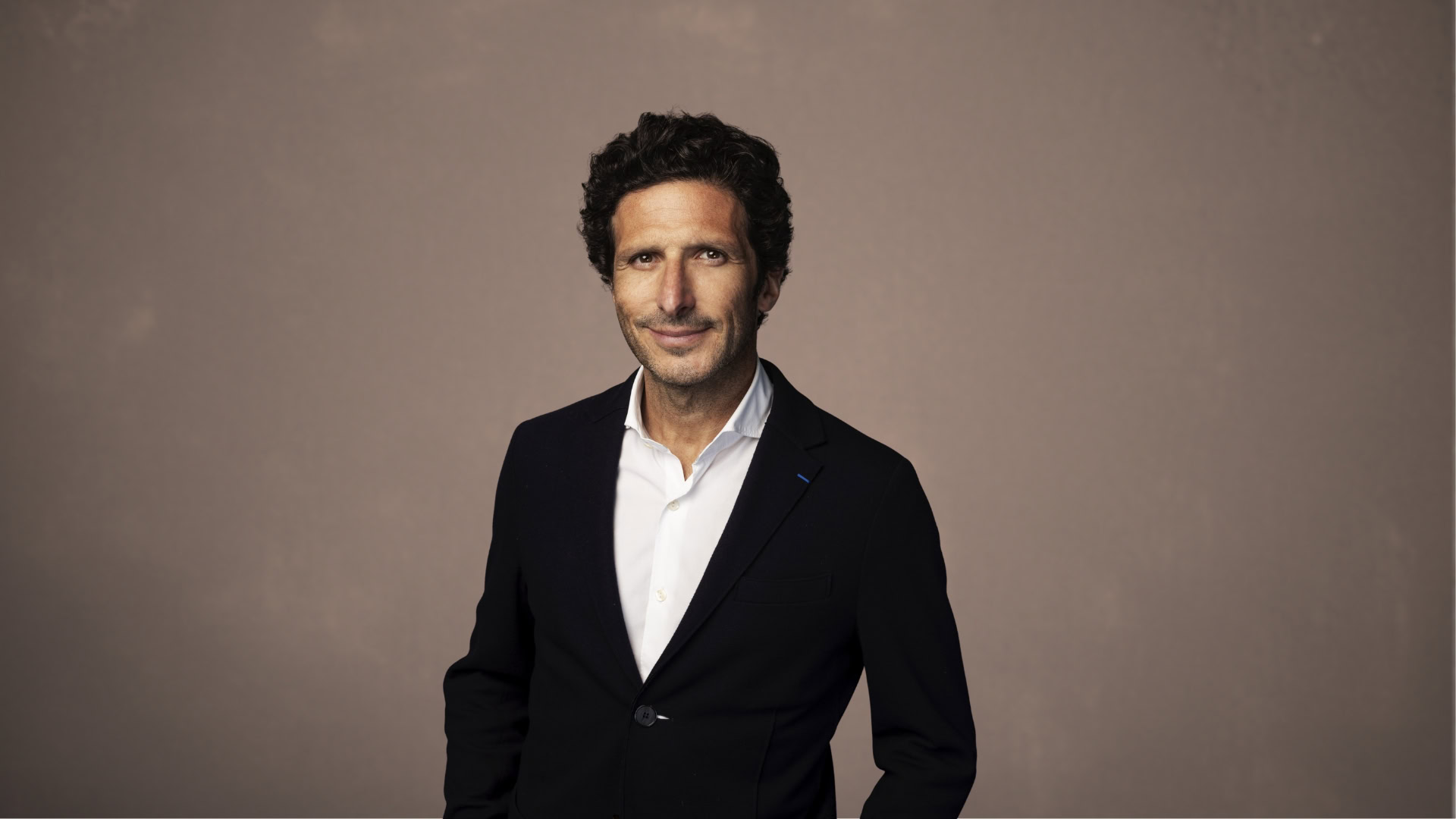
Last June, the HEC Alumni Association elected Adrien Nussenbaum (H.01) as its new President. Succeeding Hortense de Roux (H.06), the entrepreneur and co-founder of French unicorn Mirakl shares his vision for the future of the HEC community. At its core? Thinking bigger and rallying the community across borders.
You have devoted the past few years to building Mirakl… What makes you want to dedicate your energy today to serving the HEC Alumni community? What appeals to you about this new role as President?
I spent fifteen years building a company. Today, I want to devote part of my energy to building a community. HEC has given me so much. It feels only natural to try to give back some of what I have received.
I also deeply believe that a school like HEC is an extraordinary collective asset. If we can better engage our alumni and help them realize that HEC is not just a degree or a distant experience, but a platform for building collective projects that are greater than ourselves, we can have a far greater impact than any of us could achieve individually.
For example, without HEC, I would not have been able to launch the HEC Imagine program around “Business & Peace” in such a smooth and impactful way. People spend so much time starting projects on their own, when we have a community, a school, professors, a brand, and students all ready to help us dream bigger.
Finally, and this may sound surprising, throughout my life I have always started companies from scratch. So having the opportunity to transform an existing platform at a time when we are facing challenges such as the new campus, AI, and new approaches to learning is a challenge that genuinely excites me.
When you graduate from a leading school, what should an alumni network offer beyond a simple address book?
A contact list is something LinkedIn already does very well. A community is something else entirely. It is made up of people who open doors for you, offer advice at the right moment, support you when things get tough, and share their experience. The real value is not the connection itself. It is trust.
A network only works if everyone plays their part. In my experience as an entrepreneur, particularly in sales roles, I have often been disappointed by the level of engagement from HEC alumni when I tried to reach out to them. There is too often a feeling that there are two categories of HEC graduates: those who need something, and those who are successful enough that they need nothing and no one. I do not believe that at all. Life is long and full of surprises, and I believe we are all capable of both giving and receiving. But this virtuous circle only works if everyone gets involved — whether we are highly successful people with incredibly busy schedules or simply have a little more time to give. One of my goals is to get the “flywheel” turning again!
What is your ambition for HEC Alumni in the years ahead?
I would like us to stop talking about an association and start thinking of HEC Alumni as a community that people want to join, contribute to, and help grow. A community where every graduate knows they will always find someone ready to help them, learn from, support their entrepreneurial journey, or share their experience. And where they, in turn, feel inspired to help the next generation.
To be more concrete, my ambition is that, among our 80,000 alumni, at least 50% will have had an active experience with the community every year, and that at least 30% will get involved — whether through donations to support scholarships, the campus, or other initiatives; by teaching classes; sharing their insights at events; proactively welcoming and mentoring students; or in many other ways. In reality, I would love for it to be 100%… but let’s not get carried away just yet.
Many members but limited engagement: how can we turn a global network into a true community?
It all comes down to the “What’s in it for me?” If people only come to receive, it simply won’t work. We need to build a community that is committed to supporting its members, while also inspiring members to contribute to the community.
Everyone should be able to find a personal reason to come back: a project, a connection, an opportunity, a cause… When that happens, engagement will naturally follow. We also need to inspire people — and that means thinking bigger. We need to move away from a system where everyone is doing things in their own corner.
Embracing “OneHEC” should not become an administrative nightmare, but a reality where events are inspiring, where students never truly leave the campus, wherever they are in the world and whatever they go on to do. The campus, its values, and the ambition that drove them to join HEC should continue to live within them forever. And we should stop talking about an association — it sounds outdated and dusty. I like the idea of a community.
You come from the entrepreneurial world… What approaches or methods would you like to bring to HEC Alumni?
I like Kennedy’s famous quote: “We choose to go to the Moon in this decade and do the other things, not because they are easy, but because they are hard.” More broadly, I believe in dreaming big and constantly aiming higher. It may not be the most HEC-like reference to quote Che Guevara, but “Let’s be realistic, let’s demand the impossible”… or rather, let’s aim for it!
More pragmatically, my approach is built around three principles: a clear vision, a culture of execution, and the freedom to try. Not every good idea will work, but I would rather see us test ten ambitious initiatives than spend a year debating a single one. Above all, the most important thing is that I want everyone to work together. I truly believe that all great adventures are team sports.
AI will transform the way we learn, work, and probably even the way we connect with one another. How do you envision the alumni network in the age of AI?
AI is already making information abundant. It must help us move faster, amplify our efforts, modernize the way the association operates, and ensure that our content reaches a much wider audience, much more quickly and in a far more personalized way. But in the age of AI, what will become truly scarce are high-quality human relationships. I believe AI can make our community much smarter: by better connecting the right people, sharing knowledge more effectively, and personalizing services. Ultimately, however, its purpose should be to help us become more human, not less.
A student graduating from HEC today is entering a more uncertain world… What should be the added value of the alumni association for them?
Their career will probably not follow a linear path. They will change jobs several times, perhaps even reinvent themselves several times throughout their lives. And that is a good thing. To stay fulfilled over the long term, you need to avoid getting bored — that is the secret to longevity.
In this context, HEC Alumni should not be a network that people turn to once every ten years. It should become a lifelong companion. Learning, connections, discoveries, support, projects, engagement, career opportunities… HEC Alumni should be there for all of this.
If I look at my own experience, I have always felt deeply connected to HEC, even though I was never the person who was always at Thursday night parties or who met my wife there… But I have always believed that we are fortunate to be part of this community, that we worked hard to join it, and that we have a responsibility both to set an example for future generations and to give back some of what we have received.
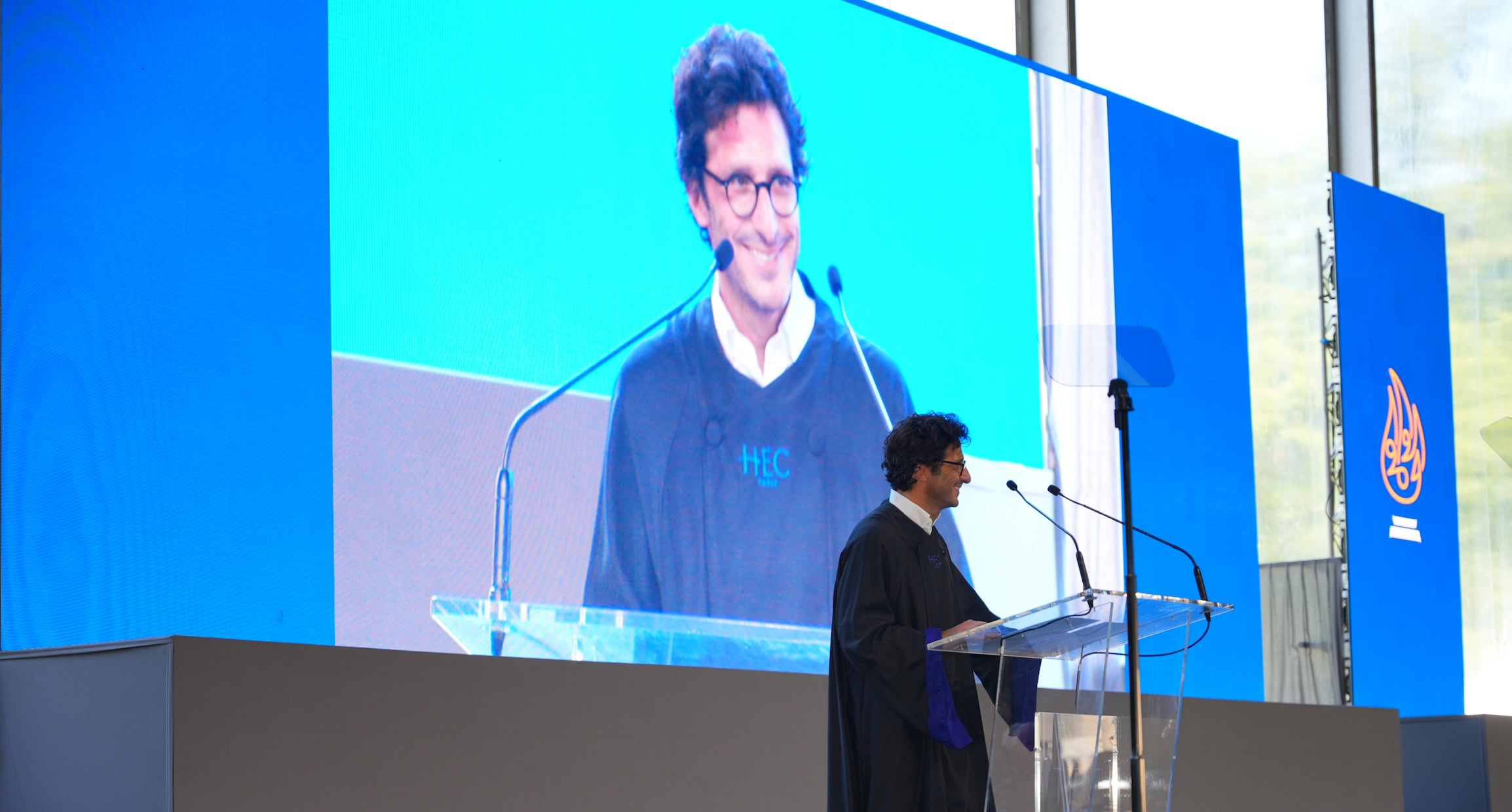
Over the past twenty-five years of my professional life, I have taught at HEC, recruited HEC graduates, taken part in conferences, created a scholarship program, and now taken on the role of President of HEC Alumni. I have made meaningful connections, experienced failures (such as never winning the Mercures 🙂), and felt an unparalleled sense of emotion when delivering the speech at the 2024 graduation ceremony… My commitment to HEC is part of my own search for meaning: having an impact on people, helping them navigate adversity, bringing energy, and ultimately giving meaning to something that does not inherently have one — life itself. The association should contribute to all of this.
Leading schools are sometimes questioned about their role in society. What role should a community like HEC Alumni play?
Training outstanding professionals is no longer enough. We must also help shape women and men who use their success in service of something greater than themselves.
We sometimes underestimate what an alumni community can become. Look at the leading American universities: their networks influence research, entrepreneurship, public policy, and major societal debates. Why shouldn’t HEC Alumni have the same ambition? Our responsibility is not only to serve our members. It is also to harness their intelligence, experience, and energy in service of the common good.
The world is undergoing profound change. Europe is questioning its direction, France is at a pivotal moment, and technological, geopolitical, and climate-related disruptions are accelerating. In this context, a community like HEC Alumni cannot simply organize events or maintain a network. It must be a community that thinks, acts, and contributes. We have thousands of entrepreneurs, researchers, leaders, and investors among us. If we can bring this collective intelligence together and put it at the service of the great challenges of our time, then we will truly fulfill our role.
HEC is a global school. How can we foster a sense of belonging between Paris, New York, Singapore, Abidjan, and Doha?
Belonging cannot be imposed. It has to be experienced. We share the same values, the same memories, and the same standards of excellence, regardless of where we live in the world. The time when an HEC graduating class was made up primarily of 350 French students coming from preparatory classes is behind us. HEC has become a global school — through its students, its alumni, and its ambitions. HEC Alumni must now fully reflect this reality. This means placing English more at the heart of our operations, giving greater representation to international alumni in our governance and initiatives, and strengthening our presence in the world’s major hubs of influence, from the United States and China to India, the Middle East, and Africa.
But we should not underestimate the scale of the challenge. Building a truly global community will take time and require a collective effort. The School, HEC Alumni, and the Foundation will need to work together far more closely, with a shared vision. We each have a different role to play, but ultimately we are pursuing the same goal: making HEC one of the world’s leading academic communities, serving its graduates and amplifying its impact around the world.
A sense of belonging should no longer depend on proximity to Paris. Every graduate, wherever they live and whatever their background, should feel that HEC is their community too — that they can contribute to it and play an active role in shaping its future.
You have received a great deal from HEC. What message would you like to pass on to future generations?
Don’t wait until you have achieved success before giving back. You can share your time, your energy, an idea, or advice long before you are able to give financially. A community becomes stronger when everyone contributes a little more than they take.
Is there any advice from an HEC alumnus or professor that has stayed with you throughout your life?
Twenty-six years ago, during my gap year, I had already founded my first company and moved to New York. Instead of returning to campus for my final year, I went on an exchange program at NYU Stern. The School then agreed that I could replace my minor by developing a strategy case study for my major in strategy, based on my own company. Michel Santi (H.71) was my mentor and supported me throughout this project, which very early in my life introduced me to a virtuous cycle: learning, going abroad, building a company, sharing your experience, and eventually teaching… I still remember Michel telling me that form mattered as much as substance — or, more precisely, that one should “never underestimate the importance of a strong theoretical foundation.” At least, that is how I remember it. Throughout my life, I have tried to cultivate both deep expertise and the ability to share it effectively, whether delivering a keynote to an audience of 1,000 people or pitching an idea to a CEO.
You have experienced what it means to build a company from an idea… Do you find that same excitement today at the helm of HEC Alumni?
Yes, because ultimately, there are many similarities. It starts with a conviction, bringing people together, and trying to build something that does not yet exist. But there is also a fundamental difference. At Mirakl, we were building a company. With HEC Alumni, we have the opportunity to contribute to an institution that educates future generations, brings together people from all backgrounds — beyond nationalities, cultures, and religions — and can play a role in shaping the way we think about the world of tomorrow. I find that to be an immense responsibility. The challenge is also considerable. When we look at the current level of alumni engagement, we can see how much remains to be done. We have an extraordinary community, but a large part of its potential remains untapped. That is precisely what makes this adventure so exciting: it is not about managing an association, but about building, over time, a community that everyone wants to be part of and to which everyone wants to contribute.

Published by Daphné Segretain