
Max Aniort (H.10): Bringing People Together
From the small Breton town of Landerneau to some of the world’s most sought-after villas, the founder of Le Collectionist is anything but a standard business school graduate. Behind a trajectory that appears to follow the classic path—preparatory classes, HEC Paris, consulting, entrepreneurship—lies a far less linear story: a nomadic childhood between Brittany, Saudi Arabia and Greece, unconventional parents, a social culture shock in France’s elite educational system, and a constant desire to create connections. Now 40, and sole CEO of Le Collectionist, the luxury villa rental platform operating in the world’s most desirable destinations, Max Aniort continues to cultivate the same passion he had as a child: bringing people together. A portrait of an entrepreneur for whom hospitality is not merely a business, but a way of being in the world.
A Home Open to the World
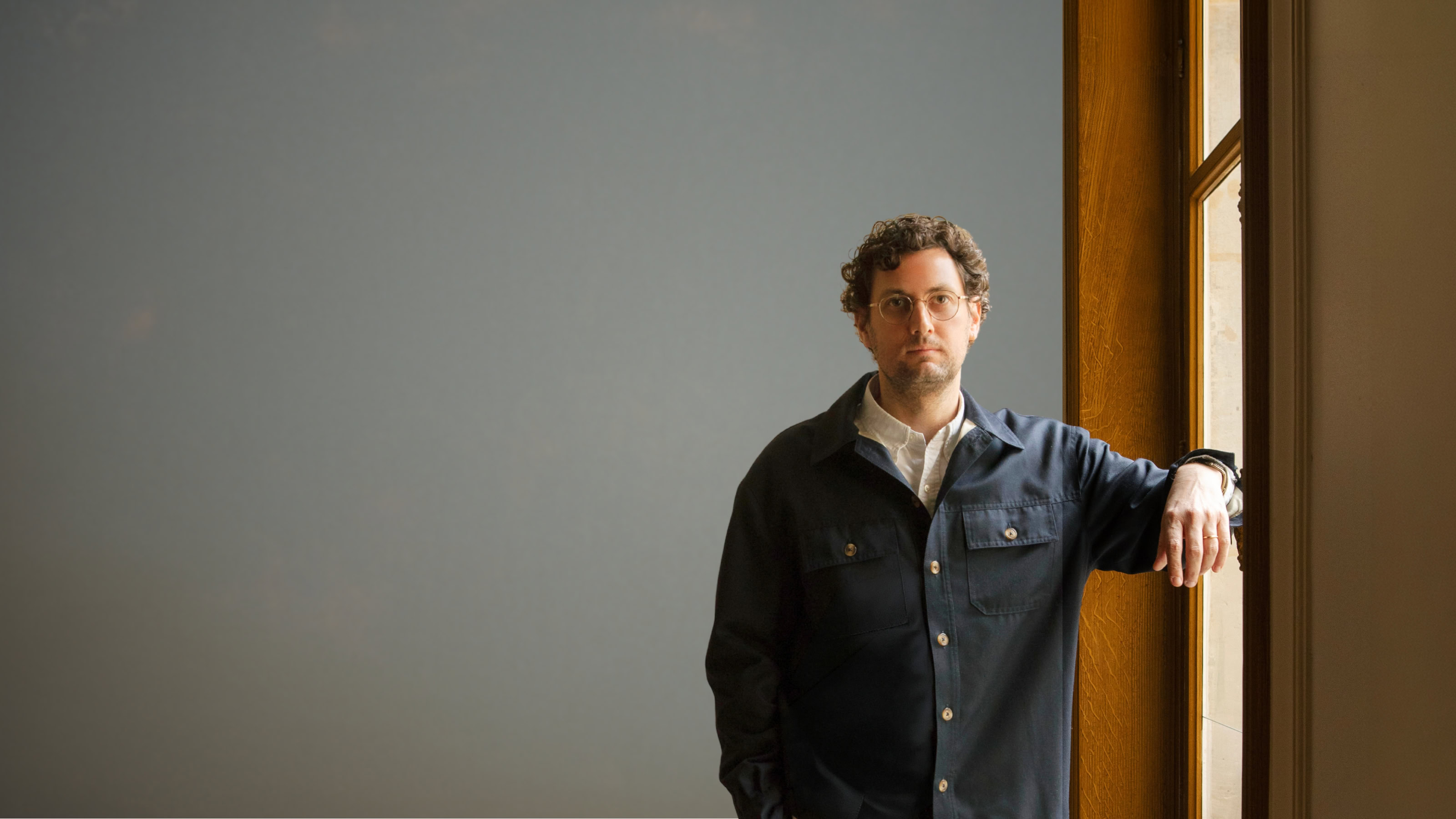
For our meeting, Max Aniort chose one of Paris’s most talked-about venues: the new private club launched by Xavier Niel on Avenue d’Iéna, of which he is a member. There are no mandatory jackets or ties here—far removed from the understated codes of traditional Parisian institutions such as the Automobile Club or the Interallié. Entrepreneurs mingle with creatives, investors cross paths with artists, and conversations seem to matter more than appearances.
When I arrive, Aniort is already there. Long-sleeved T-shirt, discreet earring, immediate smile. This new-generation executive—a member of the French Tech Next 120 and a 2025 Young Leader of the French-American Foundation—embodies an understated elegance. A kind of natural refinement that ultimately reflects the world he has built through Le Collectionist: warm luxury, never ostentatious.
At first glance, his journey seems perfectly mapped out: a high-achieving student who attended the right schools before building a company that has become a global reference in luxury villa rentals. Yet as our conversation unfolds, a different story emerges. It begins in Landerneau, in Brittany’s Finistère region. “I was born in a tiny little town in Brittany,” he says with a smile.
After a few years in Brest, a move that would shape his worldview followed. From the age of seven to fourteen, he grew up in Jeddah, Saudi Arabia. Far from France, his universe revolved around family: a younger brother four years his junior and parents who were deeply present without being overbearing. He still looks back fondly on the freedom of those years. “Honestly, it was an amazing childhood. We were outside all the time. We sailed, we went spearfishing.” His parents were far from the typical French expatriate model. They met at seventeen and ran away together on the eve of their baccalauréat exams, travelling all the way to India. His father eventually joined the French Navy and worked with helicopter fleets. His mother pursued a succession of careers: airline ticketing, fashion, and teaching French to members of the Saudi royal family. “She’s had a thousand different jobs,” he says admiringly. More importantly, they passed on a particular way of engaging with the world. In the Aniort household, the door was always open. In Jeddah, where social life was limited and gathering places scarce, the family home became a haven for expatriates living far from home. “At Christmas, there was always an extra place set at the table. If someone dropped by, they could sit down and join us.” This culture of hospitality profoundly shaped their eldest son. “I think we were really raised with the idea of being an open house.” The phrase resonates in a striking way when one knows what comes next.
The Shock of Returning to France
At fourteen, Aniort returned to France. He enrolled at the Naval High School in Brest while his parents and brother remained in Saudi Arabia. Suddenly, he found himself alone in boarding school, thousands of kilometres away from the life he had known. “I loved it. It was difficult at first, but I loved it.” Teachers quickly recognised his potential. They encouraged him, guided him and opened doors. He particularly remembers a mathematics teacher who spent hours explaining France’s preparatory classes and elite higher-education system. He was later admitted to the economics preparatory programme at Lycée Henri-IV in Paris. And then came another shock. “I arrived in Paris knowing absolutely nobody. I was on a scholarship and living in the boarding house. Honestly, it was really tough.” Many of his classmates seemed better prepared, some having already attended the lycée itself. They appeared to master social and cultural codes that were still unfamiliar to him. For a time, he felt like an outsider. Yet he persevered. He narrowly missed admission to HEC Paris on his first attempt, chose to repeat his second year of preparatory classes, and ultimately discovered an unexpected intellectual pleasure during that extra year. “The first time around, you’re overwhelmed. You take notes without really understanding. The second time, you can finally engage with the teachers, ask questions, and have real discussions. I loved that extra year.”
HEC: Above All, the People
When Max Aniort joined HEC Paris in 2010, he was twenty years old. Settling into the Jouy-en-Josas campus, he discovered an entirely different environment. The courses interested him, and certain encounters left a lasting impression. “I made some incredible friends.” Many of them remain among his closest circle today. Looking back, however, he says he would approach his studies differently. “If I had to do it again, I’d do it another way.” He regrets not having connected academic learning more directly with real-world experience. That realisation came during his gap year in Hong Kong, where he worked in both credit analysis and financial-services consulting. For the first time, he experienced life inside a company. “When I came back, I no longer viewed school in the same way.” Like many students of his generation, he naturally gravitated toward the most prestigious sectors of the time—finance, consulting and strategy—without necessarily asking himself what he truly wanted to build. “I’d been told that finance and consulting were the best options. So I looked for something that combined the two.” Consulting nevertheless provided him with a toolkit he still uses today: structure, governance and organisational discipline. Then came the encounter that changed everything.
Building More Than a Company: Creating Reunions
In 2014, Olivier Cahane (H.08), a former HEC classmate, was looking for a partner to help develop a young company specialising in luxury villa rentals. Mutual friends arranged the introduction. “They were the ones who projected us into those roles.” At the time, Aniort became CEO of what was still a fledgling business. There were three co-founders. The company was already called Le Collectionist. When he expressed doubts, his friends offered a revealing perspective. “I was always the one organising dinners, trips and parties. The one bringing people together.” At its core, Le Collectionist was never born out of a passion for real estate or luxury tourism. The project connected with something much deeper: hospitality, the art of welcoming others and the joy of gathering people together. “We organise holidays more than we organise travel. ” The distinction is essential. While others sell destinations, Le Collectionist sells life moments: family celebrations, reunions among friends and shared memories. Paradoxically, the Covid-19 pandemic accelerated this vision. As the tourism industry faltered, the company benefited from growing demand for private homes and intimate group stays. “People didn’t really want to stay in hotels anymore.” The year 2020 became a strategic turning point. The company demonstrated its profitability. Between 2021 and 2023, it completed five acquisitions. Today, Le Collectionist operates on an impressive scale: €150 million in booking volume, €35 million in net revenue, 200 permanent employees, 200 seasonal staff, 10 offices worldwide and a presence across some of the most sought-after destinations on the planet. Since the gradual departures of his co-founders in 2018 and 2020, Aniort has been solely at the helm. The change in scale has been remarkable. When he assumed full operational leadership, the company generated around €25 million in revenue. Six years later, that figure has increased sixfold. Yet his driving force appears largely unchanged. Listening to him describe the dinners he hosts—where designers, American entrepreneurs, lifelong friends and new acquaintances mingle—you can still sense the spirit of the family home in Jeddah. The same desire to bring different worlds together. The same curiosity. The same table with one seat left open. After all, the most meaningful memories often begin around a table, in a house where you know you are welcome.


Published by Daphné Segretain