
François Gemenne : weathering the world to come
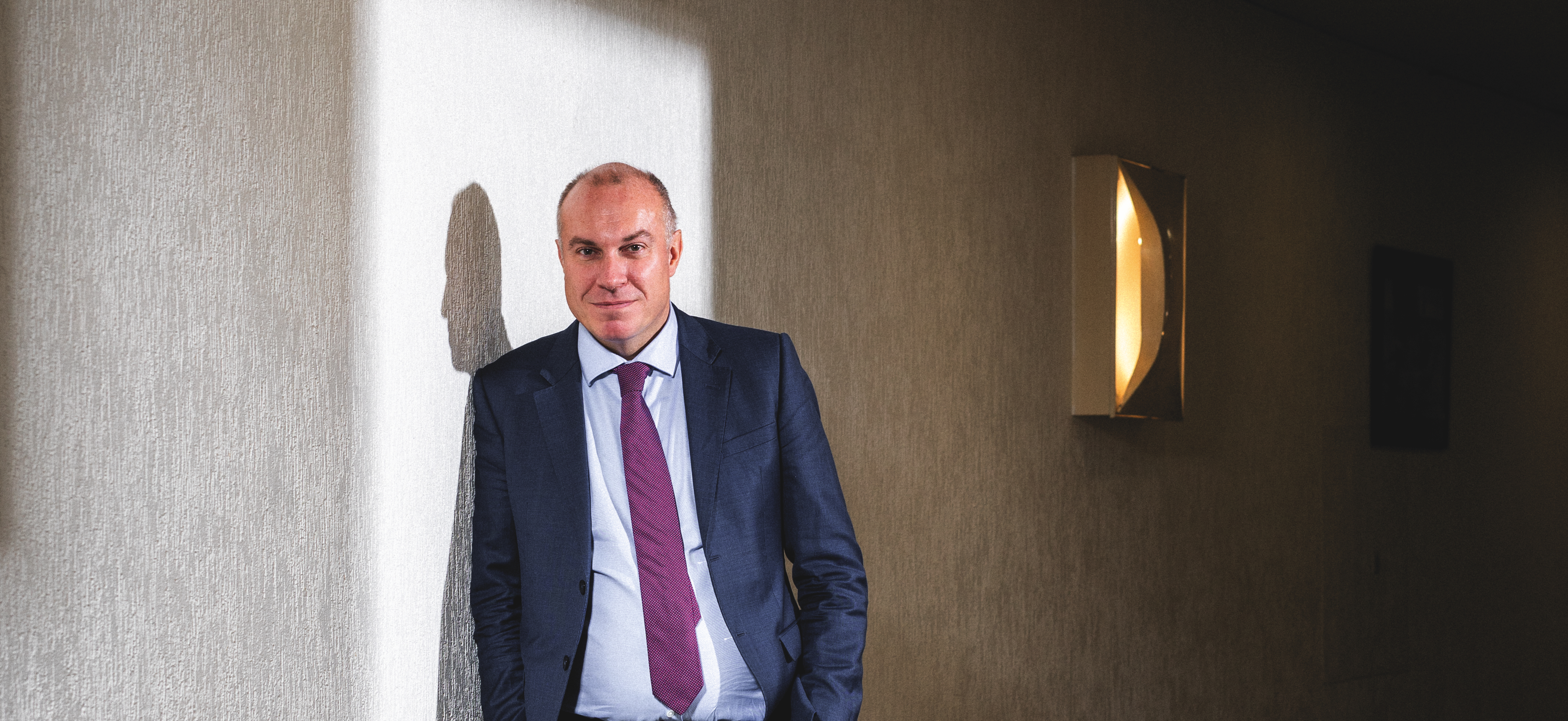
A professor at HEC Paris, where he heads the Master in Sustainability and Social Innovation (SASI), François Gemenne specialises in the geopolitics of the environment and migration. His research focuses on displacement linked to environmental change and climate adaptation policies. A contributing author to the IPCC’s Sixth Assessment Report, he challenges simplistic views of climate change: there is no universal threshold beyond which a place becomes uninhabitable, nor is the future set in stone. What is certain, however, is that climate change will profoundly alter the conditions in which we live, work, invest and move. For him, the question is not simply where we will be able to live tomorrow, but where and how we collectively choose to live.
As climate change alters living conditions, some regions will become increasingly difficult to inhabit. How do we determine when a place becomes uninhabitable?
We need to be careful with the very notion of “uninhabitability”. This is one of the issues we explored through the European HABITABLE project. Rather than trying to establish a threshold beyond which a place can no longer be inhabited, we wanted to understand how people themselves define the limits of what they consider habitable. People’s perception of climate change is highly subjective. It depends on the realities they face, but also on their ability to adapt, the kind of home they live in, their income, their access to infrastructure, their age, their job… So we cannot simply say: “Above a certain temperature, people can no longer live here.” The real question may be less about physical habitability than about changing living conditions. Take the Paris property market. Today, top-floor flats are among the most sought-after. Yet they are also particularly exposed to heat. Will that still be true in twenty years? Could ground-floor flats, which are often less desirable today, become more attractive because they are cooler? This very concrete example shows how climate change could fundamentally alter the value we place on a particular location.
Could climate change therefore redraw the map of where people live?
Yes, and there would be nothing unprecedented about that. Throughout human history, the environment has been one of the main factors determining where populations settle. As the Sahara formed, populations gradually moved elsewhere. If the Sahara did not exist, the history of Egypt, Sudan and the entire region would have been very different. Today, we are on the brink of major environmental change. It is therefore reasonable to expect consequences for the geographical distribution of populations. But that does not necessarily mean we will see massive, uncontrolled migration. The research I am involved in shows precisely that population redistribution driven by climate change is not inevitable. There will be displacement, but its scale and nature will also depend on public policies, infrastructure, property markets, economic opportunities and people’s ability to move.
Are the most vulnerable always the most likely to migrate?
No. In fact, that is one of the great paradoxes of environmental migration. The most vulnerable are often those least able to leave. Wealthier people can relocate more easily. They can move house, move to another city or sometimes even another country. They are also more likely to have jobs that allow them to work remotely. For poorer populations, particularly in the Global South, mobility is much more difficult. People may depend on agricultural land, a factory or a local job. And moving is expensive. That is why, in many situations, climate-related displacement takes place over relatively short distances. People do not necessarily leave their country. They may move just a few kilometres away because their village is regularly flooded, because an area has become too exposed to wildfires or because agricultural conditions have changed. We need to stop automatically imagining climate change as a machine producing international refugees. We must also consider those who cannot leave.
Yet recent events show that wealthy countries are affected too.
Absolutely. And that is probably one of the most significant changes in how we perceive the problem. For a long time, climate disasters seemed to be something that happened “elsewhere”. Now we are discovering just how vulnerable our own territories can be. When a country such as Belgium experiences major wildfires, it discovers that it does not necessarily have the appropriate equipment to respond. The same debates then arise as in France: should we strengthen emergency response capabilities? How far should national solidarity extend? And that raises a much deeper question: what are we collectively prepared to protect?
Is that when adaptation becomes a political issue?
Exactly. Imagine a coastal area highly exposed to rising sea levels and coastal flooding. At some point, we may have to ask ourselves whether we should continue building sea walls to protect a handful of homes or accept that people will need to relocate. The same question arises with wildfires. Should public resources be deployed without limit to protect properties in extremely exposed areas? And if we protect some neighbourhoods but not others, what criteria should guide those decisions? Such trade-offs will become increasingly common.
For a long time, we thought of adaptation as an essentially technical matter: building a sea wall, installing air conditioning, strengthening firefighting capabilities or modifying buildings. But as soon as we ask who should be protected, where we should invest and how much we should spend, we enter the realm of politics.
So it is less about “saving the planet” than making decisions in the interests of the greatest number. Do you see the social implications of climate change as central?
Absolutely. In fact, that is what first drew me to climate issues. I do not have a particularly strong attachment to nature. I do not know much about trees, and I am not especially passionate about landscapes. What interests me is justice and the consequences our actions have on other people’s lives. I am more affected by the thousands of people who die during a heatwave than by the hectares of forest that burn, even though the two are obviously connected. What strikes me is the fundamental injustice of people being forced to move because of conditions they did not create. And this question of justice runs through every aspect of adaptation: who gets protected? Who pays? Who can leave? Who has to stay? Who decides what is worth preserving?
How can we prevent adaptation from becoming another source of inequality?
That is a difficult question. Take the energy market. When fuel prices rise, wealthier households can more easily buy an electric car, replace their heating system or renovate their home. They can turn a constraint into an economic opportunity. Poorer households, meanwhile, are left with a petrol or diesel car they cannot afford to replace and a home they cannot afford to renovate. They bear the burden of rising prices without having the means to adapt. This is where public policy becomes essential: not to ask everyone indiscriminately to “make sacrifices”, but to narrow that divide.
You have said that “accepting change” does not necessarily mean “suffering its consequences”. What does that mean in practice?
Accepting change means first facing reality and deciding to change course. If a year of drought destroys crops, we can compensate farmers. But if we spend a billion euros this year making up for losses without enabling farmers to change their production methods, we risk spending the same billion again next year. We end up artificially sustaining a system in which crops are regularly destroyed. Adaptation is precisely about looking beyond the following year.
Is that the difference between a transition imposed on people and one they actually want?
Yes. You can always ask people to accept a 2 or 3% reduction in pay in the name of a collective effort. They will complain, but they may eventually accept it if you explain that it is temporary. As soon as the situation improves, they will naturally want their previous salary restored. What is much harder is to bring about a lasting change in people’s aspirations. The challenge, then, is to make change desirable. I do not have much faith in policies based solely on giving things up and making sacrifices. People want more, or better; they do not want less, or worse. So if we want to transform our lifestyles at a macroeconomic level, we need to show people that they stand to gain. That means moving beyond an approach that focuses exclusively on what people must give up. We need to be able to explain what we could gain: more pleasant cities, more comfortable homes, more efficient transport, a less vulnerable economy and more resilient businesses.
Will this transition be driven primarily by governments or by businesses?
Over the years, my view of where the levers of change lie has gradually shifted. For a long time, I taught students who were mainly heading into politics or the civil service. And the further I went, the more I began to think that the keys to the transition might lie more in the economy than in government action. I think one of the limitations of the Paris Agreement was that it placed much of the responsibility for the transition in the hands of governments, while leaving businesses, local authorities and civil society relatively on the sidelines. Yet many of the most important transformations are taking place precisely in those areas. Some companies are already fundamentally changing how they produce, invest and make decisions.
Are you referring to corporate social responsibility (CSR)?
I think we are experiencing a fundamental shift. For a long time, CSR was seen as an additional component of a business. There was the core activity, which was supposed to generate profits, and then an environmental or social policy was added to offset some of its impacts. That approach is disappearing. Environmental issues are becoming central to business strategy. They affect costs, supply chains, climate risks, access to resources, geopolitics and, ultimately, a company’s very ability to remain profitable in the future. A business that ignores these issues risks losing its competitiveness within a few years. The real question, then, is not whether a company has a highly effective sustainability department operating alongside the rest of the business. It is how to gradually eliminate the divide between sustainability and the core business itself.
What does this mean for a school like HEC?
A great deal. When I look at the Master in Sustainability and Social Innovation, I see it at a crossroads. For a long time, the question was how to raise students’ awareness of the environmental and social impacts of the economy. Today, the challenge is different: how do we make these issues a central part of organisational strategy? This also raises the question of individual responsibility. When a school like HEC invests so much in educating its students, and when society invests so much in their education, it is legitimate to ask what they intend to do with their degree. If you join a company that accounts for a significant share of the French economy, you have considerable power to act. You also have a responsibility. I would therefore rather see a graduate from a leading business school join a company that produces steel, cement or cars and help transform its value chains than assume that making a difference necessarily means launching a small “sustainable” start-up. Creating a purpose-driven business can be wonderful. But transforming the large companies that underpin the economy is just as valuable, if not more so.
Ultimately, what will tomorrow’s world look like?
We need to be very cautious about making projections over the very long term. Looking a hundred years ahead, we can imagine that some variables may remain relatively close to their current levels. But in the meantime, societies will have changed profoundly. The real question, then, is not simply what the climate will look like in a hundred years’ time. It is what kind of societies we want to build to live with that climate. The 19th century was the century of coal. The 20th was the century of oil. The 21st must be the century of electricity. Yet today, we are still struggling to leave the previous century behind. We therefore need to recognise the scale of the changes under way and collectively decide which direction to take. We must see the climate transition as an opportunity to build the world we want to live in.

Published by Daphné Segretain