

In Hong Kong, Christophe Bertrand Opens the Doors to Asia for HEC
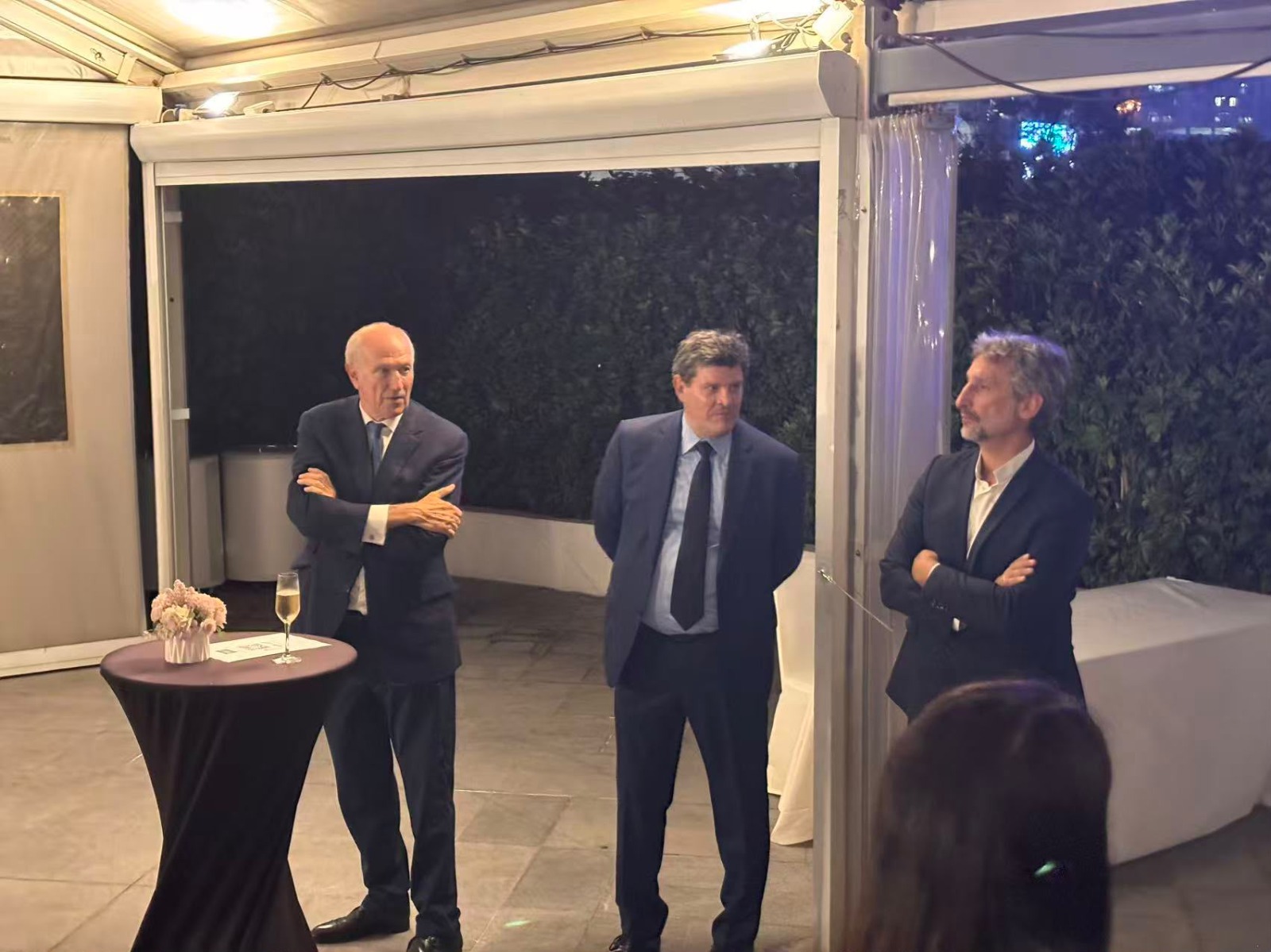
Nearly one hundred people gathered at the Royal Hong Kong Yacht Club, including alumni, institutional partners and representatives of leading entrepreneurial families. During the visit organized to mark twenty years of HEC Paris’s presence in China, the Hong Kong leg became a powerful showcase of the strength of a network capable of bringing together the worlds of business, finance, academia and culture. As President of the China Greater Bay Area Chapter, Christophe Bertrand (M.07) has played a major role in turning this community into an active ambassador for HEC’s influence across Asia.
Two Days to Strengthen Ties Between HEC and the Greater Bay Area
Celebrating twenty years of presence in China, while also consolidating existing relationships and opening up new opportunities: these were the objectives of the visit organized by HEC Paris in October 2026. Following an anniversary gala in Shanghai, the Paris delegation travelled to Hong Kong for two days of meetings with public-sector decision-makers, business leaders and academic partners from the region. The delegation included Jean-Paul Agon (H.78), Chairman of HEC Paris and L’Oréal; Jean-François Palus (H.84), President of the HEC Foundation; Éloïc Peyrache, Dean of HEC Paris; Philippe Oster (EMBA.16), Director of International Affairs at HEC Paris; Marguerite Gallant (H.03), Managing Director of the HEC Alumni Association; Jean-François Baumann, Director of International Development at the HEC Foundation; and Elodie Xu (EMBA.21), Director of the HEC Paris China Office. Christophe Bertrand played an active role throughout the visit, drawing on his network and in-depth knowledge of the local ecosystem.
On October 12, the Royal Hong Kong Yacht Club hosted a gathering that brought the community together. Nearly one hundred guests accepted the invitation from the Chapter and the delegation visiting from Paris. Over cocktails, conversations brought together alumni, academic partners and representatives of the local business community.
For Christophe Bertrand, the stakes went far beyond an evening of reunions: the aim was to demonstrate the vitality of the HEC community in the region and build practical bridges between the School and its Asian environment. The evening marked the culmination of a packed programme combining institutional meetings, encounters with entrepreneurs and leading local families, and discussions about future partnerships and executive education programmes. Before the cocktail reception, a Bilateral Institutional Roundtable brought together the HEC delegation and the region’s leading institutional and business stakeholders, including the French Consulate General, the French Chamber of Commerce, Hong Kong Science & Technology Parks Corporation, the Private Wealth Management Association, the Hong Kong General Chamber of Commerce, the Hong Kong Trade Development Council, the Hong Kong–France Business Council, the FinTech Association of Hong Kong, Invest Hong Kong and Hong Kong Talent Engage.

The following day, discussions continued in a more intimate setting. Several prominent Hong Kong entrepreneurial families were invited to meet with the delegation and discuss the School’s development plans, family business governance and succession issues. In total, six local business dynasties had the opportunity to engage directly with the HEC ecosystem. To facilitate these meetings, Christophe Bertrand drew on his extensive knowledge of the local business landscape and the trusted relationships he has built over the years.
From Europe to the United States: The Pivotal Choice of Asia
Christophe Bertrand’s own career reflects this gradual opening towards the international arena. Coming from a family with roots in the timber industry, he initially pursued an engineering degree specializing in materials before complementing it with management studies at HEC Paris. This proved to be a decisive step, confirming his desire to build a career beyond France’s borders.
His first professional experience took him to New York, where he joined the Saint-Gobain Group. There, he discovered North American working methods and business practices. After six years in the United States, he felt ready for a change of scenery and increasingly drawn to Asia. He therefore decided to pursue an MBA in Finance at the Hong Kong University of Science and Technology (HKUST).
“I had already spent several years in the United States and had become somewhat familiar with American working culture. I was really keen to discover something different and immerse myself in Asia to deepen my understanding of the world,” he explains.
As part of his MBA, an exchange semester in Shanghai enabled him to deepen his knowledge of mainland China and its business environment. Upon completing his studies, a professional opportunity arose in Hong Kong, where he settled permanently in 2015.
He has since been working at Shun Tak Holdings, a leading listed conglomerate whose main business activities span real estate, hospitality, tourism and investment. Rather than joining a Western company, he deliberately chose to become part of a major Asian group, driven by a desire to understand the region’s business culture and practices from the inside. As Head of Development, he operates in an environment where local knowledge and the quality of personal relationships are essential.
A Resilient City, a Network to Rebuild
Since arriving in Hong Kong in 2013, Christophe Bertrand has witnessed several periods of major upheaval. The Umbrella Movement in 2014, the protests in 2019, followed by the pandemic and the prolonged closure of borders, have profoundly transformed the city. While many expatriates and international professionals chose to leave, he decided to stay, convinced that Hong Kong would regain its dynamism. “Hong Kong has always been a resilient, pragmatic city, with a tremendous capacity to adapt,” he points out.
Although the recovery has been gradual and the local economy remains closely tied to mainland China, Hong Kong retains a unique position as a strategic crossroads between China and international markets, particularly in finance, real estate, international trade and professional services. At the same time, it is increasingly establishing itself in technological innovation and the cultural industries.
It was against this backdrop that Christophe Bertrand gradually became more involved in the HEC community. After attending several events organized in Hong Kong and Shanghai, he joined the Chapter’s board under the presidency of Hugues de Saint Seine, who led it from 2021 to 2024. He succeeded him at the end of 2024, with the ambition of giving the community fresh momentum.
He then set about modernizing the Chapter’s operations: less hierarchy, clearly defined responsibilities and governance adapted to the availability of volunteers, many of whom have particularly demanding schedules. The goal was to make involvement more flexible and effective.
With a view to greater regional consistency, Christophe Bertrand also initiated a major strategic move by merging the Hong Kong & Macao and South China Chapters to create the China Greater Bay Area (GBA) Chapter, covering the entire economic region of Guangdong, Hong Kong and Macao. This development aligns the network with the economic integration of this vast metropolitan area and creates greater synergies for alumni on both sides of the border.
Another key priority has been to improve the quality and security of exchanges within the community. Over the years, the number of discussion groups with no access controls had multiplied. He therefore decided to start afresh, restricting these spaces to alumni whose HEC credentials have been verified. This fundamental effort reflects a firm belief: the value of a network lies less in its size than in the trust and quality of the relationships that underpin it.
With a board comprising eight members and two advisors, the China GBA Chapter now organizes around fifteen events a year, driven by renewed momentum. 2027 will mark another major milestone, with Hong Kong hosting the very first major regional event on an Asia-Pacific scale. Designed around a dual format combining a conference and a gala dinner, this flagship gathering will bring together alumni from across the region, as well as academic partners, business leaders and local institutional stakeholders, offering a tangible expression of the network’s ambition to foster openness and strengthen its international reach.
Alumni as Ambassadors for the School’s International Development
For Christophe Bertrand, an alumni chapter should never operate in isolation. Its members are meant to act as true ambassadors for HEC Paris, becoming fully engaged in their local environment, building relationships with institutions, universities and businesses, and helping raise the profile of HEC Paris initiatives. Ultimately, they contribute to establishing HEC as a leading international brand.
This outward-looking approach is particularly important in a region where relationships between Chinese and international business communities are often built over time, through personal encounters and networks founded on trust.
One such ambassador is Lan Yan, a member of the HEC Paris International Advisory Board and an Independent Director at Edmond de Rothschild. Formerly CEO of Lazard Greater China, she plays an important role in economic relations between France and China. In the Chapter President’s view, she is one of those influential figures capable of bridging the two ecosystems.
Preparing the delegation’s visit also involved mobilizing part of his personal and professional network. Working closely with the School’s teams and the Family Business Center, he helped organize meetings with several major entrepreneurial families in the region. The objective was to present HEC’s work on family business governance and succession, showcase its initiatives and identify potential sources of support.
Although he prefers not to disclose the identities of the families involved, Christophe Bertrand emphasizes the importance of these targeted discussions, which require substantial preparation in advance.
This mobilization illustrates how the role of alumni communities is evolving. Beyond providing spaces for social interaction and networking among graduates, they can become genuine partners in the School’s development, fully supporting the One HEC approach. By facilitating connections with business stakeholders, helping develop executive education programmes and academic partnerships, and identifying potential donors for the HEC Foundation, they help embed HEC within local ecosystems.
In Hong Kong, Christophe Bertrand intends to build on this momentum: expanding the community, strengthening ties with local stakeholders and developing new ambassadors, particularly across Greater China. His commitment is rooted in a simple belief: having studied at HEC creates a lasting bond, one that can continue to generate value long after graduation, provided it is nurtured collectively and firmly rooted in the realities of each region.

Published by Daphné Segretain