

Florence Chataignier (H.99): “Freedom is too precious to put yourself on hold”
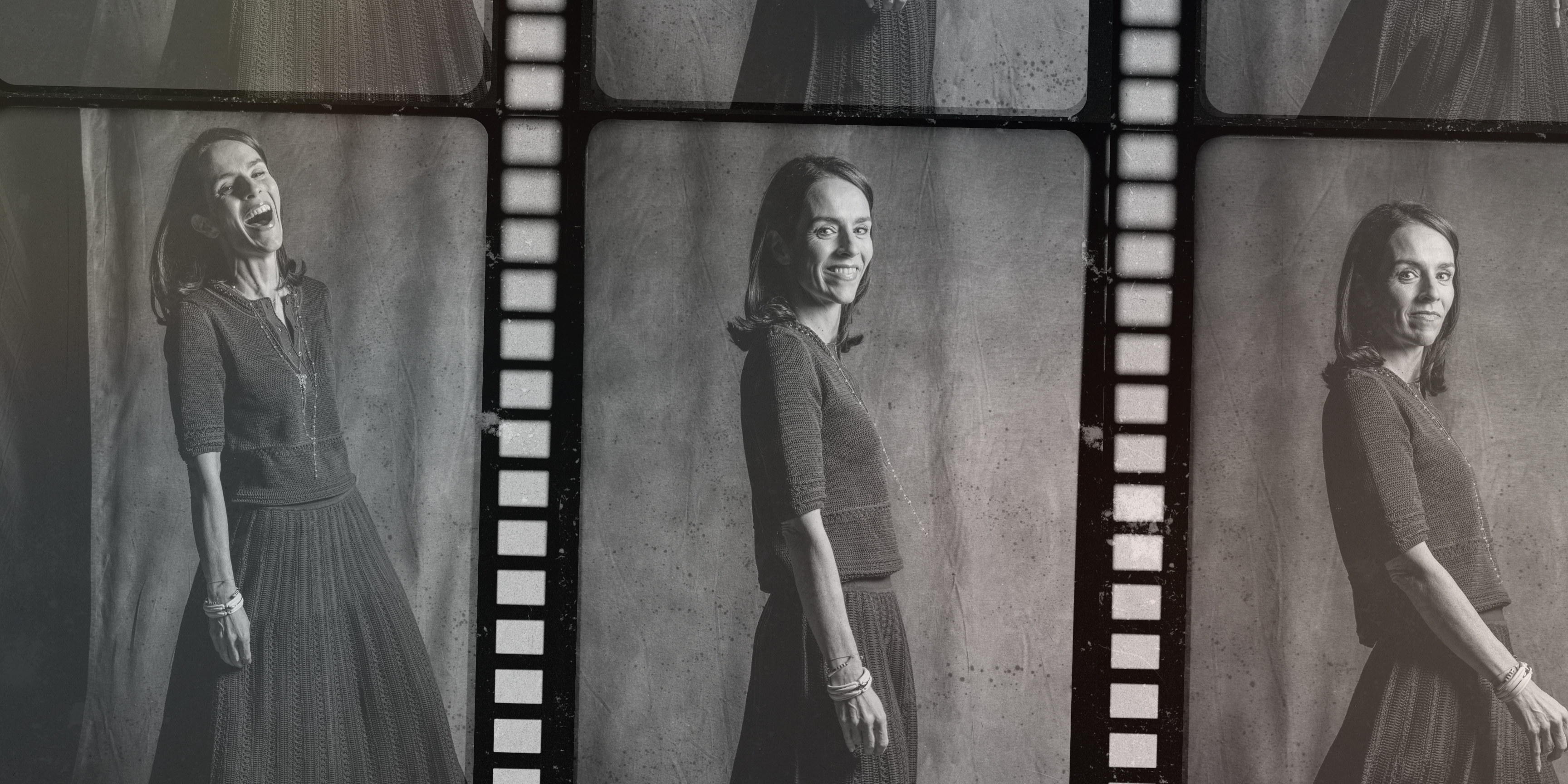
Following Des gens comme il faut, inspired by her family history, Florence Chataignier returns with Fuir la lumière (published by Le Cherche-Midi), a novel exploring freedom, emancipation and the indelible marks left by childhood. Through Anita, a young woman who tries to break free from an upbringing in a libertarian community before seeking her place in a new life in London, the author questions our choices, the compromises we make and what it truly means to be free. Alongside her work on Les Rencontres du Papotin, she continues to forge a path shaped by detours, curiosity and writing. We met her.
Florence Chataignier is not someone who likes to be confined by definitions. After HEC, she worked in television, moved to New York, joined the *Papotin* adventure and has now published her second novel. Hers is a life in motion, echoing that of her heroine, Anita, although Chataignier has no intention of writing her own story. “This one came completely out of nowhere, even though there’s quite a lot of me in it,” she says. After a first book rooted in her family history, *Fuir la lumière* is therefore very much a work of fiction—but one into which Florence has poured a great deal of herself, her obsessions and her observations.
Where does the need to escape come from?
The novel has two starting points. The first is Florence’s long-standing fascination with communities and the mechanisms that lead some people to accept rules they would never normally agree to. While researching her book, she visited one such community several times, observing its residents and their sometimes surprising backgrounds: “There was a hundred-year-old woman, a concert pianist, a farm worker, a healer…”
Then there is New York. On her computer, Florence came across a short story she had written several years earlier about a woman who takes the train from Brooklyn to Manhattan every morning and fantasises about a stranger she sees in the carriage. “I started wondering: what kind of childhood did this woman have? How do you let your life become so boring that you need to invent a story for yourself on the train?” The answer suddenly became obvious: the woman had grown up in a cult. The two stories came together, and Anita was born.
Anita leaves the world of her childhood at 17 and goes on to accumulate experiences, places and different ways of living, as though at every stage she were searching for the person she might become. “She has absolutely no idea who she is,” Florence explains. “With every change, she thinks: at some point, I’ll have a flash of inspiration; I’ll meet someone who can become a role model for me.”
Her journey, then, is not simply a succession of escapes. It is also a search for identity. When she arrives in London and builds a family life with Guillaume, Anita might finally seem to have found a degree of stability. But something begins to crack. The man she chose is charming, she fell in love with him, and yet his freedom gradually comes to occupy all the space. “She let her own freedom wither away in a corner of the room, next to an old ficus,” says the author, still immersed in her story.
That sentence encapsulates one of the novel’s central questions. Can you love someone without losing yourself? Can you build a life together without abandoning what makes you who you are? For Florence, the answer lies in a deeply personal conviction: freedom is not negotiable. “It drives me crazy when I hear my friends say, ‘I give myself to you for life.’ It makes me want to scream. […] I’m not giving myself to anyone for life!”
Even within her own relationship, she makes no secret of this philosophy. “Alexandre [Mars, Ed.] knows the deal—we revisit the subject every five years,” she says, amused but entirely sincere.
Anita rediscovers this freedom when she finally becomes aware of the choices she has made. “Because it was the most precious thing she had, because she had been deprived of it for 17 years, suddenly she opens her eyes and thinks: what have I done?”
Childhood: the suitcase we carry everywhere
Behind this quest for freedom lies another, deeper question: can we ever truly start again from scratch? It is a theme that runs through both of Florence Chataignier’s novels. In *Des gens comme il faut*, family, memory and secrets already occupied a central place. In *Fuir la lumière*, Anita also carries the weight of an unconventional childhood, even as she tries to distance herself from it.
“You can’t escape your childhood,” Florence says. You can work on yourself, “spend twenty years in psychoanalysis,” rebuild your life—the foundations remain. She enjoys observing people who believe they have started all over again but who, without realising it, are still dragging behind them “huge suitcases and piles of shoulder bags.” The image is both funny and affectionate, and says a great deal about the novel’s tone. Florence has no desire to systematically pit seriousness against lightness. On the contrary, she likes tragedy and absurdity to coexist, allowing her characters to go through difficult situations while remaining profoundly human. This interest in individual lives also shapes her perspective on women. Anita gradually realises that she has settled into a role that no longer suits her. Florence connects this with a reality she frequently observed in New York: women who follow their husbands abroad and find their own professional or personal trajectories put on hold.
“I met 40 women who had followed their husbands to New York,” says the former Vice President of Bonpoint in the United States. Expatriation can create a particular social environment in which women spend more time together, take on more responsibility for the children and sometimes lose the reference points that previously gave structure to their lives. For Florence, however, the issue goes far beyond expatriation. “I think it’s often women who put themselves on hold, and that’s dangerous.” Through Anita, she champions a form of emancipation that does not necessarily mean leaving everything behind, but rather refusing to disappear behind the choices we make for others.
Writing, listening, then letting go
Florence also nurtures this attentiveness to others through her work on *Les Rencontres du Papotin*. She is now involved in the programme’s editorial production, in which a group of unconventional journalists on the autism spectrum interview personalities from all walks of life with remarkable directness. The experience has reinforced an idea that is central to her writing: not worrying too much about what other people think. “I try not to worry about what people are going to think of my work,” she explains. For Florence, writing is first and foremost about telling a story she enjoys, with her characters, her obsessions and its areas of ambiguity. Writing also offers her a space apart, almost a break from reality. She jokingly describes herself as “not very good at reality.” When she writes, by contrast, everything seems simpler: “Shutting myself away in my quiet room and writing my story—that suits me just fine.”
With Fuir la lumière, Florence gives readers the freedom to interpret the story for themselves. While female emancipation and the search for identity provide an obvious way into the novel, it opens other doors too, particularly around our relationship with the dead and the possibility of an afterlife. “I like the fact that everyone sees what interests them in the book, and that there are several ways into it,” she says. Perhaps this is where the true meaning of the title lies. Fuir la lumière does not necessarily mean wanting to disappear. It can also mean stepping away from a light that shines too brightly—the gaze of others, social expectations, role models and predetermined lives—in order to seek out your own way of existing.
And if Anita spends much of the novel running away, perhaps it is ultimately so that she can better understand where she wants to go. For Florence, freedom is never something we acquire once and for all. It is something we build, question and reclaim.
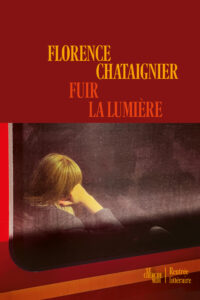
Fuir la lumière, by Florence Chataignier, published by Le Cherche Midi, €21.

Published by Daphné Segretain