

The forest takes centre stage at HEC Paris
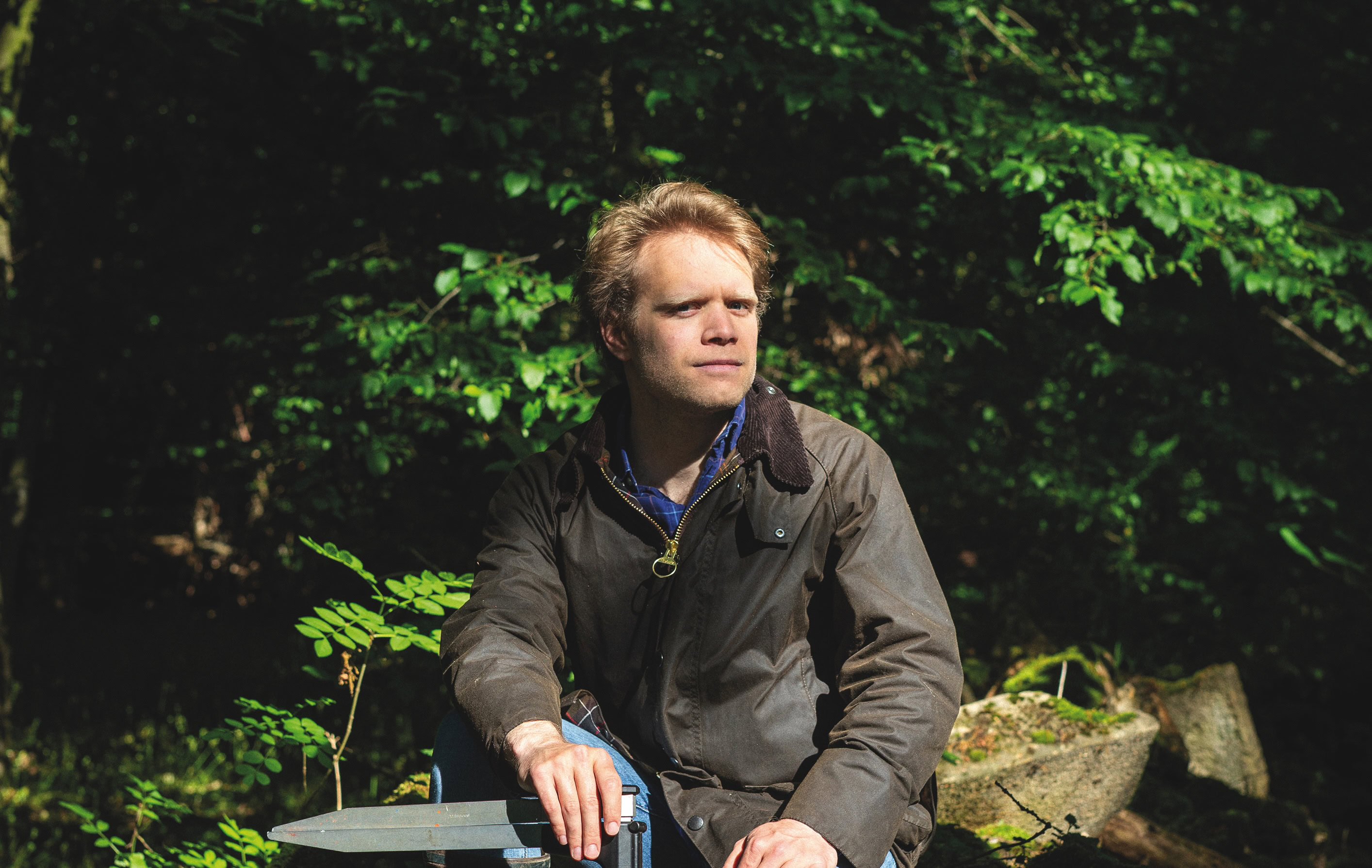
Alongside the transformation project for the HEC Paris campus, another, quieter undertaking is beginning at the edge of the buildings. The forest, which covers 80% of the land in Jouy-en-Josas, will be managed by Kloros. Its cofounder, Victor Chevrillon (H.14), promotes a vision of the forest as living heritage, an ecological laboratory, and a long-term challenge.
You are working on HEC’s forest alongside the campus renovation project. How do the two initiatives connect?
The two projects are independent, but they clearly go hand in hand. The new campus project places great emphasis on reconnecting with nature — and the forest covers 80% of the Jouy-en-Josas site. It therefore made sense for the campus transformation to be accompanied by a natural-space management project. The timeline is not exactly the same, however, since we finalized a twenty-year management plan. To do so, we first had to assess the forest stands and then develop concrete recommendations for logging and forestry work. This preliminary phase was carried out in close collaboration with the head of environmental heritage at HEC Paris, which was essential to ensure that the proposed directions truly matched the site’s ambitions and challenges.
The work, which will begin soon, will last five years. How long will you remain responsible for managing the campus forest?
We signed a seven-year contract with the School to manage the campus forest. But in reality, forestry management is always approached on a much longer timescale. Regardless of the length of individual mandates, the management plans submitted to the administration cover twenty years. And when we carry out forest modeling, we project ourselves over even longer periods — around 180 years.So this is not a process designed for one or two years, or even only for the duration of the campus renovation project. It is something that extends far beyond that. That may also explain why the two projects are independent, even if they are complementary and stem from the same broader ambition.
What are Kloros’s main activities?
We have two core activities. The first is forest management — which is what we are doing on the HEC campus. We manage forests belonging to individuals, families, and private stakeholders. We observe the ecosystem and decide how it should evolve over time: should trees be planted, or on the contrary cut down? Should specific interventions be carried out to encourage the growth of certain species? That is the forestry management side of our business.
Our second activity consists of supporting investors — individuals or institutions — who want to invest in forests. We identify forest land for sale, estimate the value of estates, and assess their long-term development potential. In this way, we advise people who wish to invest in forests and then manage those forests with and for them.
Why buy a forest? What can someone gain from such an investment?
There are several motivations. Broadly speaking, it works much like real estate. You buy a forest as you would buy a building: it is an asset that can generate returns. Timber harvesting can be profitable, for example. But forests can also serve as a diversification investment. They carry emotional value as well — a geographical and territorial anchor. They also have strong ecological value, which gives meaning to the investment. Finally, there are several tax advantages linked to owning and passing on forest assets, which can be an incentive.So in many cases, it is part of a long-term patrimonial strategy, with the goal of passing something on to one’s children. As I said earlier, forests operate on a long timeline.
What types of revenue can a forest generate?
The core economic equation is timber harvesting. But there are other possibilities: forests can be rented out for hunting, for example. There is also an environmental dimension — reforestation projects or ecosystem restoration initiatives can be financed through private funding. Some companies are interested in supporting these kinds of projects, either as a form of sponsorship or because they later want to communicate around them.
Who owns forests in France?
Today, about one quarter of French forests belong to the public domain. The remaining three quarters are privately owned. Public forests — state forests, municipal forests, and so on — are managed by the ONF, which operates with a kind of monopoly. Private forests, meanwhile, are managed by private actors like us. But it is estimated that nearly half of French forests are not managed at all because ownership is so fragmented. Many owners do not even realize they own forest land. There are tiny scattered plots everywhere. That is why we also carry out land consolidation work: we try to buy small surrounding plots in order to regroup larger forest areas. The economic and environmental impact can be huge.
Human intervention helping nature develop sounds somewhat counterintuitive. To protect forests, wouldn’t it be better simply to leave them alone?
That is actually a fairly valid point of view. The idea is not to “help” forests in the absolute sense — forests manage perfectly well on their own. The real issue is ensuring that forests can continue fulfilling their functions for humans. That is the central challenge of forestry management. Today, however, climate change is creating unprecedented problems. Certain natural balances are under threat, leading to population collapse or health crises. Drought threatens species such as beech trees. In eastern France, spruce trees planted at low altitudes are being devastated by bark beetles. In southwestern and southeastern France, wildfire risks threaten entire areas. In those cases, human intervention can help protect natural environments from an ecological perspective.
Is the forest shrinking in France?
No. There was a major decline during the Industrial Revolution, but the use of coal and oil reduced the need for wood as fuel, and for roughly the past two hundred years the surface area of French forests has been increasing.It is also a highly regulated sector: forest owners are not allowed to clear forests without authorization. It is closely monitored and subject to heavy fines. There are debates among specialists, however: what exactly is a forest? Are rows of pine trees planted in the Landes truly forests? Those are legitimate questions. But overall, forests are expanding, and they now cover around 17 million hectares in France.
Alongside the forest management project, we have another initiative: creating outdoor furniture for the campus using wood from the forest itself. It would be a very tangible way of connecting forest management with the transformation of the campus. To make this happen, we are considering using a mobile sawmill and partnering with specialized companies for the design and production of the furniture.
Did living alongside the forest on campus influence your own path?
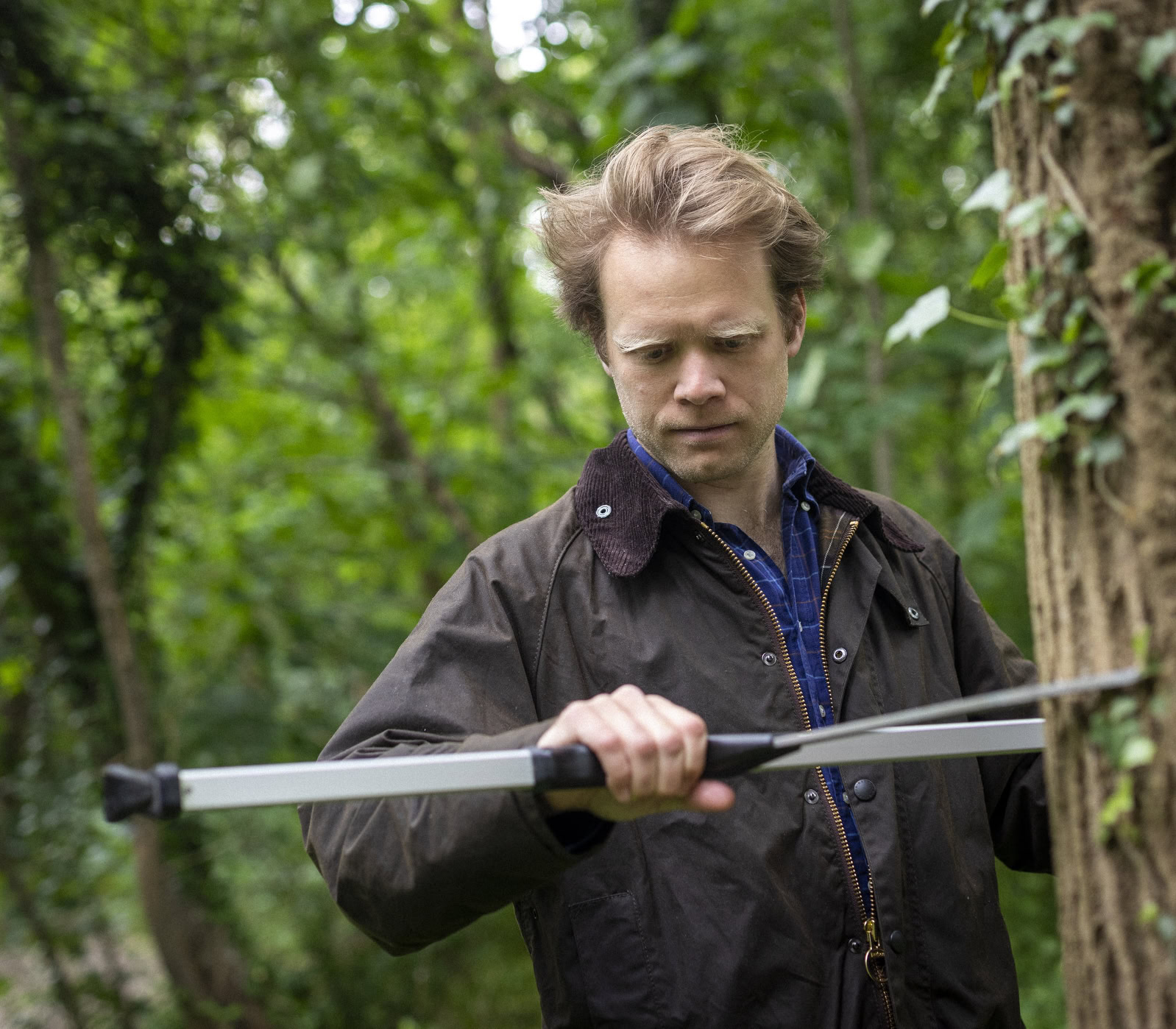
Honestly, when I was a student, I barely noticed the forest around me. I crossed it to get from one building to another or to the rugby field without paying attention. But HEC is still the reason Kloros exists. I met my business partner, Loïc Zellvegre, because he was married to one of my classmates, Allison Zellvegre (H.14). When I graduated from HEC, about a third of my friends went into finance, another third into consulting, and the last third started companies. So when Allison introduced us to her husband, who worked in forest management, it felt incredibly exotic to us. We immediately started asking him lots of questions. And it was fascinating, because Loïc is a highly technical expert, a real forest geek, but also someone with a great deal of perspective on the industry and on what does not work. At some point we thought: “What if we tried to find a solution?” That is how we eventually started working together. In a way, it is the classic HEC dream: finding someone who knows how to do something and helping them scale it.
So your goal was to manage forests differently?
Exactly. Today, two worlds coexist in forestry management. On one side, there is a highly industrial model, comparable to intensive agriculture. It relies on alternating clear-cuts and replanting cycles: you wait for trees to mature, then cut everything down at once. It is a brutal approach — and one that is heavily criticized today. Yet it remains dominant because of historical inertia and because it is simpler.
But there are alternative approaches. Continuous-cover mixed forestry, for example, has existed for a long time. We did not invent it, but it used to be marginal and is now becoming more popular again. People talk about uneven-aged stands or selection forestry — technical terms, but the core idea is simple: nature already does things very well, we just help it slightly. There is a phrase that summarizes this philosophy well: “Imitate nature, accelerate its work.” This is a form of forestry where trees are not planted artificially. An acorn falls, a shoot appears, and nature takes over. Our role is simply to guide the process. If there is a tree species we want to encourage, we will adjust the surrounding vegetation to provide the right amount of light or shade. It is forestry that works with nature rather than against it.
How do you measure the impact of your work? Do you use specific indicators?
It depends on the initial objective. Forests serve three main functions: economic (wood production), ecological (air, soil, and water purification), and social (quality of life and leisure activities). The way impact is measured depends on the goal. Economically, we can estimate the volume of timber based on the number and size of trees. Market value varies: oak might sell for €200 per cubic meter, while beech is worth three times less. From an ecological perspective, it is relatively easy to calculate how much carbon a forest plot captures. The social dimension is harder to quantify, but we can still ask people whether they are satisfied with the forest and track how that evolves over time.At HEC, the primary challenge is social. This is a place designed to welcome people, so enhancing the quality of the environment is crucial. Economic profitability is very secondary. The ecological aspect, however, is essential in terms of image: HEC must set an example in the management of its natural spaces. The forest should become a showcase for the School’s environmental commitment. Very few campuses in the world are this heavily wooded — it is quite exceptional. Even if, as students, we do not necessarily realize it. I would love for students to become more aware of this natural richness, perhaps through outdoor activities — or even Thursday-night parties in the forest.
Are there wild animals in the campus forest?
Of course. When I was a student, we once received an email warning us that a wild boar hunt would be taking place because there were too many boars on campus at the time. We were advised not to go for a walk if we did not want to be knocked over by a piglet — or by a hunter. Animals are part of the forest — and therefore part of the daily reality of forestry management. One of the ecological goals of forest management is precisely to preserve suitable habitats for different bird species and small mammals. Several indicators, such as biodiversity potential indexes, allow us to assess whether a forest encourages the development of these species. But animal populations sometimes also need to be regulated. Overpopulation — especially of large animals — can destabilize ecosystems. In France, there is a genuine imbalance between forests and wildlife populations: there are often too many large animals, just as there were too many wild boars on the HEC campus.
Wild boars eat acorns, while deer and roe deer feed on buds and young shoots. If these animals become too numerous, they can damage the natural regeneration of vegetation. Beyond the often divisive debate around hunting in France, there are times when these populations need to be regulated in order to preserve the forest itself.
Conversely, some species can also be encouraged by preserving specific habitats. For example, we sometimes leave dead trees standing instead of cutting them down, because they provide habitats for woodpeckers and nesting birds. What we call “habitat trees” or “biodiversity trees” are also important: when a large branch breaks and creates a cavity, bats may settle there. Dead wood left on the ground is equally essential for insects. Entire ecosystems depend on dead wood. There is a phrase — perhaps slightly too marketing-oriented for my taste, but fundamentally true — that says: “Nothing is more alive than a dead tree.” It is exaggerated, but the reality is that even after a tree dies, it continues to sustain entire ecosystems and enrich the soil.
Kloros
Founded in 2020 by Loïc Zellvegre and Victor Chevrillon (H.14), Kloros takes its name from a Greek word referring to a specific shade of green — the green of young shoots. The same Greek root appears in words such as “chlorophyll” and “chloroplasts,” the plant cell components responsible for photosynthesis.
The company now manages 11,000 hectares of forest across France and also advises investors seeking to invest in forests. Keen to align its compensation model with the interests of investors and forest owners, Kloros charges for its management services according to the surface area of forest managed rather than based on operating revenues — a system that can encourage excessive logging at the expense of the forest itself. Likewise, its investment advisory fees are calculated according to the surface area purchased rather than as a percentage of the transaction value, in order to avoid incentivizing high-priced acquisitions.
Kloros currently employs 24 people and generated more than €1 million in revenue in 2025.

Published by La rédaction