
24 hours with Pierric Duthoit (M.99)
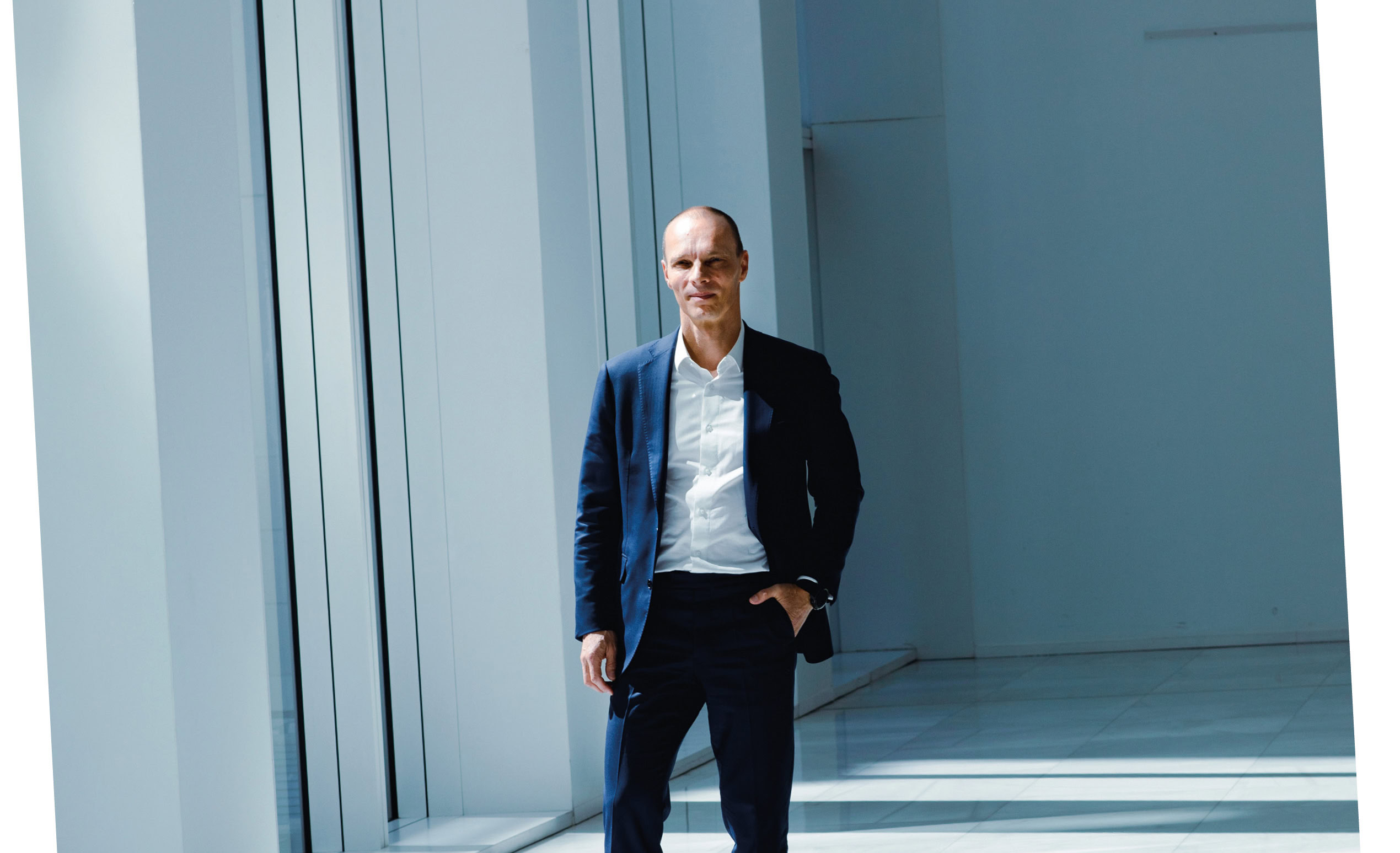
As head of Meta France, Pierric Duthoit (M.99) explores the digital world of tomorrow — its technologies, uses, and ability to convey messages. A hyper-connected vision.
Just steps from the Palais Brongniart, in a corner of central Paris still marked by its financial history, little reveals what happens behind the white façades of an anonymous office building. No logo, no signage — only the discreet flow of employees coming and going. This is where Pierric Duthoit has established the headquarters of Meta France. The discretion feels almost paradoxical for a company that has become one of the defining infrastructures of everyday digital life. Meta’s ecosystem now spans social platforms — Facebook, Instagram, WhatsApp, Messenger, Threads — as well as AI, immersive technologies, Meta Quest headsets, and connected glasses developed with Ray-Ban and EssilorLuxottica. Through this mix of networks, content, hardware, and AI, Meta is trying to build digital experiences that are more integrated, more continuous, and less dependent on smartphones. Following Pierric Duthoit means tracing the path of a man in constant motion. Trained at Saint-Cyr and later at HEC Paris, he moved from defense to tech, from Russia to the United States, always navigating moments of transformation. At Google, Coty, and now Meta, he has witnessed each major digital shift: online advertising, the mobile revolution, and the rise of artificial intelligence.The scale of Meta’s influence is reflected in the numbers. In 2024, its platforms were associated with €213 billion in economic activity and 1.44 million jobs across the European Union. In France alone, they accounted for €34.65 billion in activity and approximately 235,000 jobs.
7:00 am Morning run
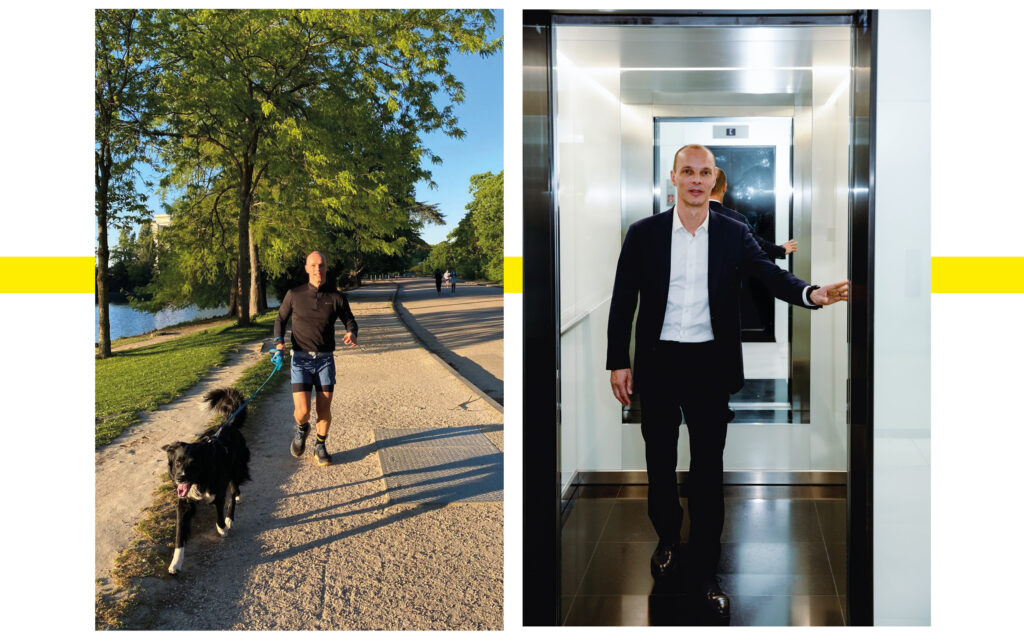
In the lingering silence of a Paris morning, Pierric Duthoit leaves his apartment dressed for a run. More than a habit, sport is a discipline for him — a framework that structures the rest of his day. Along the paths of the Bois de Boulogne, just steps from his home, he finds familiar ground, far from the screens, meetings, and strategic decisions of Meta.Leading the way is Léo, a border collie–golden retriever mix adopted from the SPA. The pair moves at a steady pace. Pierric describes these runs less as physical effort than as a transition space. A man of action, father of four, trained to lead and make decisions, he long maintained an intense level of physical activity: ultra-trails, half Ironmans, even a marathon on ice back when he was living in Russia. Today, the rhythm has changed. In his fifties, he no longer seeks crowds or overcrowded starting lines. Instead, he prefers the repetition of forest trails, the steadiness of breath, and the quiet presence of his dog — a way of staying in motion without chasing performance.
8:30 am Breakfast and focus
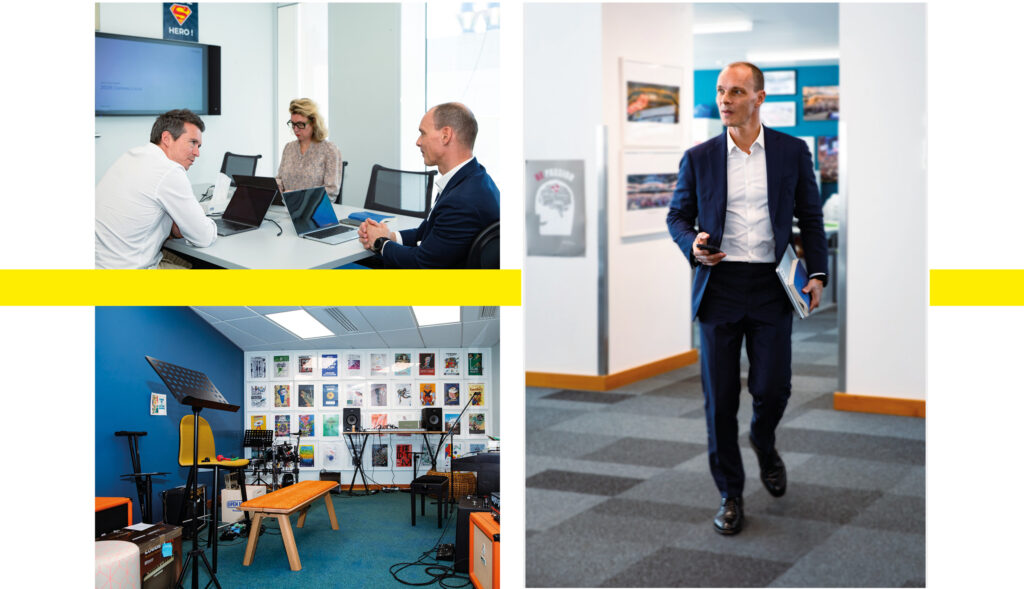
Inside the glass-roofed atrium of Meta’s Paris headquarters, the cafeteria slowly comes to life. Pierric sits down with Sihame, his assistant of one month, a “boomerang employee” returning to Paris after a first stint in London. Eggs, fruit, unlimited coffee, gym downstairs, snacks and ping-pong upstairs — the space recreates a slice of Silicon Valley in Paris’s 2nd arrondissement. Sihame recently reviewed Pierric’s schedule using Meta’s internal AI tools. “He barely had any breathing room left,” she explains. “AI helped visualize the meetings, the durations, the teams involved. Then we rebuilt some focus into the schedule.” “My days had become entirely back-to-back,” Pierric admits. Between bites, they refine the day’s agenda: meetings, travel, video shoots. Meanwhile, he scans Les Échos, glances at Le Monde, and checks his internal AI briefing. In this ultra-functional environment, even breakfast becomes a productivity tool and the cafeteria becomes an informal command center, where the day is shaped as much as it begins.
10:00 am Before Cannes Lions
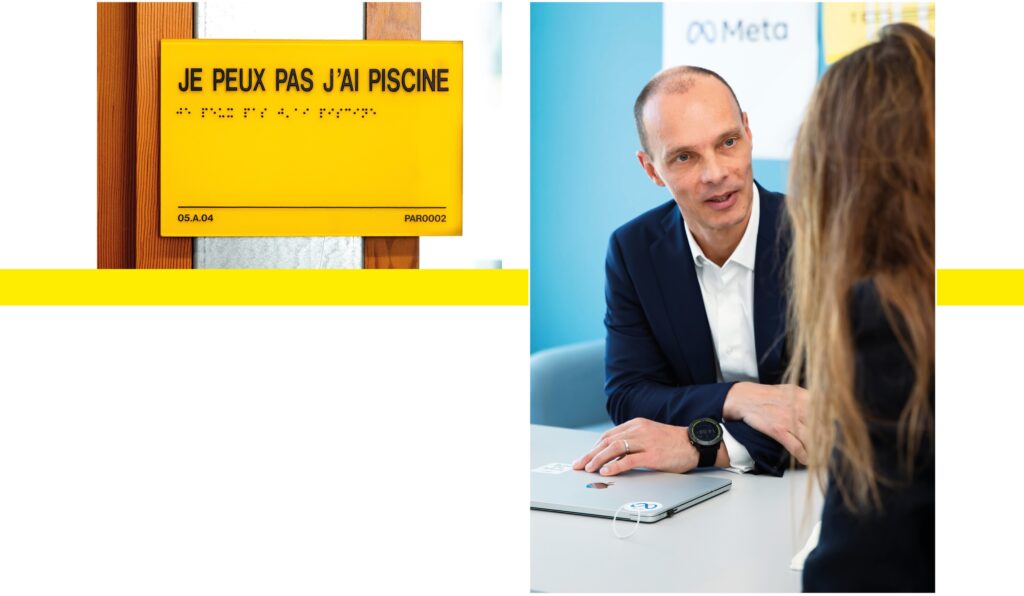
“Paris, je t’aime,” “Amélie Poulain”, “j’peux pas j’ai piscine” — inside one of Meta’s glass-walled meeting rooms, conversations revolve around budgets, events, and end-of-year priorities before shifting to another topic: the Cannes Lions International Festival of Creativity. Every June, Cannes becomes the global crossroads of advertising and creativity. Brands, agencies, and tech giants gather to showcase campaigns, analyze trends, and define the language of tomorrow’s advertising. For Meta, the stakes are clear: demonstrating how AI, video, and new social formats are reshaping the relationship between brands and audiences. “Everyone is there,” Pierric explains. “Americans, Europeans, Asians, South Americans. For five days, it’s nonstop demos, client meetings, and discussions around our latest AI developments.”
1:00 pm Lunch with Jacquemus
At lunchtime, Pierric heads to the Palais-Royal district to meet the teams of Jacquemus. Around the table, discussions focus on visibility, creators, immersive experiences, and the challenge of maintaining a strong identity in a world saturated with images and recommendation algorithms. Over the past few years, Jacquemus has become one of Instagram’s most closely watched French brands, turning each runway show into a viral event. For Meta, the relationship goes beyond traditional media buying: the conversations are as much about creation as they are about audience behavior. Pierric listens carefully, asking questions about international audiences, high-performing formats, and the growing use of generative AI tools. Again and again, the discussion returns to one idea: campaigns no longer live only in magazines or on runways. They circulate, fragment, remix, and become shared cultural language.
4:30 PM Demo at Station F
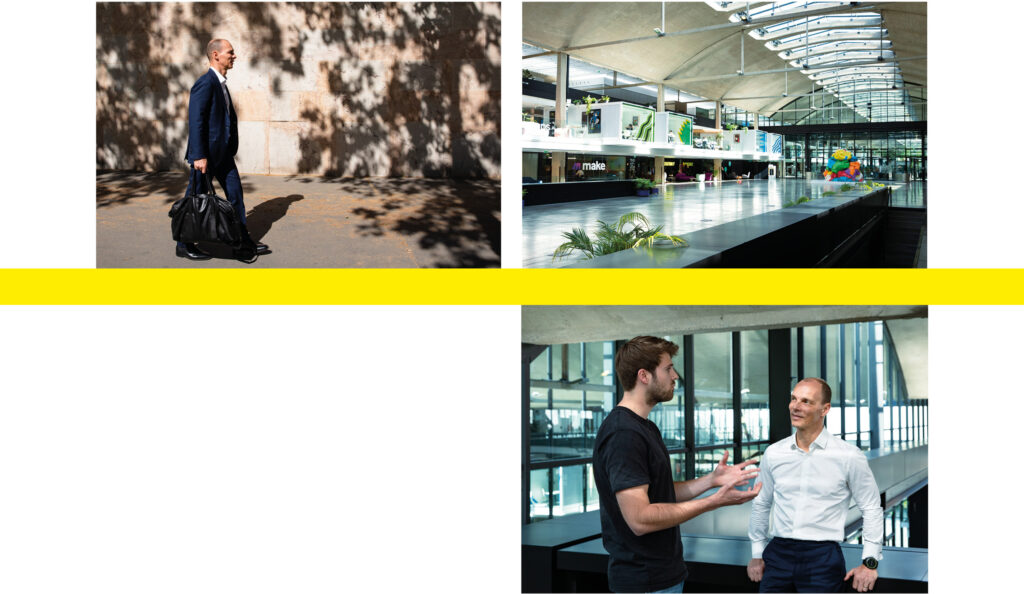
Paris Metro, Line 14. No driver, few stops. The journey linking Meta to Station F in Paris’s 13th arrondissement already says something about the world Meta is trying to build. For several years now, Meta has been exploring a new idea: moving computing beyond the smartphone and into the user’s field of vision. First came the Ray-Ban Meta glasses — discreet eyewear capable of filming, listening, responding to voice commands, and interacting with embedded AI. Then came the Oakley Meta Vanguard line, designed for more athletic and intensive uses, capturing movement and extending physical experiences into the digital world. In both cases, the logic is the same: making technology less visible. At Station F, inside the HEC Incubator spaces, Pierric Duthoit meets Thomas Brisson, cofounder of Oorion. The start-up develops assistance solutions for visually impaired users and recently integrated its technology into the Ray-Ban Meta ecosystem, turning connected glasses into real-world navigation tools. “It’s an app running through the phone — people already use smartphones every day,” explains the entrepreneur, before recalling the story that inspired the project: “A blind woman told us how she dropped her keys and spent fifteen minutes on all fours trying to find them.” From this ordinary but frustrating situation emerged a broader technological ambition: using computer vision to help identify everyday objects — keys, doors, train platforms. Today, Oorion already claims 50,000 users and rapid growth. Pierric tests the device himself. The glasses activate, the embedded camera captures the surroundings, and information is processed in real time. The project fits into a wider movement toward integrating Meta connected glasses into practical, everyday uses. Thomas Brisson summarizes it simply: “The advantage of Ray-Ban Meta is that they’re already widely adopted… users feel comfortable wearing connected glasses in daily life.” During the discussion, the question of competition arises. Brisson distinguishes OOrion’s approach from Be My Eyes: “Their model relies on a real person remotely guiding the user. Ours is based on embedded AI.” Beyond the product itself, what interests Pierric Duthoit most is the integration into real life. Far from flashy demos, he focuses on frictionless adoption. “What’s interesting is that the technology disappears. You stop thinking about the tool.” Then, after a pause: “The real issue isn’t the technology itself — it’s its ability to blend seamlessly into everyday life.” After winning over SNCF Connect & Tech, which now offers OOrion’s services to visually impaired users, the start-up is already looking toward new markets.
8:00 PM An evening at L’Olympia
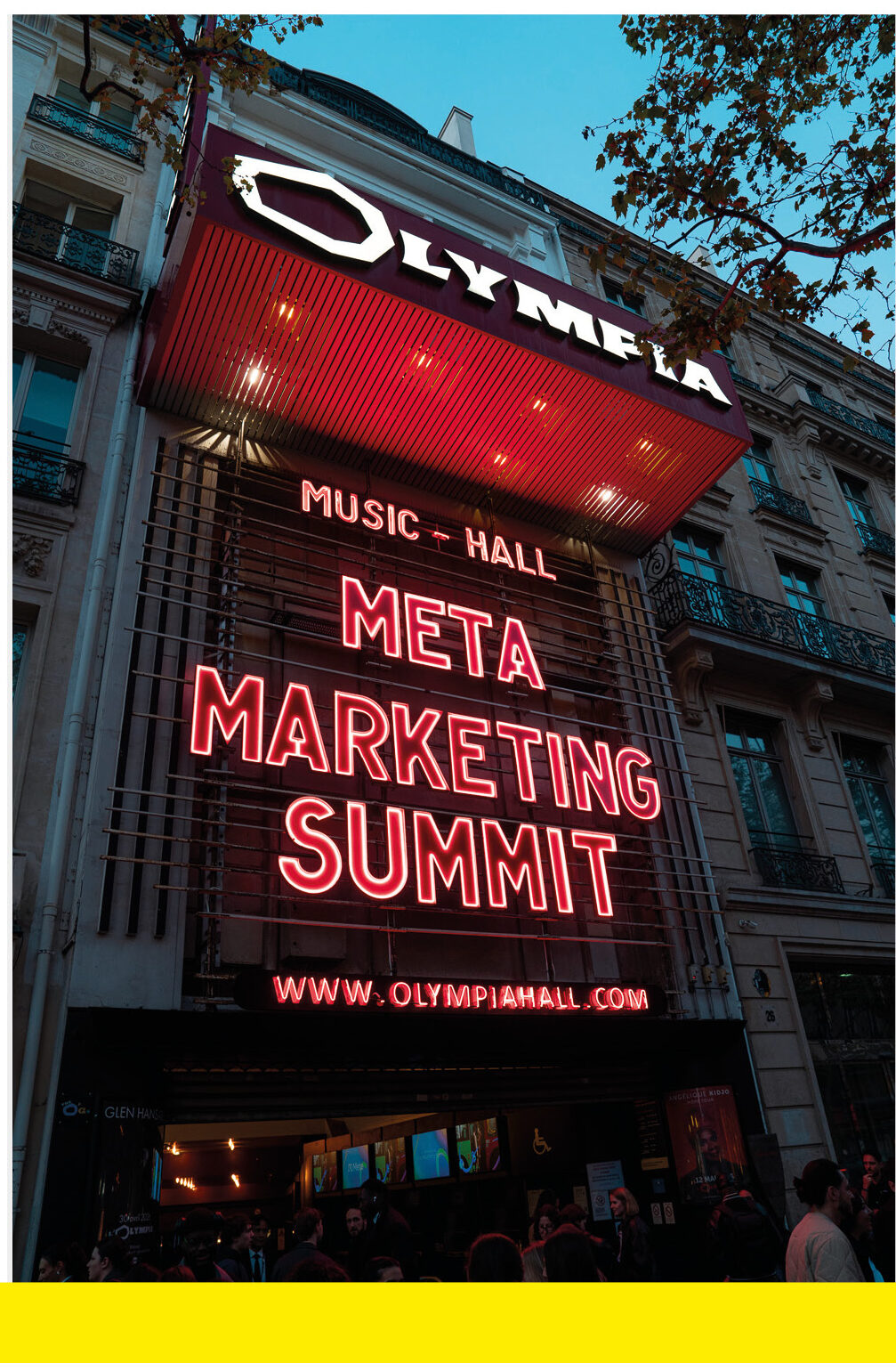
Night falls over Paris’s Grands Boulevards and L’Olympia, where Meta is holding its annual flagship event. Advertisers, agencies, and decision-makers gather to discuss the transformations already reshaping their industries. Wristbands, printed tickets, welcome bags — 1,200 guests fill the venue. On the walls, the posters are not for artists but for brands invited on stage: Renault, Accor, Samsung. On stage, Pierric Duthoit opens the evening with a speech that feels almost programmatic. “AI is here. And we are all augmented. At Meta, we have built an AI that has become an engine for discovering the world. It continuously identifies the moments that truly matter to your audiences. In a world where attention is increasingly expensive, performance no longer depends on spending, but on your ability to feed these systems.” He pauses before continuing: “AI always brings us back to what matters most: people. They are who your customers watch — and who your future customers will continue to watch. Familiar faces now carry more weight than official messaging.”
For ninety minutes, brand representatives and influencers take turns on stage, decoding new attention dynamics and outlining a communication landscape where technology
is no longer just a tool, but a fully integrated component of the message itself. Then, almost unexpectedly, the conference turns into a concert: DJ Mosimann and singer Suzane electrify the stage. L’Olympia becomes a performance venue once again. Around 10 p.m., the last guests spill back into the wet streets of Paris. Another evening in a future that never stops moving.

Published by Daphné Segretain