
20 years in China: how HEC Paris has grown alongside an economic powerhouse
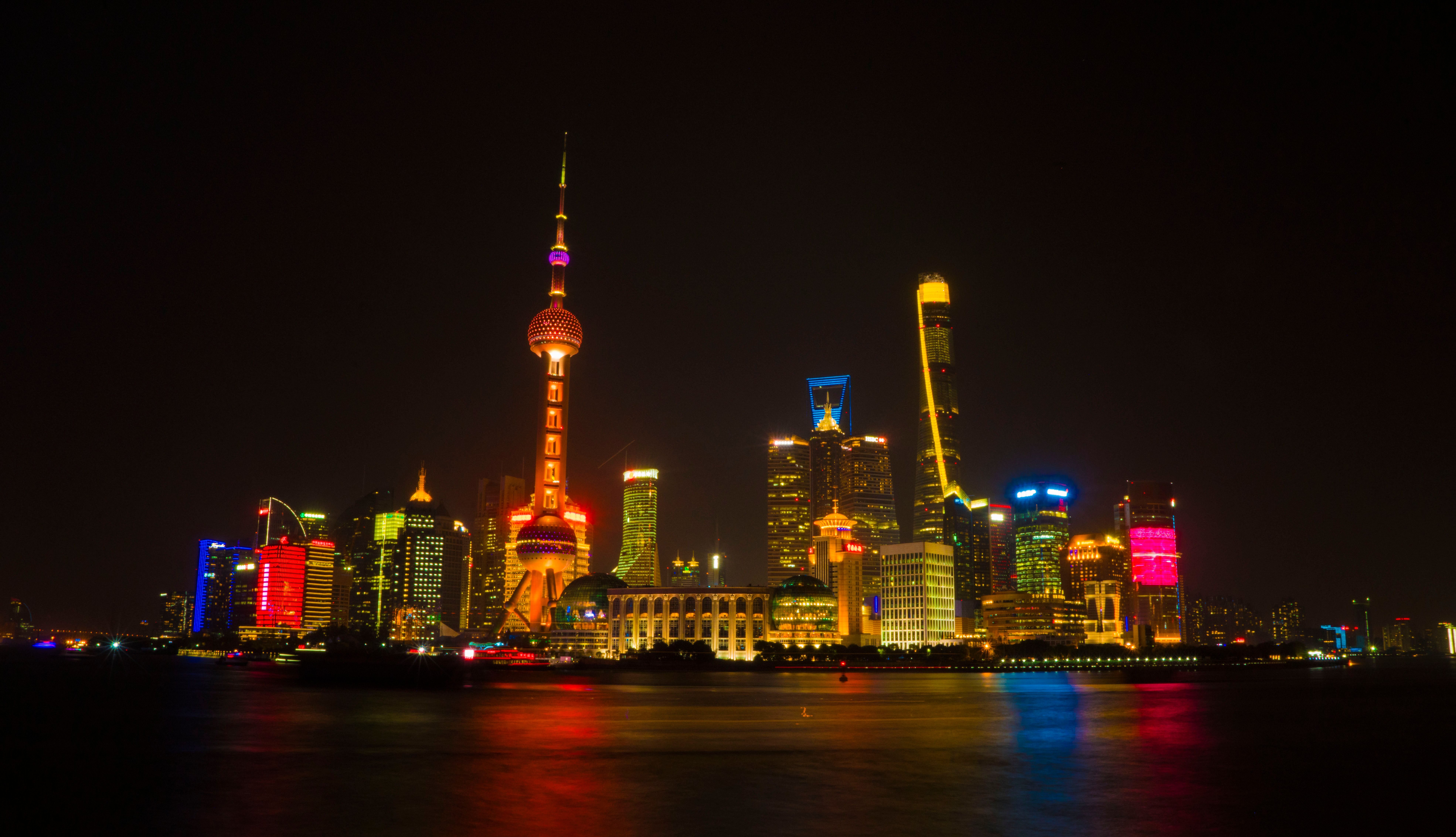
Since 2006, HEC Paris has built far more than an academic presence in China. By supporting successive generations of Chinese business leaders, the School has gained a unique vantage point on the country’s extraordinary economic transformation. As its China office celebrates its 20th anniversary, we look back on a journey that tells the story of both HEC Paris and a China whose rise has reshaped the world since the dawn of the 21st century.
Some anniversaries are about more than simply marking a milestone. The 20th anniversary of HEC Paris’s presence in China is one of them. It tells the story not only of a French business school establishing itself abroad, but of two decades of sustained dialogue between two business cultures, two approaches to management and two worlds that have grown ever closer.
When HEC Paris opened its Beijing office in 2006, China had only recently joined the World Trade Organization (WTO). The country was rapidly opening up its economy, foreign investment was pouring in, and Chinese companies were discovering the demands of international business. The need to equip a new generation of business leaders was growing fast, while the principles and practices of global management were still taking shape. Against this backdrop, HEC Paris, under the leadership of its then Dean, Bernard Ramanantsoa (MBA.76), decided to establish a permanent team on the ground. Its ambition was clear: not to export a French model, but to build a bridge between two rapidly evolving economic ecosystems.
A european first
The story began with an unprecedented initiative. HEC Paris became the only leading European business school selected to launch its Executive MBA directly in China, in partnership with the training center of the State-owned Assets Supervision and Administration Commission (SASAC).
For the first time outside France, HEC Paris deployed its entire academic model: programs, faculty, teaching standards and degree-awarding requirements. Every month, professors travelled the 10,000 kilometers between Jouy-en-Josas and Beijing. Classes were delivered with simultaneous interpretation to ensure that language was never a barrier to learning — a remarkable logistical undertaking at a time when international programs were still relatively rare in China.
Other institutions soon joined the initiative, including the training center of the National Development and Reform Commission (NDRC), broadening the program’s reach to executives from both private companies and international groups.
Behind HEC Paris’s decision to establish a presence in China lay a fundamental conviction: management is not something that can simply be exported. It is shaped through dialogue between local realities and international best practices.
Keeping pace with a changing economy
As HEC Paris put down roots in China, the country itself was transforming at extraordinary speed. Urbanization accelerated. Digital giants emerged. Manufacturing companies moved up the value chain. And the domestic market became one of the most dynamic in the world.
Chinese business leaders were changing too. No longer simply looking to learn from Western standards, they increasingly wanted to develop models of their own. HEC Paris quickly understood that there could be no one-size-fits-all response.
Its teams went out into the field, visiting factories, meeting executives and observing production lines and new ways of organizing work. International case studies gradually made more room for situations drawn directly from the experience of Chinese companies.
This ability to adapt became one of the hallmarks of HEC Paris’s China office. Rather than applying ready-made formulas, the School sought to translate the broader principles of management into practical solutions that addressed the realities and needs of local businesses.
An era of partnerships
A new chapter began in 2012 with the launch of a degree program developed in partnership with Zhejiang University, one of China’s most prestigious academic institutions. Approved by the Chinese Ministry of Education, the program enabled participants to earn both a Chinese and a French degree — a powerful symbol of an academic partnership that now extended well beyond executive education. More than 300 business leaders would graduate over the course of this first decade.
At the same time, HEC Paris’s international reputation continued to grow across Asia. Universities in Hong Kong, Taiwan and Shenzhen chose the Jouy-en-Josas campus to host international modules for their Executive MBA programs. Partnerships multiplied, spanning both public institutions and major industrial groups. HEC Paris also expanded its custom executive education offering, developing programs tailored to the strategic challenges facing leading Chinese companies.
China Resources Group led the way in 2010, followed by China Energy Investment Group, State Power Investment Corporation, Bank of China and ICBC, among others. Gradually, HEC Paris evolved from a provider of executive education into a trusted partner for strategic thinking.
Weathering the pandemic, looking to the future
As elsewhere around the world, the Covid-19 pandemic brought international exchanges to an abrupt halt. Yet HEC Paris’s China office was determined not to put its activities on hold. Within days, alumni mobilized to deliver protective equipment to hospitals in Wuhan. Events moved online, courses were adapted, and virtual gatherings helped maintain ties across the alumni community. Paradoxically, this ability to respond quickly also laid the groundwork for the recovery to come.
From 2023 onwards, exchanges resumed with renewed momentum. HEC Paris Dean Eloïc Peyrache, accompanied by representatives of the HEC Foundation, HEC Alumni and the School’s international relations team, travelled across China, meeting with leading universities including Tsinghua, Fudan and HKUST, as well as iconic companies such as Alibaba. A strategic partnership was signed with the Zhejiang Entrepreneurs Association, while custom programs once again brought Chinese executives to the Jouy-en-Josas campus.
HEC Paris also continued to expand into new fields, notably with the Master in Media, Art and Creation (MAC), developed with academic support from the Tsinghua Academy of Arts & Design.
Bridging two worlds
Over the past 20 years, China has changed profoundly. So has HEC Paris. The School arrived in a country eager to understand the rules of international management. Today, it works alongside an economy that innovates, invests and increasingly exports models of its own.
This evolution ultimately tells another story: that of a School that chose to see internationalization not simply as geographic expansion, but as an opportunity to rethink how business leaders are educated. Over the years, the China office has become a meeting place for entrepreneurs, researchers, students, alumni and policymakers — a platform where French and Chinese perspectives and experiences come together around a shared ambition: to prepare leaders capable of navigating an increasingly interconnected world.
At a time when artificial intelligence, environmental transitions and geopolitical tensions are reshaping the global economy, the ability to build bridges has never been more valuable. The first 20 years of HEC Paris’s presence in China tell a story of long-term commitment, patience and adaptability. Above all, they mark the beginning of a new chapter.
An anniversary gala in Shanghai
Beyond the anniversary itself, HEC Paris will also be celebrating a community that has grown considerably over the past 20 years. Now firmly established in Beijing and Shanghai, as well as in southern China between Hong Kong and Shenzhen, the network brings together several hundred Chinese and international alumni in senior positions across a wide range of sectors, from industry, finance and technology to consulting, media and the creative industries.
Among them are Michel Ye, the first Chinese CEO of Michelin China; Jiang Yuan (E.10), founder of Pure Technology; Xu Yingzhuo (E.07), co-founder of Haid Group; Thierry Labarre (H.89), CEO of Mazars in China; Alexandre Xing (H.84), HEC Paris’s first Chinese graduate, who graduated in 1984; Zhentao Wang (E.06), founder of Aokang Group; Charles Cheng (MBA.89), Chairman of SG and a member of the HEC Advisory Board in China; and actress and producer Zhu Zhu (E.24).
To mark 20 years in China, HEC Paris will bring its community together in Shanghai on October 9 for an anniversary gala celebrating French gastronomy. Many of the corporate partners that have supported HEC Paris in China will also attend, making the evening a highlight of Franco-Chinese academic and business relations. Companies interested in taking part in the event can contact Pauline Feutrie, HEC Alumni’s Director of Partnerships (pauline.feutrie@hecalumni.fr).
The evening will feature a dinner showcasing French cuisine, accompanied by entertainment and several key institutional moments. Representatives of OneHEC governance — the School, HEC Alumni and the HEC Foundation — will each take the stage to share the common vision guiding HEC Paris’s international development.
Guests will also hear from Alexandre Xing, HEC Paris’s first Chinese graduate, as well as alumni from the EMBA China Track, whose personal journeys illustrate the lasting impact of 20 years of cooperation between HEC Paris and China.

Published by Daphné Segretain