

Flore Cousin (H.11): Using AI to Unleash Children’s Imagination
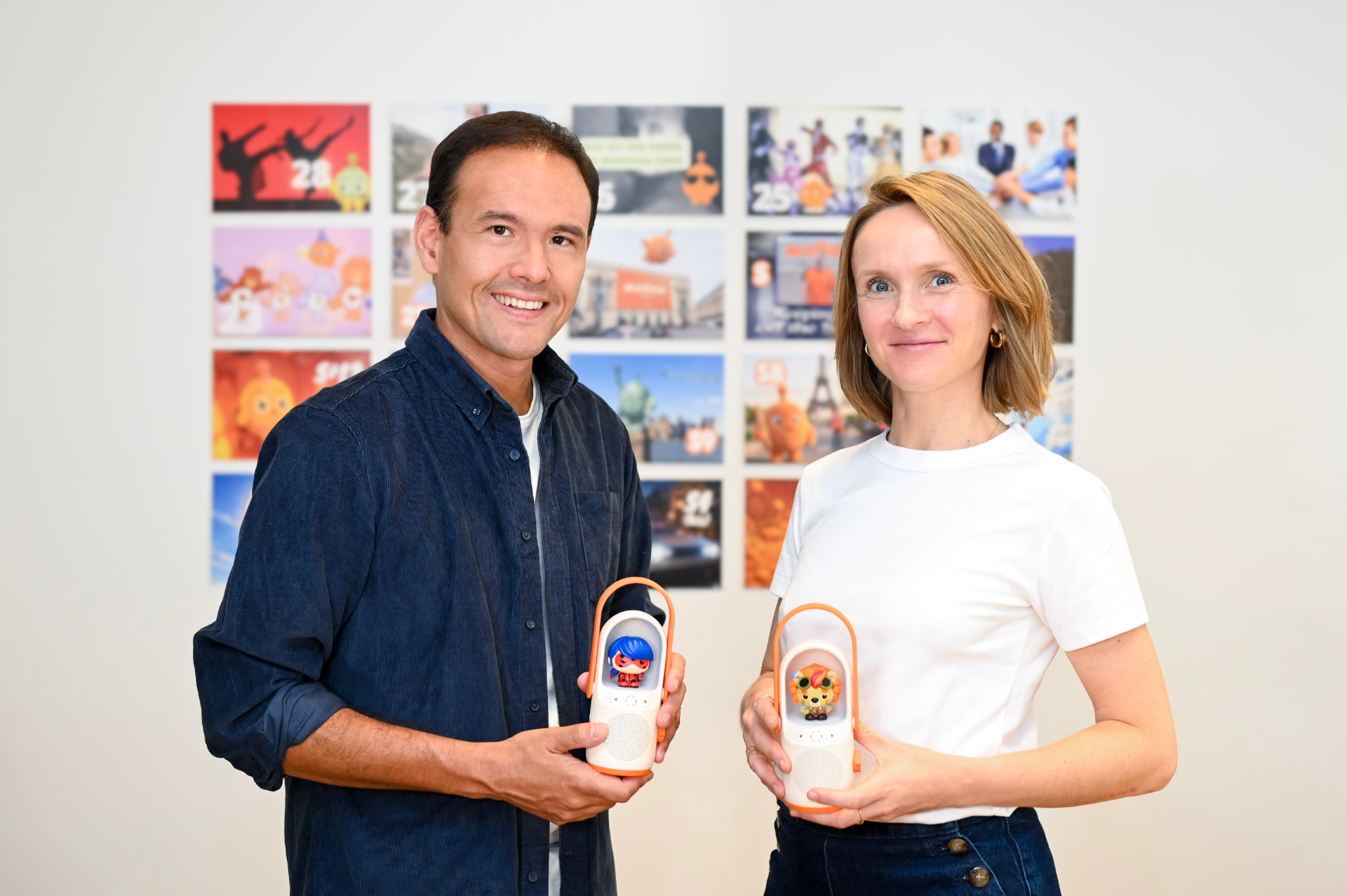
Co-founder of Mallow alongside Cédric O (H.06), Flore Cousin is determined to harness artificial intelligence to support children’s development. Through an interactive audio play device, she aims to stimulate language skills, creativity and self-confidence without adding another screen to families’ daily lives. What began as a mother’s personal experiments has grown into an entrepreneurial venture that has raised €11 million.
From Goats and Chickens to Tech Startups
Before setting out to reinvent children’s play through artificial intelligence, Flore Cousin grew up in a village of 2,000 inhabitants in northern France, surrounded by “chickens and a horse in the garden.” Far from the traditional academic paths of Paris’s leading preparatory schools, she attended an agricultural and horticultural high school that also offered a general education track. She then enrolled at HEC after completing her preparatory studies at Saint-Jean de Douai, driven by the determination that has always characterized her.
At HEC, she made the most of several international opportunities, spending six months each in Los Angeles, Shanghai and Sydney. After graduating, she began her career in London at Procter & Gamble, where she learned to put consumers at the heart of every decision. Understanding their needs, habits and motivations would become one of the defining threads of her professional journey.
After a stint in consulting at Boston Consulting Group, she joined a small coaching company, followed by Alma, a specialist in buy-now-pay-later payments. At the fintech company, she witnessed a startup scale up at remarkable speed, growing from 40 to 400 employees in just eighteen months. The experience gave her valuable insight into the drivers of growth, as well as the mistakes that inevitably come with building a young company. “I thought to myself: this is great, I’m adding more strings to my bow, I’m observing, and I’m making mistakes too.” Her entrepreneurial ambition, after all, was nothing new. “Ever since my earliest childhood memories, I’ve been creating products.”
At Alma, the idea of launching her own company gradually became impossible to ignore. She eventually left to pursue an entrepreneurial project with a former colleague. Although their partnership came to an end, Flore Cousin continued exploring new ideas. Her longstanding interest in children’s education soon converged with the emerging possibilities of voice-based artificial intelligence.
When a Bedtime Story Becomes an Entrepreneurial Venture
By then, Flore Cousin was already a mother of two young boys. She was particularly interested in education, self-confidence, creativity and imagination. When the first voice-generation models began to emerge, she started experimenting at home, creating stories, podcasts and books for her children, using AI in particular to help with writing and illustrations. The boys couldn’t get enough. But producing all this content was time-consuming. “Mum actually has a whole company to build on the side,” she jokes.
Behind the anecdote lay a growing intuition: what if technology could allow children to extend their explorations independently, without constantly relying on an adult or having to sit in front of a screen? Flore began developing prototypes and interviewed around forty parents to understand their expectations. She was exploring a concept that was still relatively unfamiliar in the toy industry: an experience in which children would not simply listen, but speak, make choices and shape the course of a story.
At the same time, Cédric O was independently considering a similar project. Flore’s brother, who was friends with the former French Secretary of State for Digital Affairs, suggested for several months that the two meet. When they finally sat down for lunch, the entrepreneurs discovered that they shared the same vision: putting technological advances and scientific knowledge about child development to work in the service of education.
Their respective interests proved complementary. Flore was particularly passionate about imagination, creativity and self-confidence, while Cédric O was more interested in reasoning and logical skills. Through discussions with researchers, they came to understand that these abilities were closely connected to language development. Yet in a classroom of 25 or 30 pupils, a teacher simply cannot devote time to an individual conversation with every child. Traditional audio content allows children to listen, but rarely gives them the opportunity to speak. This revealed an opportunity worth exploring.
Before taking the plunge, the two future partners spent several weeks getting to know each other. They asked one another the difficult questions, went on long walks together and even had lunch with each other’s spouses. Sharing a common vision was not enough: they also needed to know whether they could work together over the long term. Mallow was founded in September. Just a few months later, the project had already attracted investors.
Not a Storytelling Box, but a New Way to Play
Mallow is an audio-based play device designed for children aged 4 to 10. Children place a figurine on the device and enter a world in which they become the hero. To move forward, they must speak, answer questions, solve problems and come up with their own solutions. In a fantasy adventure, for instance, a character might suddenly shrink to the size of an insect and have to cross a river. Building a raft, asking ladybugs for help or bouncing across a spider’s web: several options are available. The story evolves according to the child’s choices.
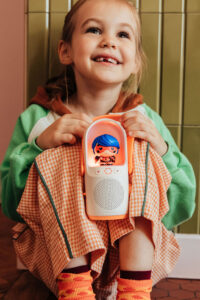
The difference from a traditional storytelling device is fundamental. Whereas conventional audio stories mainly encourage children to listen, Mallow aims to spark exchanges and give children the ability to influence how the game unfolds. “We’re inventing video game consoles,” Flore Cousin explains. Designing an interactive game involves much more than simply adding a question to a story: it requires carefully considering branching scenarios, possible answers and the player’s progression.
To achieve this, Mallow brings together children’s authors, storytelling and game-design specialists, as well as cognitive science researchers. The company also relies on a scientific advisory board chaired by Grégoire Borst, Director of the Laboratory of Psychology of Child Development and Education at Sorbonne University. Each game has specific objectives: developing language skills, expanding vocabulary, exercising memory, stimulating reasoning or encouraging imagination.
Flore oversees game development and the experience offered to children. Cédric O is responsible in particular for the technical teams, finance, strategy and partnerships. His media profile can help accelerate the company’s visibility, but the co-founder is keen to emphasize that their responsibilities are clearly divided. “Our two roles are distributed very naturally in this way,” she explains. She has no intention of competing with her partner for the spotlight: she is leading a central part of the product’s development.
Mallow has raised €11 million to develop its project, with support notably from Fred Potter, an experienced hardware entrepreneur. Building a physical product is an entirely different challenge from launching an app. The fundraising process also took on a very personal dimension: Flore signed the documents from her maternity bed while expecting her third child. Quite literally, a balancing act between family life and entrepreneurship.
AI, Yes, but Never at the Expense of Human Interaction
Allowing artificial intelligence to interact with children raises an unavoidable question: how far should we let machines into their everyday lives? On this point, Flore Cousin emphasizes one of the company’s founding principles. Mallow is not intended to become a conversational companion capable of discussing absolutely anything. The company deliberately ruled out the idea of a connected cuddly toy that could engage freely in conversation with a child, particularly because of the risks of emotional attachment and inappropriate responses to sensitive topics.
Mallow’s games have a beginning and an end, with characters and clearly defined objectives. Voice interaction takes place within a scenario designed by professionals, rather than through an open-ended conversation in which a child might confide their feelings to a machine. Safety is built into the product from the outset, with input from experts specializing in interactions between children and objects. In the first experience, the character Zorp makes it clear from the very beginning that he is not a real person, but a fictional character. Flore wants to ensure that this distinction is perfectly clear to young users.
This approach also reflects a personal conviction: Mallow should never replace books, bedtime stories or conversations with parents. Flore still reads stories to her own three children. She sees her product instead as a way to encourage children to speak, potentially supporting other learning processes, particularly reading. The real objective is to offer an alternative to screens, whose growing presence in children’s daily lives is a source of considerable concern for many parents and teachers.
AI is therefore not presented as a magic solution to educational challenges, but as a tool serving a broader ambition: giving children more opportunities to express themselves, think critically and invent. The challenge now is to demonstrate that this promise translates into real-world benefits as the product reaches more families.
Mallow is already looking beyond the French market. The United States is a major target, although international expansion will require adapting both distribution and content to local cultural expectations. In the longer term, the company is also considering relocating part of its production to Europe.
From a small village in northern France to international markets, Flore Cousin has never lost her childhood passion for creating things. Her ambition is not to make machines talk simply for the sake of making them seem more human. It is to use technology to encourage children themselves to speak, explore and invent.

Published by Daphné Segretain