Clémence Adrey (H.08), learning differently
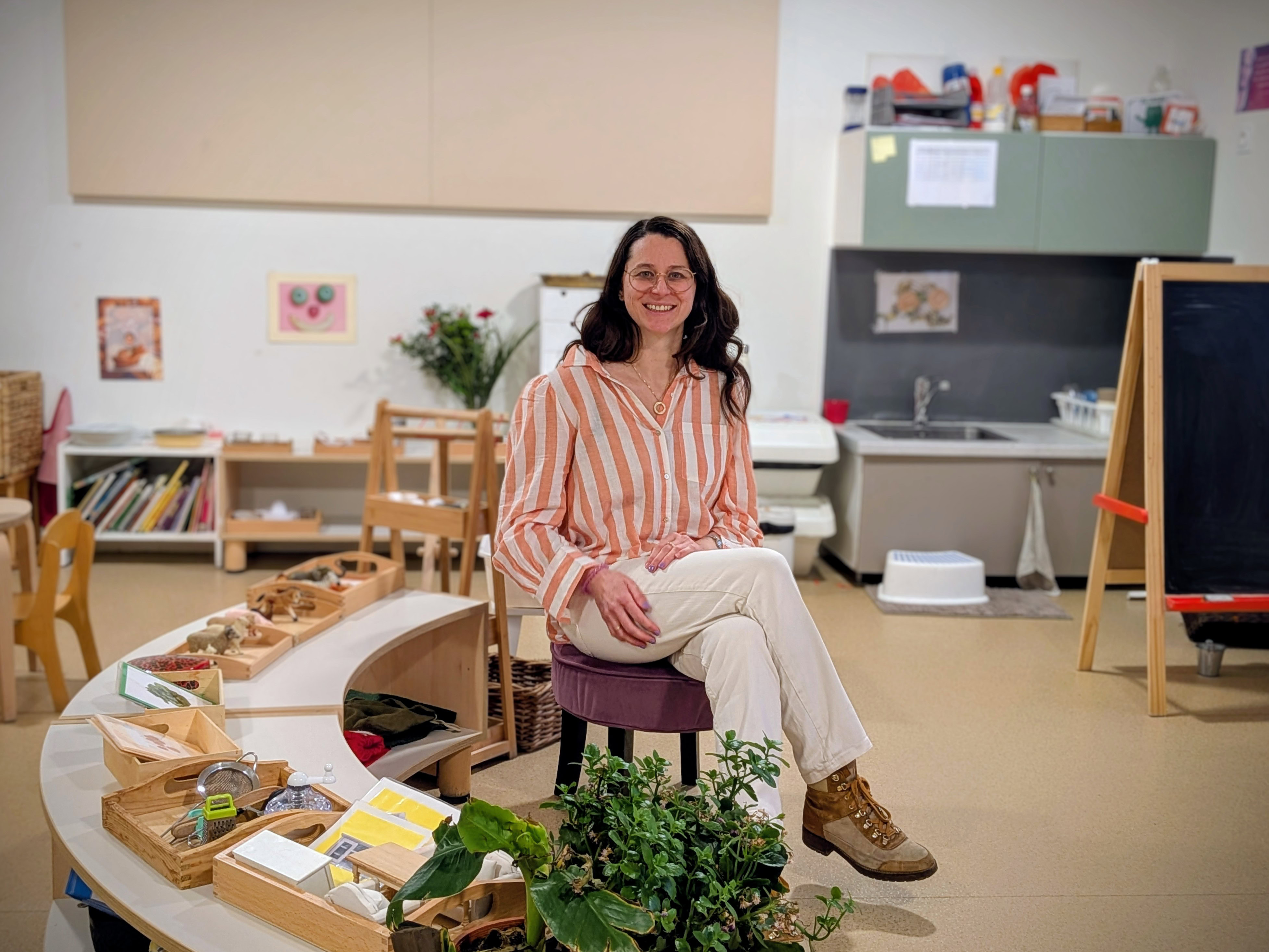
From industry to education, from HEC to the classroom, Clémence Adrey has followed a common thread: people. Now director of Les Petits Crayons and president of a group of bilingual schools, she champions a demanding yet joyful vision of learning.
At first glance, Clémence Adrey’s (H.08) path might seem classic: a “rather intellectual” family, a preparatory class, HEC. But very quickly, something resists. What guides her is not the promise of a neatly mapped-out career, nor the attraction of ready-made paths. It is a strong taste for the concrete, for human connection, and for places where one learns — sometimes where one least expects it.
HEC, or the school of human relations
Entering HEC in 2004, Clémence does not cite a favorite professor or a founding course. What she remembers is “the informal.” Campus life, the community, that very particular ability of the school to teach outside lecture halls. “You learn what it means to work with others, manage relationships, measure the impact of what you say and what you do. It’s already a form of professional life.”
If she had to single out one specific lesson, however, it would without hesitation be accounting — “the only truly pragmatic course, the one that’s always useful.” The rest, she says, belongs to an essential general culture: the kind that later allows you to understand, adapt, and grasp the issues when you enter the working world.
Health, industry, reality
Graduating in 2008, Clémence begins in consulting, on health-related topics: insurance, mutual funds, prevention. There she discovers a sector in transition, at a time when regional health agencies (ARS) are being set up and when chronic disease management is still in its early days. But consulting does not hold her for long. “I have a bit of a rebellious streak,” she smiles.
The turning point comes at Air Liquide Santé. There she finds what she was looking for: industry, the tangible, the product. As a product manager in a small entity of the group, she works on home respiratory ventilators. Specifications, exchanges with doctors, close collaboration with R&D. “You manufacture something that has a reality. And that, for me, changes everything.”
The moment of doubt… and the breakthrough
Then comes a more institutional, more political position, in a context of governance crisis. A lot of reporting, little meaning. Clémence wears herself out. And begins to wonder: what, deep down, keeps coming back in all her experiences ?
The answer is neither a sector nor a title. It is a recurring scene: “I always had a free chair in my office. People would come and sit down and tell me their life stories.” She then becomes more and more interested in management, in support, then in child development. And she makes a decisive link: the mechanisms are the same. But with children, she says, “you build, you don’t repair.”
Les Petits Crayons: a school like a community
The idea of creating a school is born almost by chance, from a joke exchanged with a childhood friend who is a teacher: “What if we opened a bilingual school?” By talking about it again and again, they end up doing it.
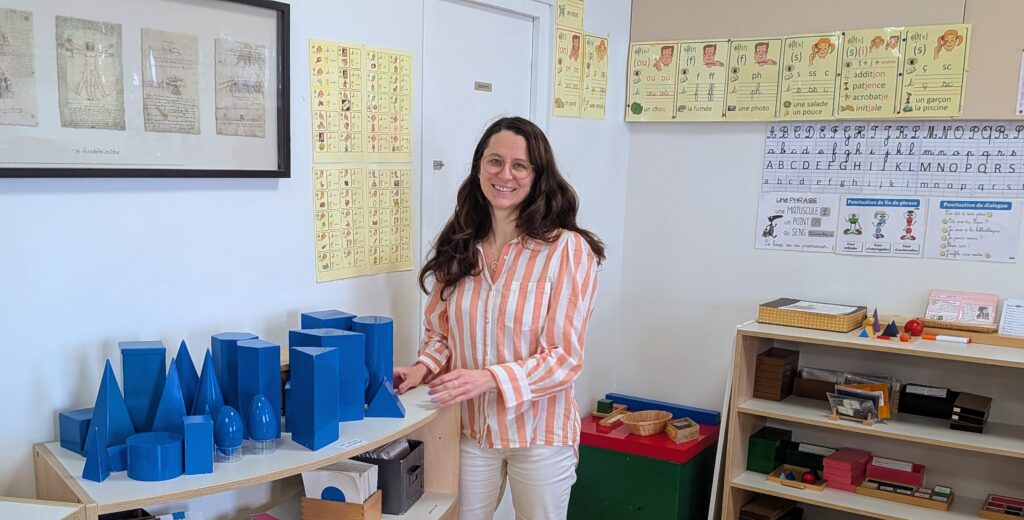
Les Petits Crayons opens its doors in 2020, in Paris’s 15th arrondissement. Two classes, a deliberately small structure, a hybrid spirit between daycare and school, and bilingualism lived on a daily basis. At the opening, right in the middle of Covid: five pupils. To keep going, they launch a leisure center on Wednesdays and during holidays. Word of mouth does the rest.
The pandemic makes the adventure even more singular: masks, certificates, lockdown periods. “It was intense, but very entrepreneurial. Moments under water, and sometimes two empty hours in the afternoon.” The founders hold on, carried by a simple conviction: stay small, stay free, build a real community.
Bilingualism, an intimate évidence
If the school is bilingual, it is not an opportunistic positioning. For Clémence, it is a personal évidence. From childhood on, English is not just academic: regular stays in England, conversations, songs, films. “I grew up partly in England, in my head and in my references.” Bilingualism is second nature — it had to be at the heart of the project.
Changing scale without losing meaning
In 2023, her associate leaves abroad. Clémence takes over sole direction of Les Petits Crayons. The school is running, but the desire for change returns — not to grow at any cost, rather to get moving again.
It is at this moment that she joins a group of independent bilingual schools as well, which she helps to structure and rename BIM School. She becomes its president in early 2025. The group today brings together five nursery and elementary schools, human-scale, with diverse pedagogies (Montessori, active pedagogies), but a common foundation: respect for the child’s rhythm, individualized pathways, close ties with families.
On Montessori, Clémence is nuanced. Admirative of the pioneer, she is wary of dogmatic drifts. “It’s not the method that makes pedagogical quality. It’s the teacher.”
Building a culture before building a brand
Her current project is not expansion, but coherence. A group identity built with the directors, shared training, teams that talk to each other, a shared culture. “The idea is that each school keeps its personality, while belonging to a readable and solid whole.”
This coherence is also reflected in the families welcomed: expatriates, neighborhood families, parents seeking an alternative to traditional school, especially for children who need to move, breathe, learn differently.
In this small world of education, paths often cross. Clémence likes to tell that her current “right-hand person,” who was already with her when the group was being structured, had previously created and run a Montessori school in Paris’s 9th arrondissement. A school where Clémence’s eldest did her entire kindergarten. “The world of education is tiny,” she smiles, “you always end up meeting again.”
Running a group of schools also means managing the unexpected. On the eve of the January 2025 term, a newly recruited pedagogical director suddenly resigns. In a few days, everything has to be reorganized, teams reassured, a solution found. Thanks to her network, Clémence finally recruits a new manager aligned with her values, who today shares her time between Les Petits Crayons and another school in the group. “It’s in moments like these that you realize how much management is a profession in itself,” she says.
For Clémence Adrey, education is above all a matter of collective responsibility. “Someone has to feel responsible for the child all day long.” A school like a small society, in short — but on a human scale.

Published by Daphné Segretain