

Campus project: “Recreating and magnifying a legacy”
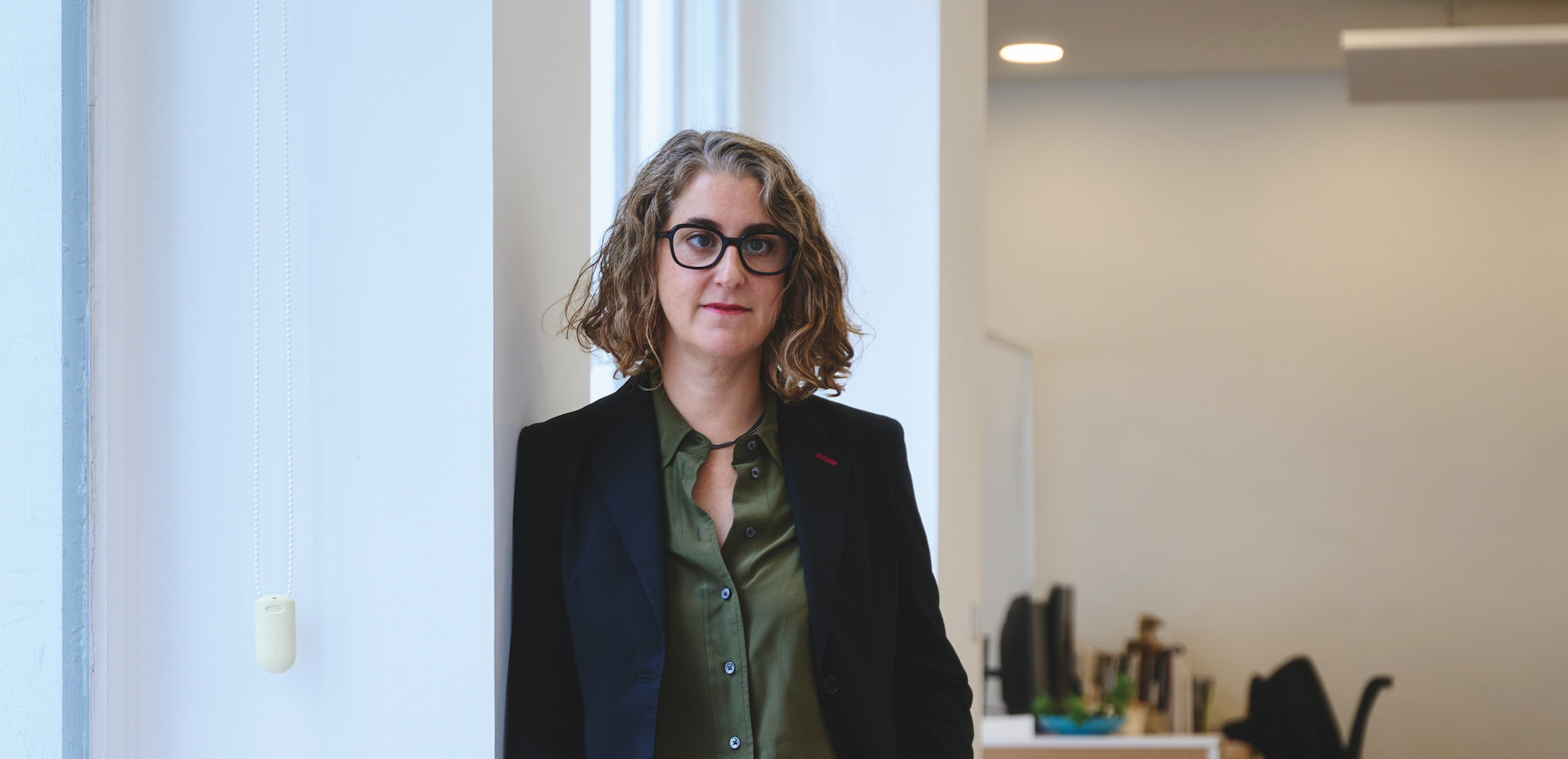
Designers of the French Pavilion for the 2016 Venice Biennale, the Art Explora artists’ residences in Tirana (Albania), and the Pernod Ricard Foundation in Paris’s 8th arrondissement, the architecture firm NeM—founded in 2008 by Lucie Niney and Thibault Marca—stands out for its formal minimalism and deep commitment to sustainable construction.
Tasked with restoring the historic château and its outbuildings on the HEC campus, the firm is once again collaborating with architect Pierre-Antoine Gatier, a specialist in historic monuments, with whom they previously worked on the renovation of the Bourse de Commerce – Pinault Collection in Paris. Lucie Niney explains the challenges of restoring this listed site.
Which part of the campus is your firm working on?
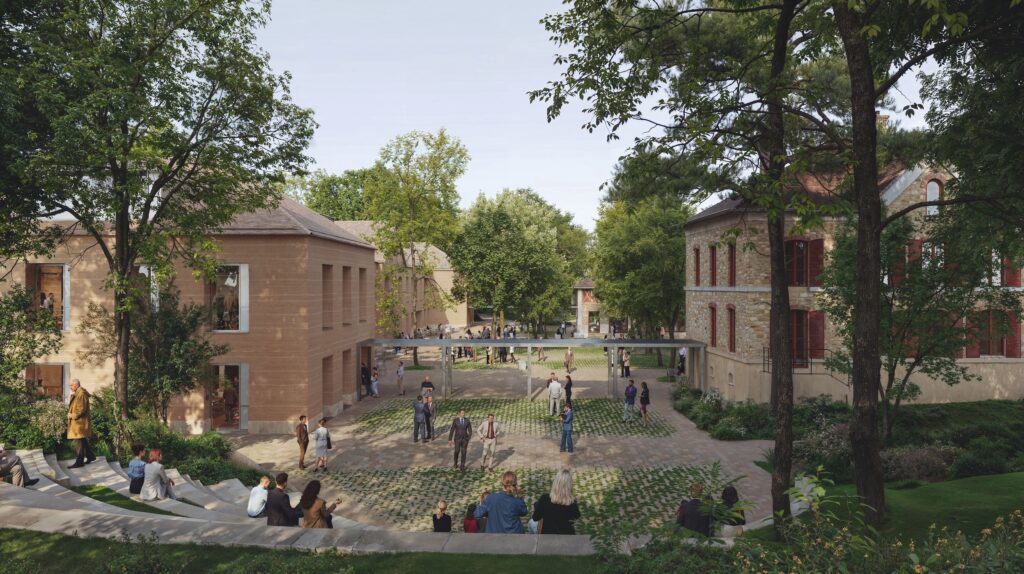
Our work focuses on three major historic buildings on campus: the château, the semi-underground Nordling House, and the outbuildings, some of which had been abandoned. Our goal is to create architectural coherence among these elements. To achieve this, we worked with Michel Desvigne’s landscape teams to connect the buildings through a landscaped walkway—a planted, shaded path with an elevator—that ends in a natural amphitheater. This outdoor circulation not only links the buildings across a complex topography, but also fosters interaction and community. Each building is treated individually: some are being restored, others rebuilt, to create a harmonious, functional campus.
Wouldn’t it have been simpler to rebuild the entire complex instead of renovating it?
Renovation aligns perfectly with our firm’s architectural and ecological philosophy. We focus mainly on the rehabilitation and transformation of existing heritage, integrating strong environmental principles. Rehabilitating rather than building anew drastically reduces the project’s carbon footprint—an essential step in combating climate change. Here, it’s also about enhancing a rich and diverse architectural heritage while creating a new layer that both reimagines and elevates that legacy. This approach is as technical as it is emotional: it preserves the site’s memory while adapting it to current and future needs. It’s a collective journey where ecology and heritage come together to envision a sustainable and inspiring campus.
How can reconstruction still “preserve the memory of a place”?
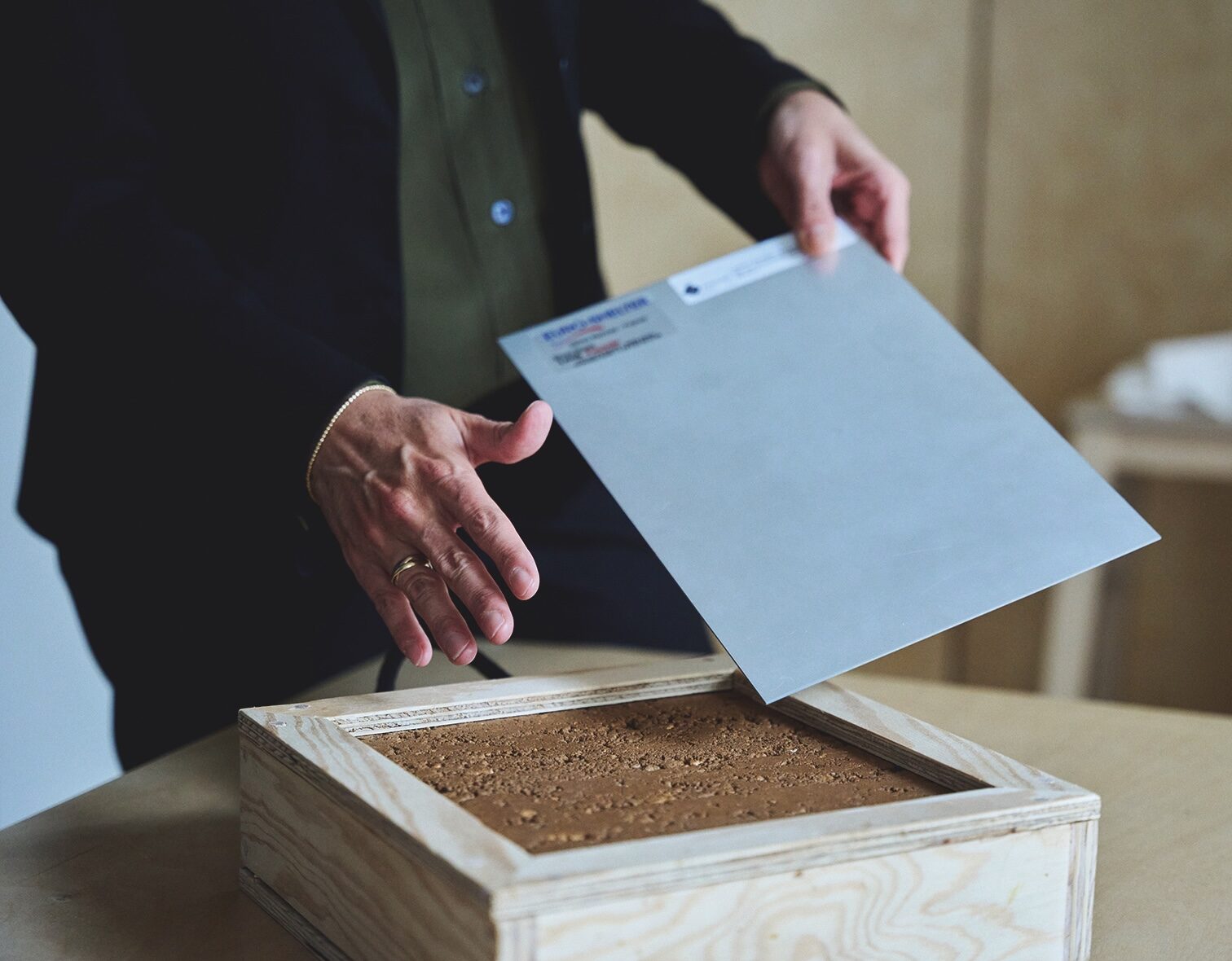
We only opt for reconstruction in parts of the site too deteriorated to restore—such as the main outbuilding, which was in advanced ruins. Rather than producing a mere imitation, we prefer to reinvent and rebuild these spaces while respecting their original volume and silhouette, thus retaining their architectural memory. To achieve this, we choose natural and sustainable materials such as rammed earth, an ancient material that offers excellent thermal performance and low carbon impact, used here in an innovative way. The structure itself is made of simple, flexible concrete to meet present and future needs. In this way, the new constructions engage in dialogue with the restored elements, striking a balance between heritage and innovation—while ensuring comfort, durability, and functionality.
How much creative freedom is there in this reconstruction work?
On the part of the campus entrusted to us—particularly the Nordling House—we’ve chosen to elevate the architectural quality significantly. Although the original façade couldn’t be preserved for technical reasons, we’re carefully restoring the concrete structure. To bring warmth and authenticity, we’re adding a large wooden façade with private terraces for each room, allowing users to connect directly with the surrounding landscape.
A sample of rammed earth, a natural and ancient material that combines high thermal performance with low carbon impact.
The new heart of the campus is designed to bring students closer together. Does your project reflect that ambition?
Absolutely. One of the main goals of our work is to create spaces that foster interaction and community life—because that’s the essence of a great university campus. In the outbuildings, which will house teaching facilities, we designed a circular corridor. This loop not only connects classrooms, lecture halls, and breakout rooms, but also makes movement throughout the day smoother and more intuitive. These circulation areas have been widened to include informal spaces—places to gather, chat, or relax. There are cafés, lounge areas, and small salons. The idea is to multiply opportunities for encounters between students, faculty, and visitors. Here, architecture serves not just form and function, but pedagogy and connection.
Photographies : © Ciprian Olteanu / Waverline
Illustration : © Artefactory

Published by Daphné Segretain