
Pascaline Peugeot de Dreuzy (E.10): “Family businesses play a major social role”
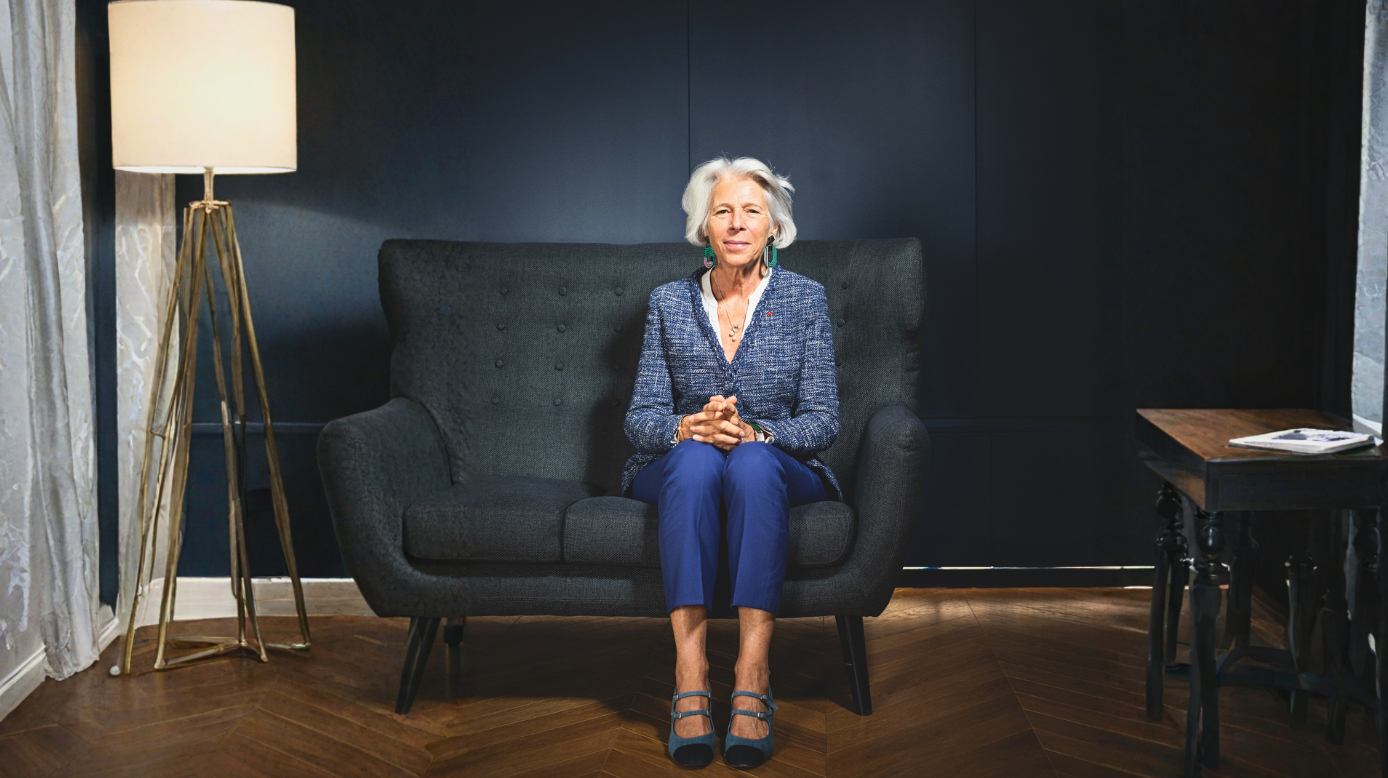
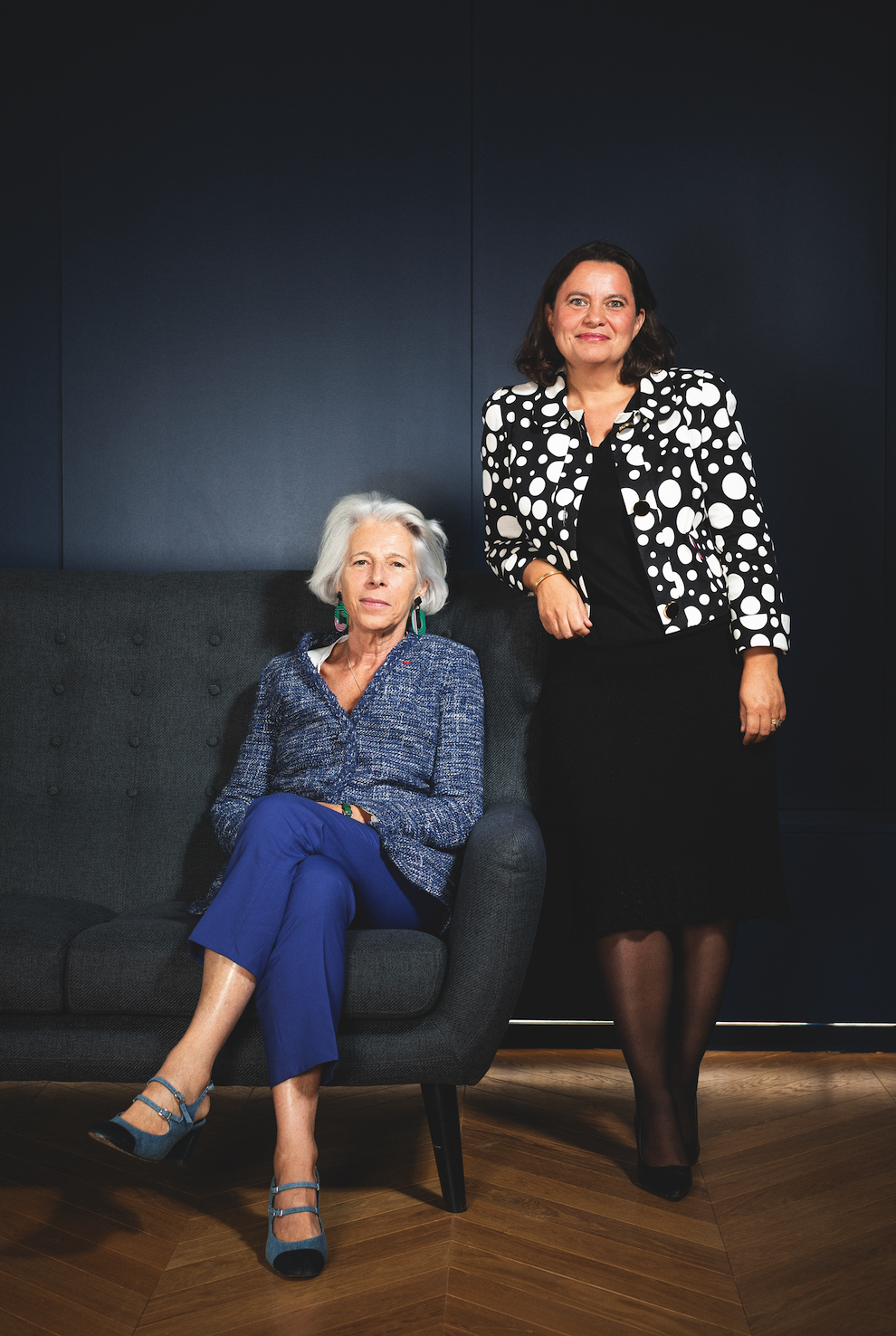
On the occasion of the launch of the HEC Paris Family Business Center, HEC Stories publishes a conversation between Cécile de Lisle (M.04), the center’s director, and Pascaline Peugeot de Dreuzy (E.10), board member and representative of the eighth generation of the Peugeot family.
The two women discuss an unconventional career path from Parisian hospitals to corporate boards and detail what makes family businesses unique. These companies make up a significant part of the economic fabric (60% of European firms and 71% of French firms). In France, they generate nearly 70% of employment and added value. With resilient economic models rooted in long-term vision and local territories, they must nonetheless confront major succession and transmission challenges.
Cécile de Lisle: From medicine to corporate governance, you’ve had a singular journey, which you summarize with the phrase: “The experience of risk and the passion for innovation.”
Pascaline Peugeot de Dreuzy: I was fortunate to be born into an automotive industry family. From a very young age, I was practically “infused” with this extraordinary industrial adventure, which successively became French, then European, then international. After my baccalauréat, I told my father, Pierre Peugeot, chairman of PSA’s supervisory board, that I wanted to pursue engineering studies, hoping one day to join the company. At that time, women didn’t work there — especially not in the automotive sector — so I ran into a firm “no”. I chose an alternative path: medicine, and my father encouraged me to pursue it with excellence.
What was once called paternalism is now seen as ESG.
So you became a doctor — but an entrepreneurial doctor…
Appointed as a physician at the Paris public hospitals, I built my career at Necker–Enfants malades, where I consistently led pioneering and innovative projects. My entrepreneurial instinct was always activated whenever it came to improving a unit or imagining new practices. I have always been driven by a deep desire to combine cost control with patients’ quality of life — whether through ambulatory care, pain management, or palliative care. Today, we talk about combining financial and extra-financial performance to achieve global impact. With hindsight, I realize that these medical responsibilities helped me develop skills that are extremely useful in the business world: detecting weak signals, making rapid diagnoses, managing risks and crises.
Even while working as a physician at Necker, you never cut ties with the family business…
On the contrary, that step aside never prevented me from fulfilling my role as a shareholder. Whenever possible, I visited industrial sites and took part in the group’s developments, driven by passion for this industrial adventure. I always remained very close to my father, who was a constant source of inspiration. Belonging to a family business means living alongside its leaders, sharing their highs and lows, receiving a great deal — but also offering them an external perspective that can challenge and enlighten them.
Caught up by your entrepreneurial DNA, you decided to study at HEC.
Exactly. I chose to pursue the HEC Executive MBA, where I gained legitimacy through skills and above all learned to dare. I founded a small company, P2D Technology, centered on home support for vulnerable individuals, combining human and digital services. This approach united human concerns — in which I already had significant experience — and innovation in the service of quality of life, all while keeping costs under control.
Did you then consider applying to the family business?
I chose instead to join the boards of various family companies with shared values, such as TF1, Séché Environnement, and Bouygues — where I now chair the Governance, Selection and Compensation Committee. I joined the board of Peugeot Invest, where we carried out co-investments with other family businesses. We understand one another; we share the same values.
You often refer to a “compass” when describing family businesses. What are its cardinal points?
There are four. The first axis is values — those of the family, which permeate the company and shape a shared culture. These must be nurtured, shared, and upheld with respect for each individual. Many used to speak of paternalism; today we speak of ESG. Family businesses were pioneers, deeply rooted in their regions, with strong social and economic roles. The Peugeot group supported health centers and food stores very early on — such as the RAVI, cooperatives created in the 1920s that provided essential goods at low prices in workers’ communities. The second point is transmission. This is a sovereignty issue today. Family businesses are supportive, deeply rooted in their regions, and exchange best practices with one another. Transmission requires managing emotions, which often interfere. Each generation must adapt through dialogue and respect; everyone must find their place. It is not an idyllic world — there are frustrations and disagreements — but each person bears a responsibility: ensuring the company’s continuity. Transmission carries a double responsibility: each share represents a financial right but also a duty of stewardship, for which one must be trained.
Transmission ensures the company’s long-term survival…
Indeed. And this is the third cardinal point: long-term vision. Family businesses are designed for longevity, with investment decisions made over long horizons, unlike financial capitalism. They must know how to rebound, reinvent themselves constantly, diversify their activities. The family structure makes it possible to adjust dividend distribution in order to transmit, reinvest, and thus protect our industrial flagships.
Provided you have the right leader…
Exactly — and that is the fourth point: choosing the leader. The family must assess whether there is a capable talent to take over leadership. It is important to allow younger members to prove themselves outside the company before returning, and sometimes to accept choosing an external leader, provided they share the family’s values. This compass — values, transmission, long-term vision, and leadership choice — shapes the actions and identity of every family business, in continuity with its history.
Have you found your own center within this compass?
I have been fortunate to receive a great deal; therefore, I must give back even more. I am deeply committed to supporting family businesses, especially since they form, in my view, the backbone of the French economy. I am delighted that HEC supports them through its brand-new Family Business Center.
Interview by Cécile de Lisle
Photography: Ed Alcock

Published by La rédaction