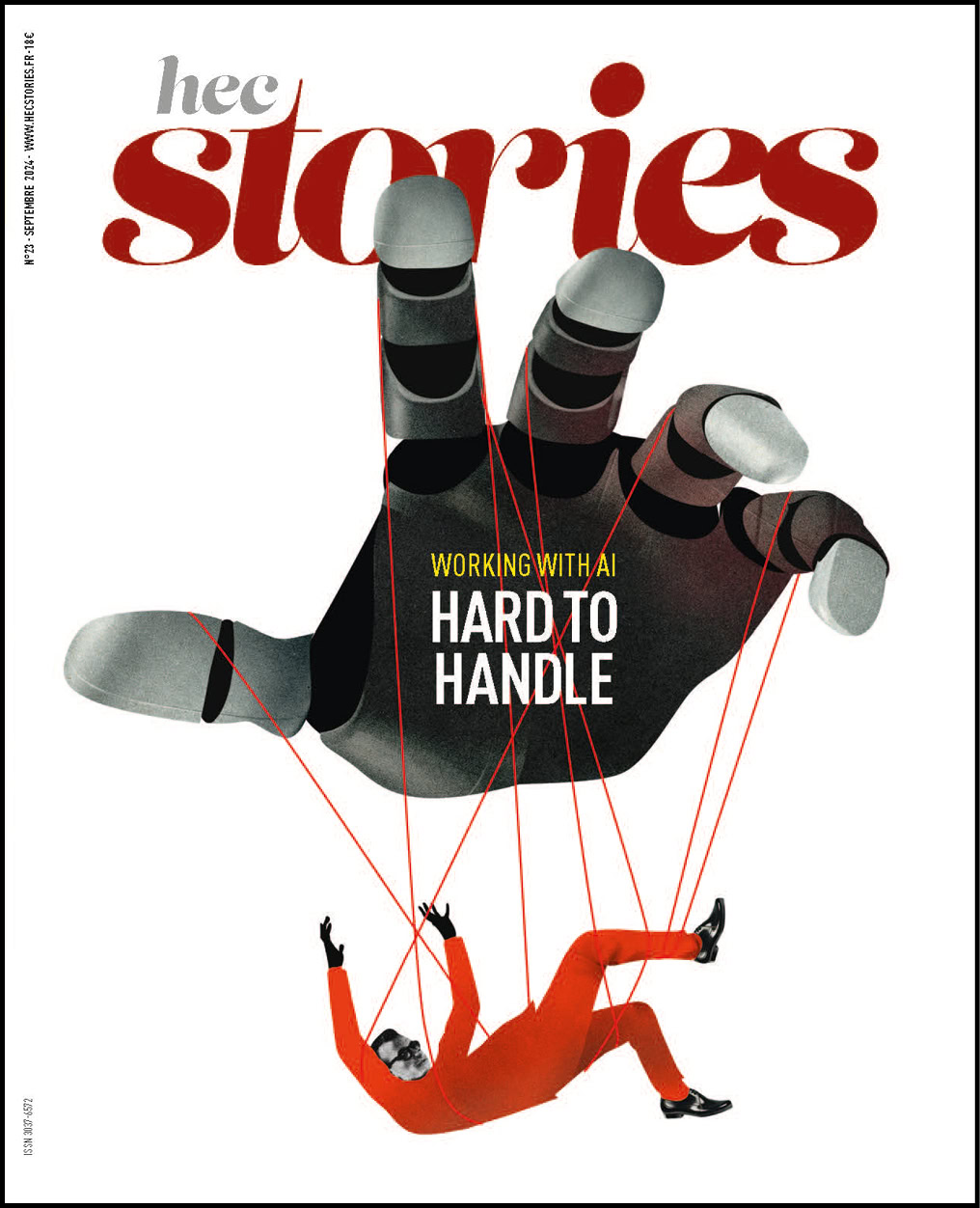

Jérôme Claraz (H.14), Turning the Climate Emergency into a Collective Game
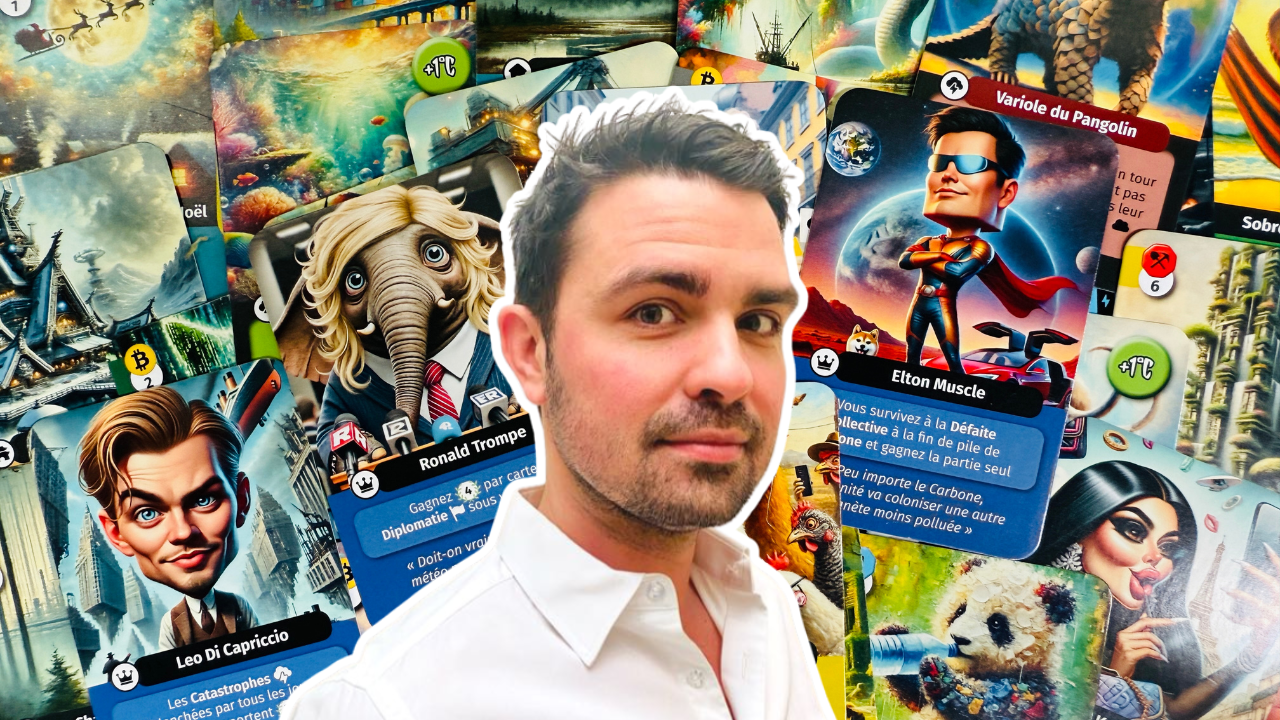
When it comes to defending the environment, Jérôme Claraz (H.14) prefers to put his cards on the table. By creating his customizable board game Carbone, he shows that raising awareness can also be fun.
Can we talk about climate without making people feel guilty? Turn a collective anxiety into a moment of play? Make people think without moralizing? This is the challenge Jérôme Claraz (H.14) has taken on with Carbone, a board game that is as playful as it is sharp, where everyone tries to win… without causing a collective collapse.
A former fintech professional who has worked in start-ups and major international groups, Jérôme put his career on hold to follow an intuition: what if board games could become a powerful tool to talk about the environment differently?
A game where everyone can lose
It all begins with an intimate, almost ordinary question. When his daughter was born, Jérôme found himself wondering: what does it really mean to “offer the best” to your children? A caring upbringing, prestigious studies, material comfort? Or simply the guarantee of living in a world that will still be habitable tomorrow?
“I realized that we all live with this paradox,” he explains. “We want to enjoy life, travel, consume, but no one wants a world at 50 degrees either.”
This tension lies at the heart of Carbone. Inspired by game theory and the prisoner’s dilemma, the game puts players face to face with their own contradictions: cooperate to preserve the planet or grow in order to win the game. Each player embodies a leader — a caricature of economic, political or technological power — and plays cards to develop. But each card produces carbon. At the center of the table, a pile melts away inexorably, symbolizing climate disruption. If it runs out, everyone loses.
The game then becomes more complex: alliances form and betrayals follow… much like in global climate negotiations.
“What is fascinating is watching people’s behavior,” says Jérôme cheerfully. “At first, players behave just like in real life: everyone for themselves. Then, halfway through the game, they realize they will have to cooperate… even though there will be only one winner in the end.”
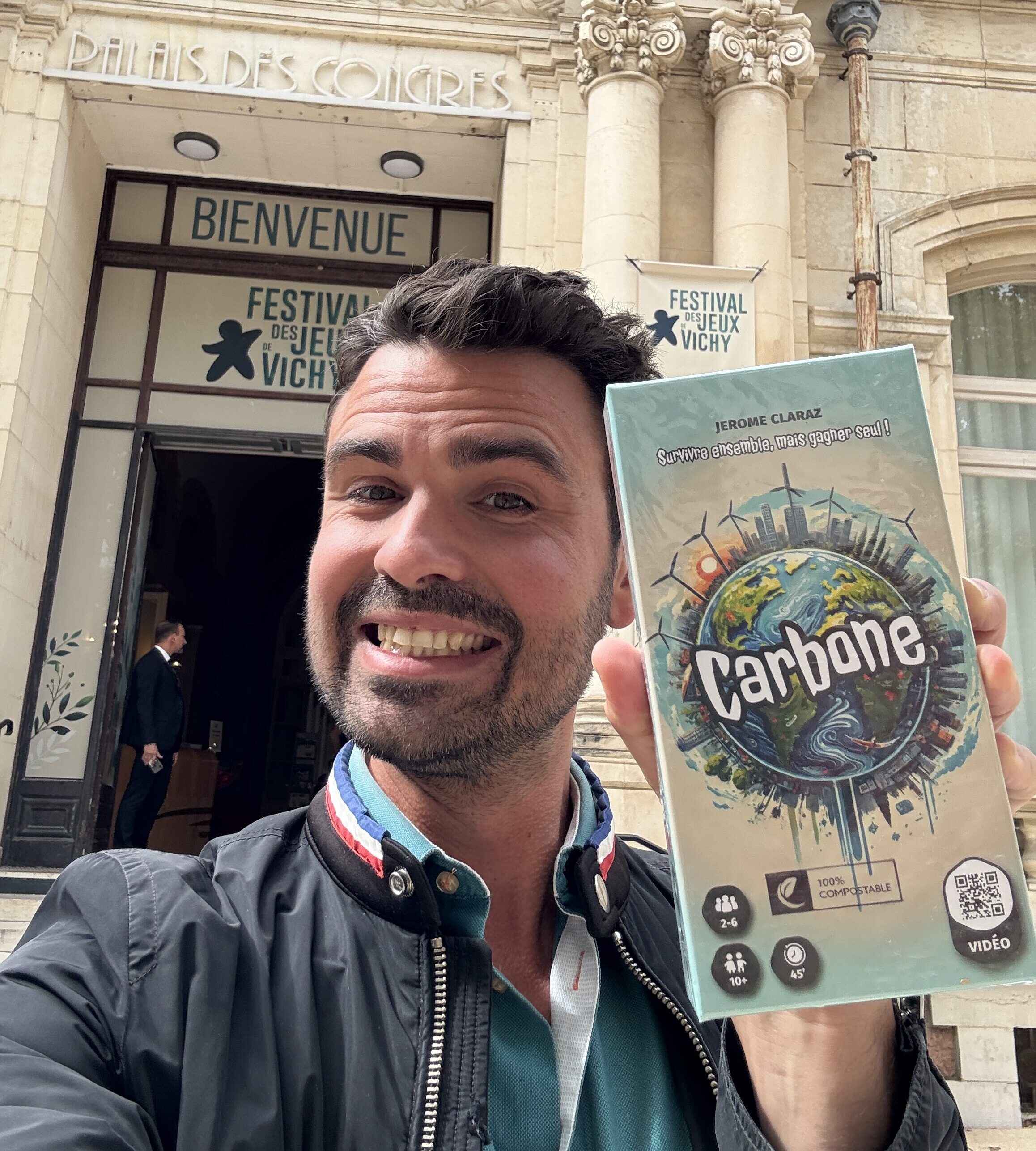
Creative climate
From the very beginning, Jérôme refused the anxiety-inducing tone often associated with environmental issues. The first version of the game was dark, almost oppressive. He quickly abandoned it. “A game must remain a game. If you start judging or frightening people, you ruin everything.” He reworked Carbone, removing anxiety-laden words and replacing them with puns. The hydroelectric dam becomes “counter-current,” permaculture becomes “short circuit,” fossil gas… “Not so hot gas.” The message remains, but subtly weaves its way into the experience and the game’s dynamics, as well as into the emotions felt around the table. “We never say ‘watch out,’ but you feel it. When the pile shrinks and disasters pile up, anxiety emerges… and the game becomes more stressful!”
The making of Carbone followed an almost militant, handcrafted path. Launched after the pandemic, its development went from paper prototypes and Excel spreadsheets to test sessions with friends, followed by games with strangers at festivals. Jérôme stepped outside his circle, accepted criticism and refined his ideas.
Courted for a time by major publishers — including the giant Hasbro — he ultimately chose the riskiest path: becoming an independent publisher. “Being a publisher isn’t just about launching a crowdfunding campaign. It’s a professional, demanding process, especially when you come from nowhere.” Launched in the summer of 2025, the game is now produced in Europe, in a factory powered entirely by renewable energy — a rare choice in an industry that is largely offshored.
“Made just for you”
To stand out from the competition, Jérôme added a new feature to his game: the ability to personalize cards. Thanks to artificial intelligence, players can create their own avatar, add a photo, a nickname, a quote… and play with it. “I discovered that people were deeply sensitive to this personalization. It’s no longer a standard game: it’s a game made just for you.” This innovation is one of the keys to the game’s success: companies such as Guerlain use it as an awareness-raising tool or as a corporate gift, creating tailor-made cards for their teams.
But the use of AI to create individual cards exposed Jérôme to an unexpected wave of criticism. Illustrators denounced the use of artificial intelligence, accusing the game of ecological inconsistency, or even of stealing creative work. “It was very violent. I felt like I was the target of a message that went far beyond me.” With hindsight, he takes a more nuanced view. Carbone also allows him to work with human illustrators, imagine more accessible versions and reflect on new hybrid models. “AI is just a tool. Everything depends on intention, on the energy you put into it. It can be a threat or an opportunity.”
After selling the first 3,000 copies online, Jérôme broadened his horizons. Available in specialty stores and showcased at trade fairs — including the upcoming International Games Festival in Cannes in February — Carbone is now also available on Amazon and is setting its sights on international markets. In the long run, Jérôme dreams even bigger: creating a committed publishing house, supporting young authors, inventing new ways to produce and tell stories. “I deeply believe there is no opposition between worlds. We must build bridges. And above all, trust ourselves. The most beautiful things happen when you take risks.”
And if Carbone were to leave players with just one thing? Jérôme smiles: “The desire to give a personalized game to someone you love. Because a game is above all a happy moment shared. And today, that is precious.”
The game Carbone is sold by the specialist store Philibert for €25.

Published by Rinade Chalach