
Jean-François Palus (H.84): portrait of a man in a field
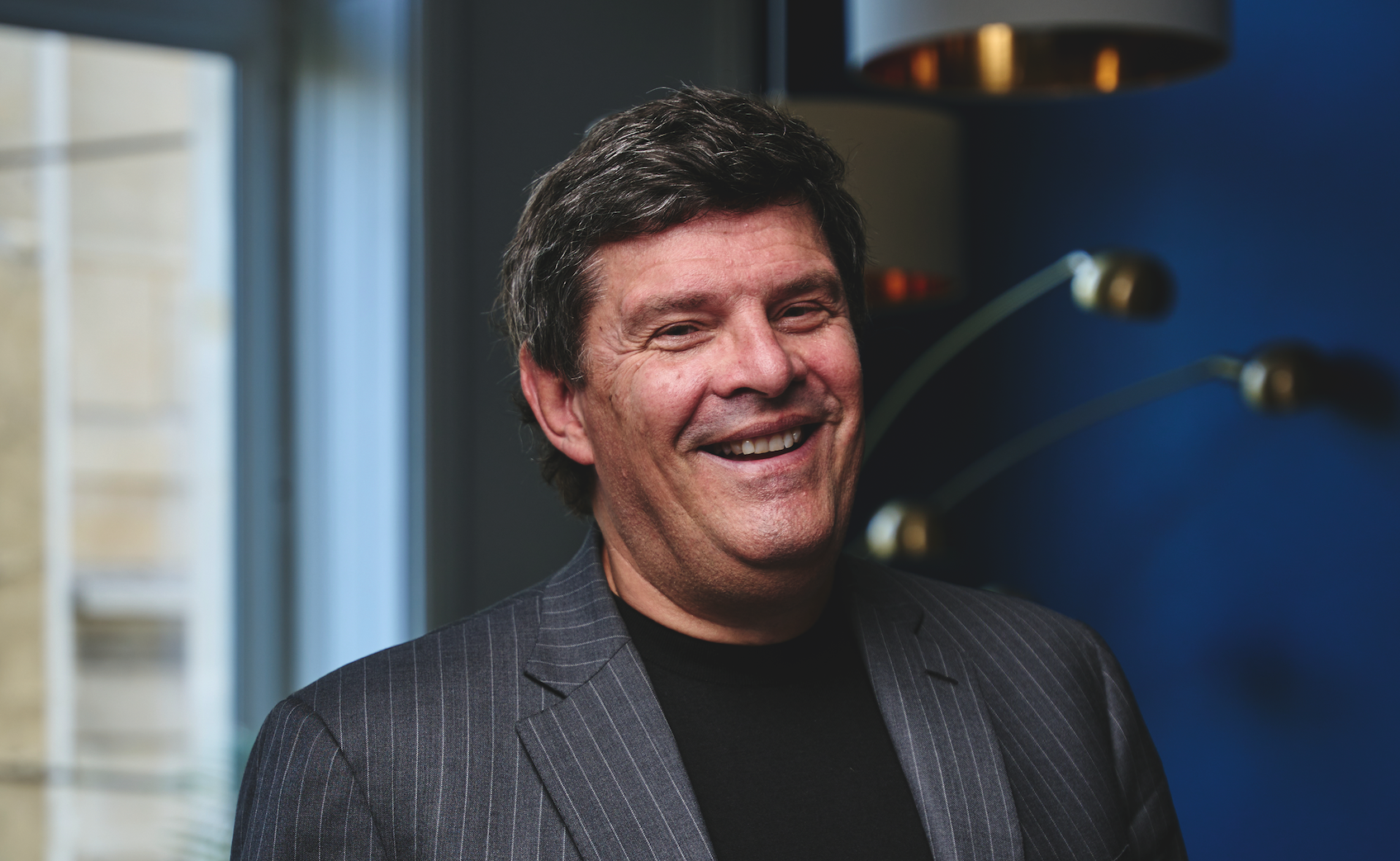
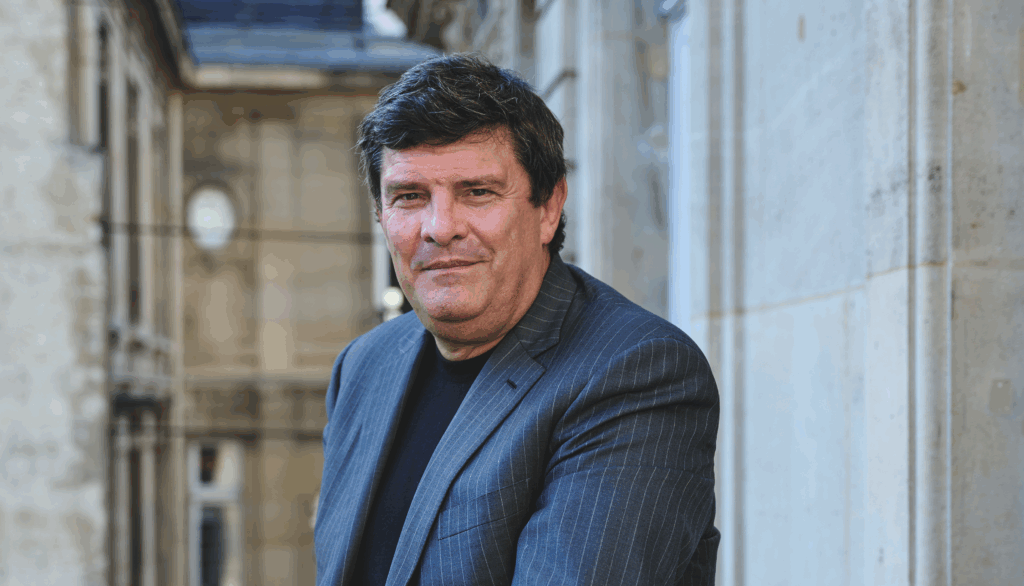
From Castres to Milan, Jean-François Palus (H.84) has witnessed thirty-five years of transformation — from industry to luxury, from executive to mentor. Today, at 64, he takes on a new role as President of the HEC Foundation.
On this gray autumn Monday, an elegant figure in a finely tailored Italian suit walks through the doors of the HEC Alumni Association. Jean-François Palus — born in Castres and never quite having lost the accent — grew up in what he calls “a sporty and studious cocoon.” It was during high school that he first heard of the prestigious preparatory classes at Sainte-Geneviève in Versailles. “A friend of my father, whose son had gone to Ginette, told him: ‘It’s fantastic — he should definitely go there!’”With a science-focused baccalaureate in hand, he entered prep school — a world of its own, built on intellectual rigor and a strong sense of collective spirit. “There was a teaching philosophy and a team-oriented mindset that I loved… very much like the values of rugby, which meant a lot to me.”
He kept playing rugby even during prep, without telling his father. “I was playing for a club in Plaisir, in the Yvelines. My dad only found out because I broke my hand during the entrance exams. Luckily, it was my left hand!” Even one hand down, prep school delivered the same sense of unity and mutual support that had drawn him to sports. “I even loved the hazing rituals. They created a deep sense of belonging.” But prep wasn’t just about community — it was an intellectual awakening too. Philosophy, in particular, left a lasting mark. “I realized that in order to understand a phenomenon, you have to analyze every component of it and understand how they interact,” says the avid Nietzsche reader.At HEC Paris, which he joined after prep, that collective mindset continued to define him. As president of the student union (BDE), he embodied a spirit of unity and celebration. “We brought together all the sports for club events. We even started serving breakfast on Sunday mornings for those who stayed on campus. I experienced moments of real joy, connection, and fun,” he says — before passing the baton to one François-Henri Pinault (H.85).More than an academic track, it was a deeply human experience. “Honestly, I think I enjoyed the non-academic side more than the coursework. As for the classes, it’s funny — forty years later, all the things we called fluff back then — management, behavior, negotiation, transactional analysis — all of that turned out to be essential. Because in the real world, what really matters is your relationships with others.”
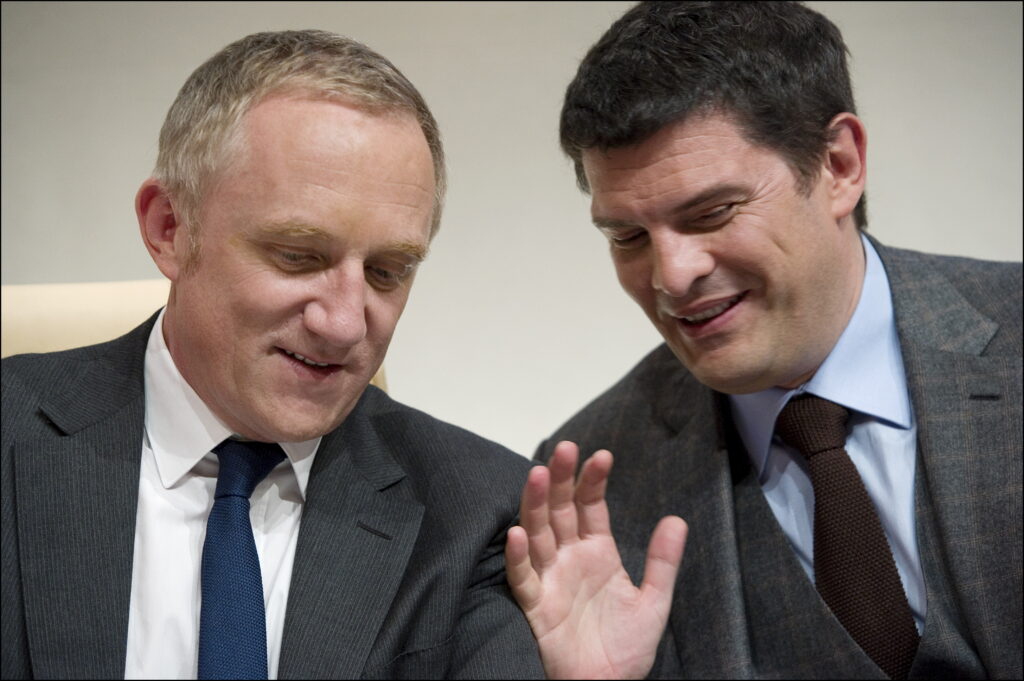
At HEC Paris, which he joined after prep, that collective mindset continued to define him. As president of the student union (BDE), he embodied a spirit of unity and celebration. “We brought together all the sports for club events. We even started serving breakfast on Sunday mornings for those who stayed on campus. I experienced moments of real joy, connection, and fun,” he says — before passing the baton to one François-Henri Pinault (H.85).More than an academic track, it was a deeply human experience. “Honestly, I think I enjoyed the non-academic side more than the coursework. As for the classes, it’s funny — forty years later, all the things we called fluff back then — management, behavior, negotiation, transactional analysis — all of that turned out to be essential. Because in the real world, what really matters is your relationships with others.”
© Stefan Gladieu
Learning in the field
After graduation, he began his career at Arthur Andersen before entering the Pinault world in 1991. “I had worked on a project for Schneider Electric, where Mr. Pinault sat on the board. I presented the file to the board — I was 28 or 29. Apparently, he liked it.” That presentation led to a career-defining phone call. “The first offer didn’t interest me. But a year later, Mr. Pinault offered me the deputy CFO role in the timber division.”From there, alongside his HEC classmate François-Henri Pinault, the group’s focus began to shift. “Our idea was to go from tangible to intangible, and from local to global. For strategic reasons, we moved from industry to retail — and eventually to luxury.”It was a complete overhaul, orchestrated with precision over several years. “When I joined the group, we weren’t doing any of the businesses we’re in today. And when I left, we weren’t doing any of the businesses we started with.”
 © Philippe Dureuil
From PPR to Kering: the transformation of a lifetime
In the late ’90s, François-Henri Pinault tapped his former classmate for a mission at Artémis, the family holding. “He told me, ‘Come on board, we need to structure things.’ I was already on the board, which oversaw Le Point, Christie’s, the Stade Rennais football club, and the Château Latour vineyard.”Though officially titleless, Palus spent four years helping manage the group’s shift toward luxury. Starting in 1999, PPR acquired Yves Saint Laurent and a 42% stake in Gucci. Meanwhile, he laid the groundwork for exiting retail — with Printemps, Conforama, and eventually Fnac all sold between 2006 and 2013. “I love building M&A dossiers, but investing for the sake of investing? That’s not me. I like operating — being hands-on.”
In 2004, he took on a more operational role as CFO of PPR. “Mr. Pinault [the father] gave his input, but it was François-Henri making the decisions.” Together, they built a symbolic and commercial strategy focused on brand identity. “To us, the brand was both a sword and a shield. A sword, because it helps you fight pricing pressure and expand globally. And a shield, because its symbolic value protects you from competition. For example, a Bottega Veneta bag costs three or four times more than a regular one — because it’s Bottega Veneta. If it were a generic brand, the price wouldn’t make sense.”
At the time, luxury still leaned heavily on traditional craftsmanship. The challenge ahead: to merge that heritage with the tools of modern industry. Yves Carcelle at Louis Vuitton had already shown the way. “At PPR, we were racing to catch up in marketing, logistics, supply chain management, and IT.
Gucci: an (almost) impossible mission
July 2023 brought the ultimate challenge: taking the helm at Gucci during a major crisis. “We needed to replace the CEO just after changing the creative director.” Palus relocated to Milan with his wife — his closest advisor. His goal: conduct a full diagnostic, identify root issues, and get the house back on track.
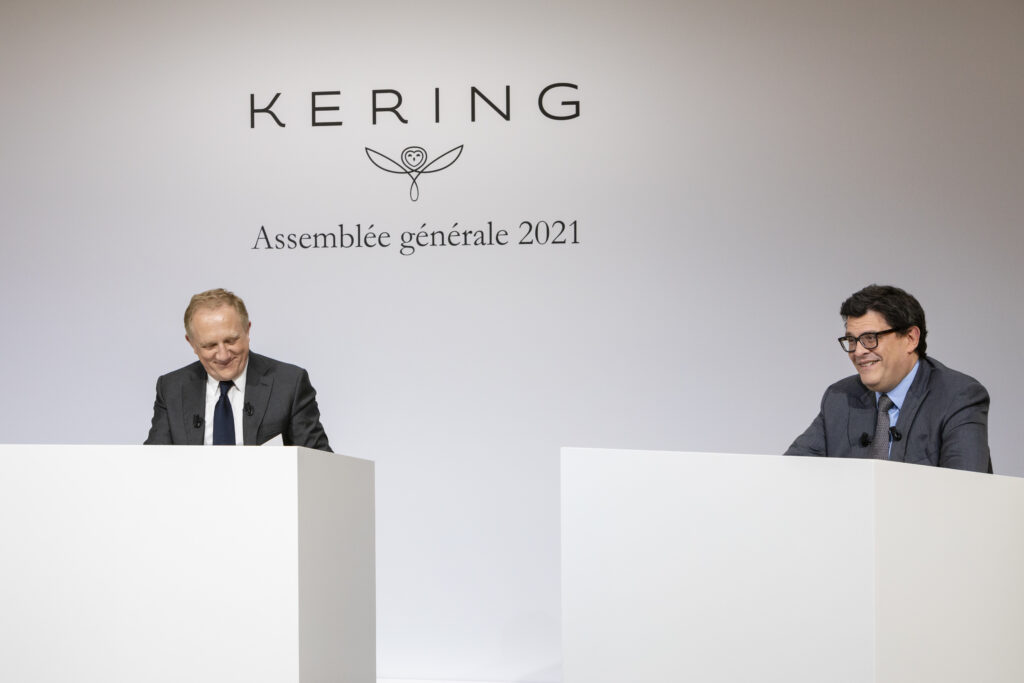
Gucci had posted €10 billion in revenue in 2022. By 2024, that had dropped to €7.7 billion. The decline dented both Gucci’s and Kering’s image.Palus cut down the product offering, streamlined distribution (including closing underperforming stores), and introduced more structure and rigor. “I wanted to bring technical discipline to a brand that was very artistic — even flamboyant and polarizing.”While reconfiguring internal processes, he also led the recruitment and onboarding of his successor, Stefano Cantino. After a year in Milan, Palus found he’d developed a taste for Italian life — and chose not to return to Paris, where Jean-Marc Duplaix (H.93) was now running his previous responsibilities with a steady hand. “At 64, I felt it would do me good to try something else,” he says. His wife Angelina — and his cardiologist — agreed.
 © Ciprian Olteanu/Waverline
A new chapter: giving back through the HEC Foundation
As Palus closes the Kering chapter, a new one begins. He succeeds Olivier Sévillia (MBA.90) as President of the HEC Foundation — a long-standing commitment now formalized. “I’ve been giving to the Foundation for a long time. Out of gratitude — I wouldn’t be where I am without HEC — and because it supports equal opportunity, which I deeply care about.”That sense of mission made it easy to say yes. “When Olivier called and asked me to take over, I was genuinely touched. He did outstanding work at a crucial moment, when the School became financially independent. Now comes the next challenge: the new campus project.”The expansion aims to grow HEC’s capacity across all programs — Grande École, MBA, and Executive EMBA — while strengthening its global image. “It’s a forward-looking project, and one I’m excited to support with the same energy that helped Kering become a global leader.”Fidelity, commitment, and humility have always defined Palus.
A quiet actor behind major transformations, he has always favored action over visibility — and teamwork over ego. “For me, the fundamental value is respect. Everyone deserves respect, as long as they themselves are respectful.”

Published by Daphné Segretain