
HEC Alumni : a 2025 Gala Dinner that celebrates the future
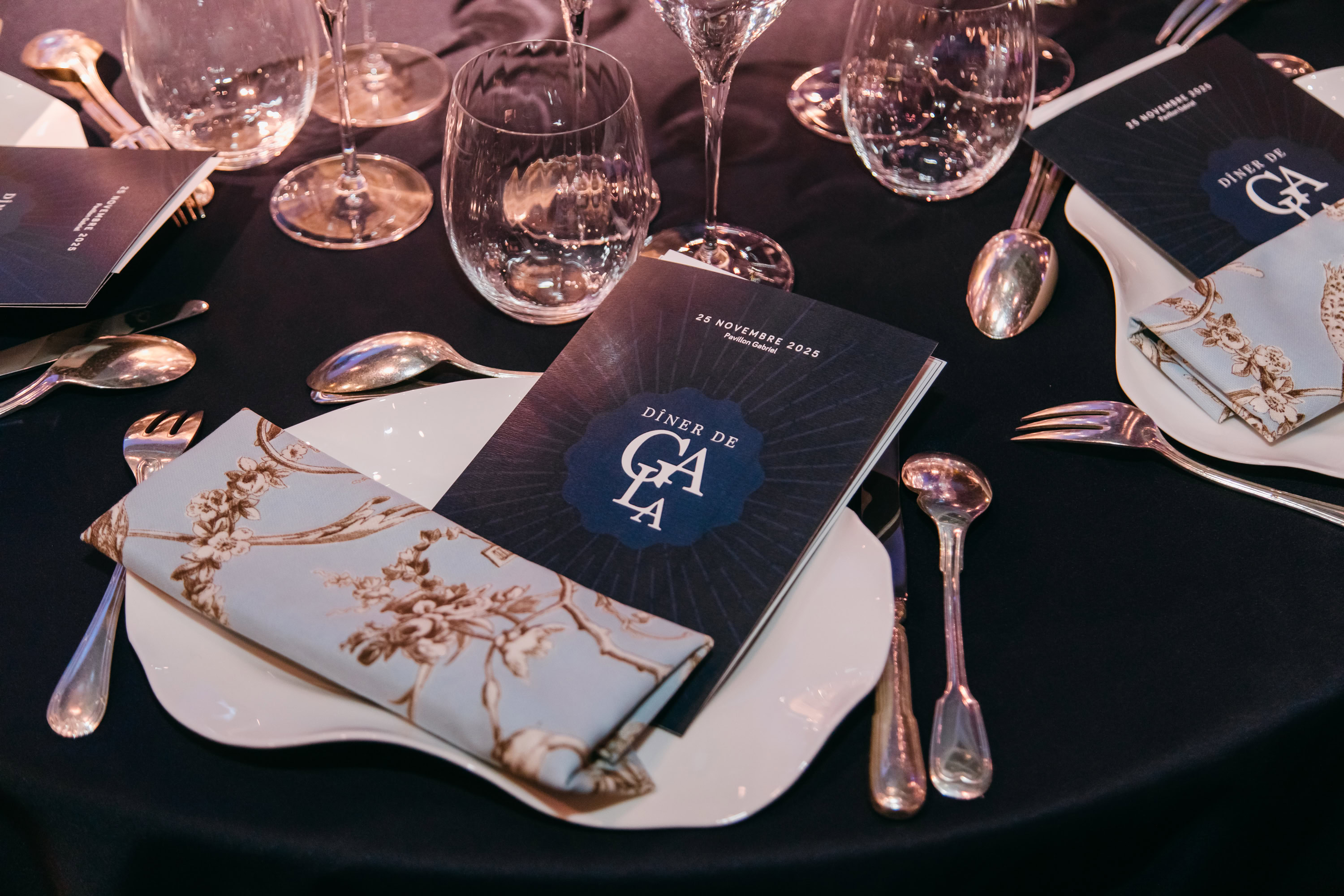
At the Pavillon Gabriel, in the heart of Paris, the festivities of the fifth HEC Gala Dinner helped shine a light on the campus renovation project.
Evening gowns and tuxedos: the Parisian cold did not discourage the guests. One thousand HEC graduates and friends, partners, professors, or members of the Foundation, the School, and the Association teams gathered at the Pavillon Gabriel, in the 8th arrondissement of the capital. Two major events followed one another on November 25: the launch ceremony of the new HEC Foundation campaign, followed by the annual Alumni Gala Dinner.
For its fifth edition, the Gala Dinner was largely dedicated to the major renovation project of the HEC Paris campus. It was an opportunity for the community to celebrate its attachment to the school and its ambition for future generations. A convivial evening, but also a decisive moment for the future of HEC.
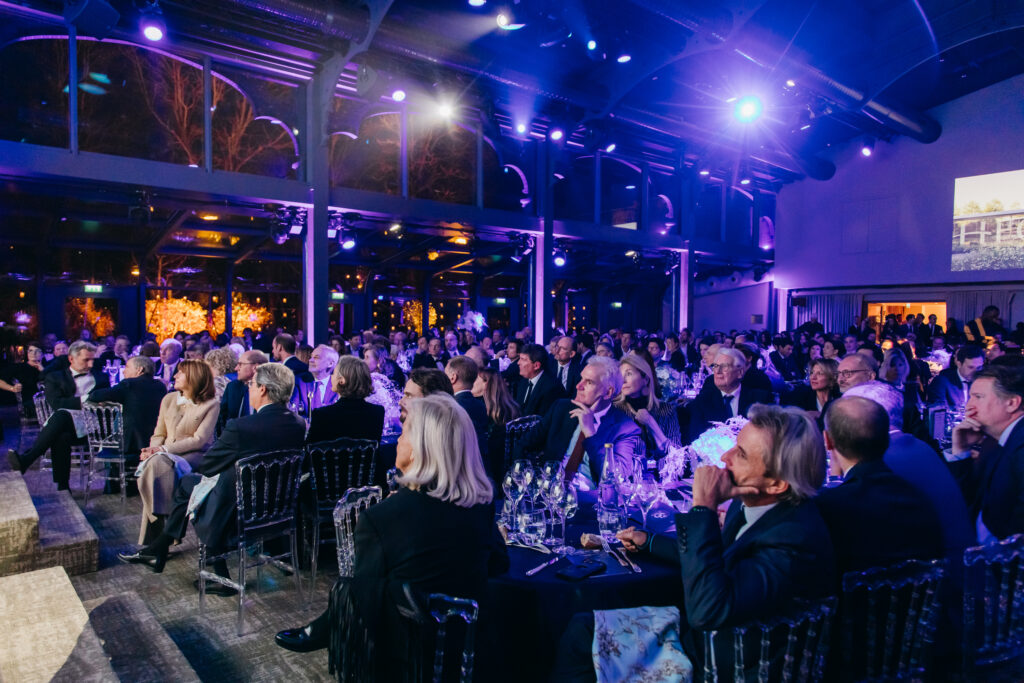
After the Petit Palais, the Palais Brongniart, the Rodin Museum, and the Hôtel Potocki, it was the Pavillon Gabriel, a 19th-century building with a vast glass roof, that served as the majestic setting for this 5th edition of the HEC Alumni Gala Dinner. Located just steps from the Champs-Élysées, this emblematic venue welcomed nearly a thousand guests, offering a decor worthy of the school’s reputation: two enormous rooms bathed in warm blue-toned light in the School’s colors, creating both an intimate and grand atmosphere.
As a starter, a new campaign for the HEC Foundation
Several hundred alumni arrived as early as 6 p.m. to attend the launch of the new HEC Foundation campaign. This fundraising effort sets an ambitious target: 300 million euros, part of which will be dedicated to the campus renovation project. This large-scale undertaking, set to begin in early 2027, aims to create, in the words of HEC Dean Éloïc Peyrache, “a place of meeting and exchange that brings together members of the community and embodies the School’s entrepreneurial and collaborative spirit, but also an iconic place, recognizable by everyone, everywhere in the world.”
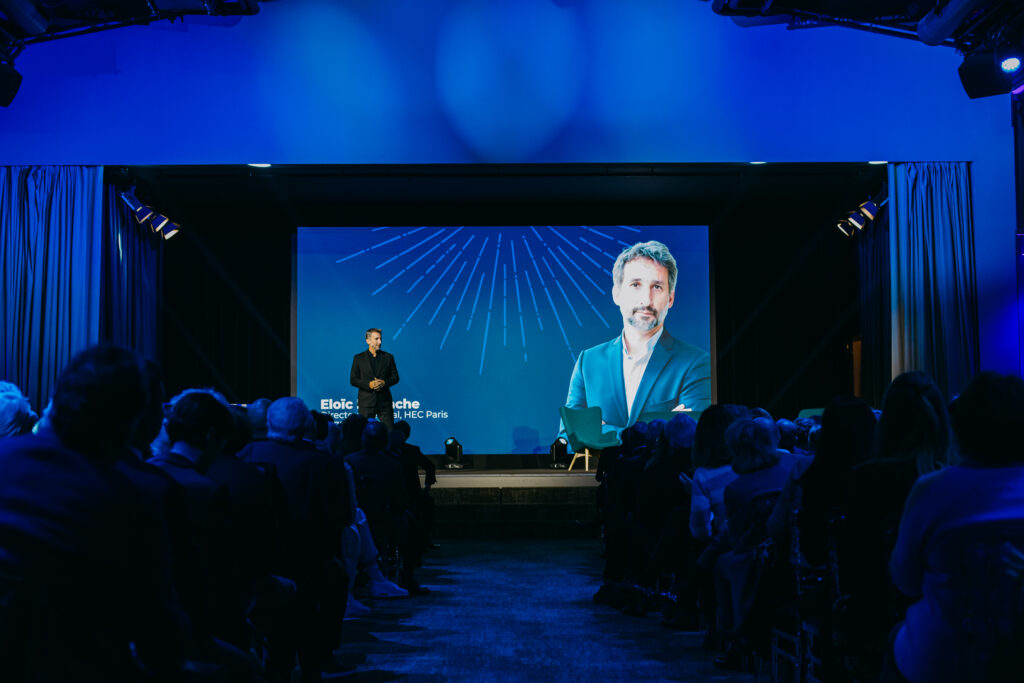
HEC Paris President Jean-Paul Agon (H.78) took the floor alongside two star architects: Kjetil Thorsen Trædal, co-founder of the Snøhetta agency who traveled from Oslo especially for the evening, and Lucie Niney, co-founder of the NeM agency. The three of them outlined the major features of the rehabilitation and transformation project for the campus, which incorporates a strong human and ecological dimension.
As an aperitif, mingling and reunions
After an hour of presenting the fundraising campaign and its ambitions for the School’s future, the cocktail began in the Élysée salon. Under a high glass roof, the crowd crossed paths, greeted each other, called out to one another. A champagne flute in one hand, a truffle puff pastry in the other, one could spot here and there Marguerite Gallant (H.03), the managing director of HEC Alumni, Guillaume le Dieu de Ville (M.06), co-founder of Lingueo and academic director of the MSc X-HEC Entrepreneurs, Constantin Simon (H.27), student and member of the HEC Alumni committee, Jérémy Bas (M.12), former managing director of HEC Alumni, Mona Audi-Montaldier (MBA.99), co-president of the Digital Hub, Alain Caradeuc (H.70), co-president of the Luxury & Beauty Hub, Déborah Aringoli from the HEC Foundation, Pei Li (M.24), president of the Blockchain Club, as well as professors Yann Algan, director of HEC Institutes, and François Gemenne, director of the SASI Master…
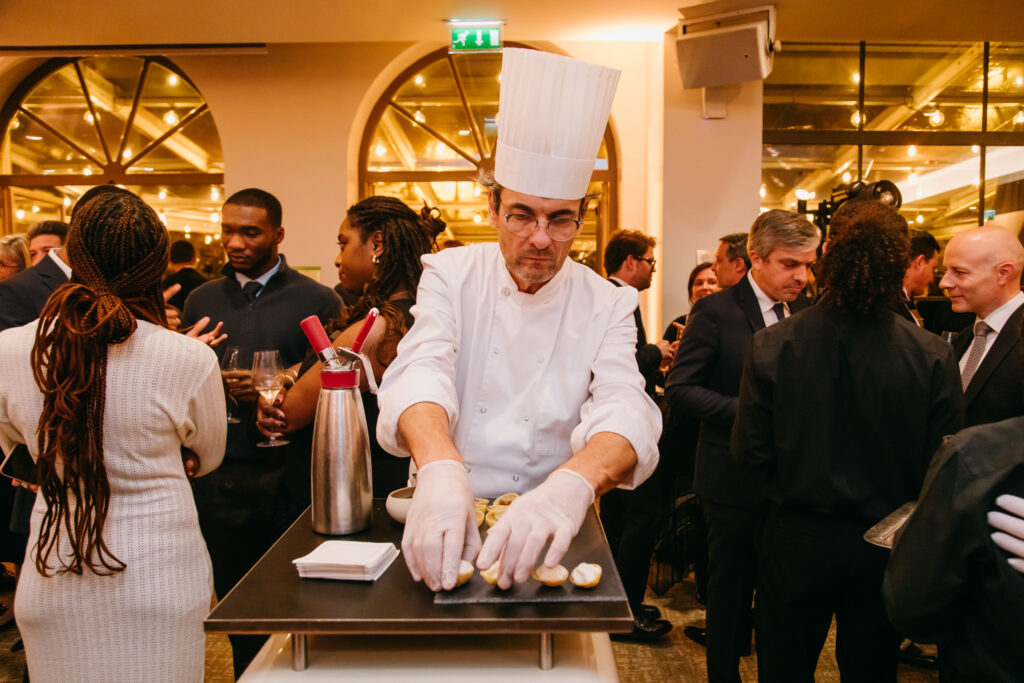
In this dense and lively crowd, both English and French could be heard in a joyful hum. The atmosphere was that of an exceptional family reunion: graduates and students reconnected after months, sometimes years, while former presidents of the HEC Association and Foundation, such as Jean-Luc Allavena (H.86), Jacques Lehn (H.65), Mercedes Erra (H.81), or Daniel Bernard (H.69), mingled with younger generations to share memories and ambitions.
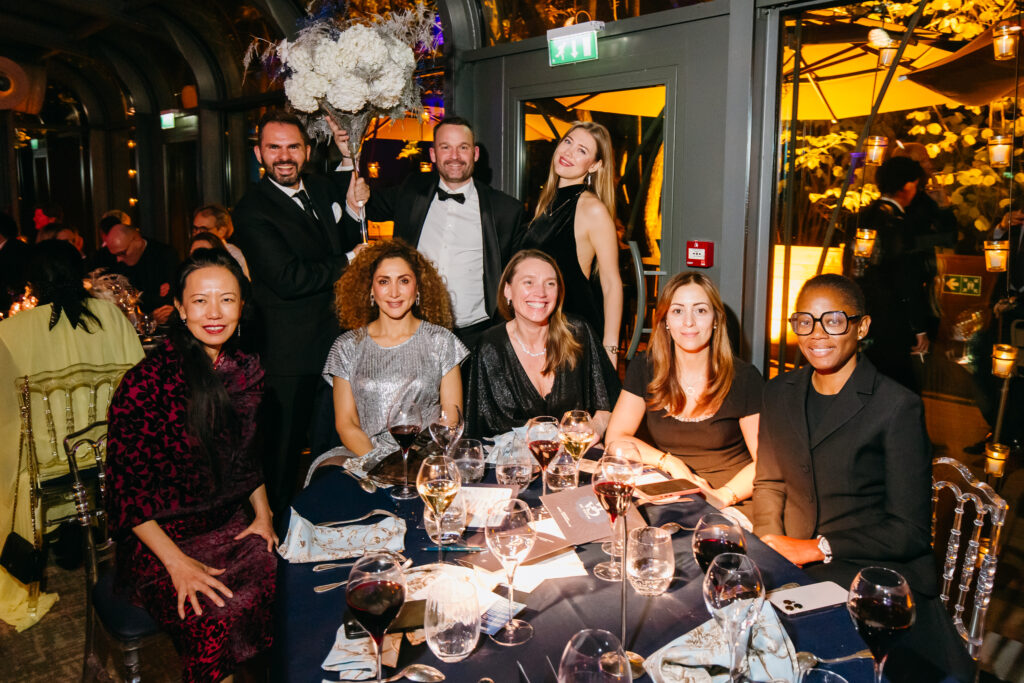
8:30 p.m., the moment has come for the 450 dinner participants to take their seats at the tables. Delphine Colson (H.94) sat next to Jean-François Palus (H.84) and François-Henri Pinault (H.85) at the Foundation’s table. Hélène Bourbouloux (H.95) invited her partners, friends, and colleagues to sit at her FHBX table. Louis Vuitton Malletier had reserved a table where CEO Damien Bertrand (H.96) and his guests dined. Classes H.96, H.00, H.03, and H.14 were also present with their dedicated tables.
On the menu: a commitment to the future
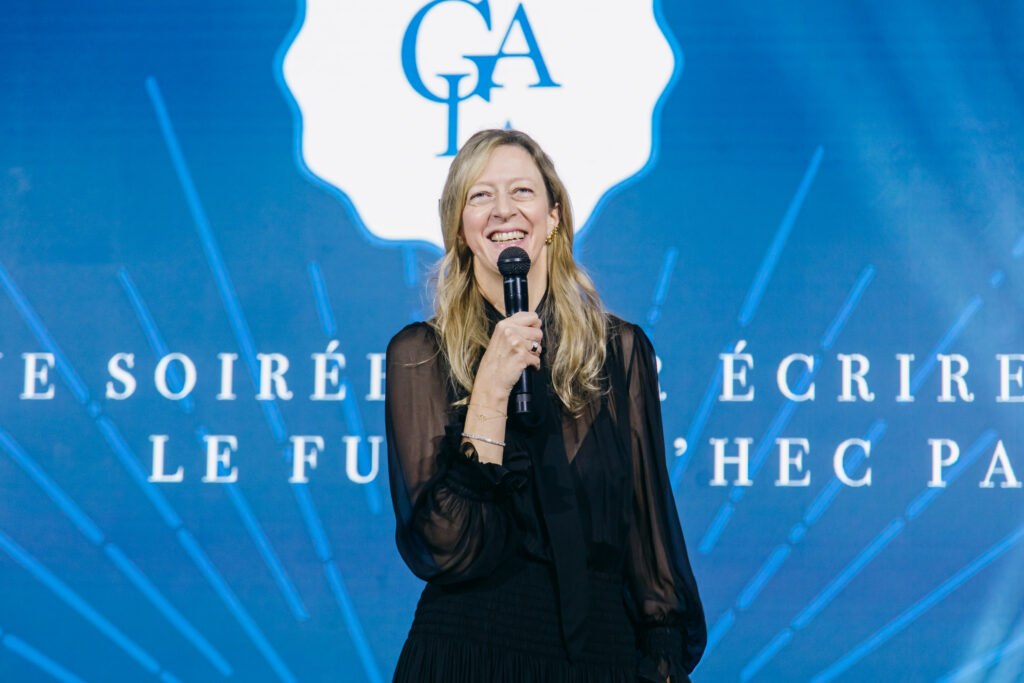
As the guests settled in, Hortense de Roux (H.05) took the stage with a warm and meaningful welcome message: “Wherever we come from, what brings us together tonight is a certain idea of friendship, our attachment to the School, and undoubtedly the desire to take part in something bigger than ourselves. That something is HEC’s future project, which will take magnificent shape in the Campus of the Future.” She also thanked the School’s prestigious partners, including Aéma, Amundi, Bouygues Construction, Capgemini, L’Oréal, Ondra, Groupe Finoli, and Sogelym Dixence, whose commitment makes ambitious projects possible, and acknowledged the presence of political and economic figures, including Marc Ferracci (H.95) and Stanislas Guérini (H.06). The message was clear: “The School is not just a place of learning, it is a living, engaged community capable of mobilizing to build its future.”
After this introduction, the dinner, prepared by Potel & Chabot, was served. A refined and inventive menu that blended traditional dishes and modern creations: langoustine ravioli, puff pastry veal fillet, and a reimagined poire belle-hélène. Throughout the meal, each table became a lively space filled with conversations ranging from study memories to discussions about the campus’s future.
The dinner was punctuated by speeches, allowing Éloïc Peyrache to remind guests who had not attended the first part of the evening about the key aspects of the renovation project and the School’s “New Responsibilities” strategy. “Our ambition is to train responsible leaders capable of transforming the world. This strategy is embodied in the Campus of the Future project, which will allow HEC to remain at the forefront of innovation and excellence.” His clear and inspiring speech reminded participants that the evening was not only a celebration but also an opportunity to mobilize for the school’s future. He emphasized the central role of alumni and the HEC Foundation in bringing this ambitious project—combining modernity, sustainability, and respect for the campus’s historical heritage—to life.
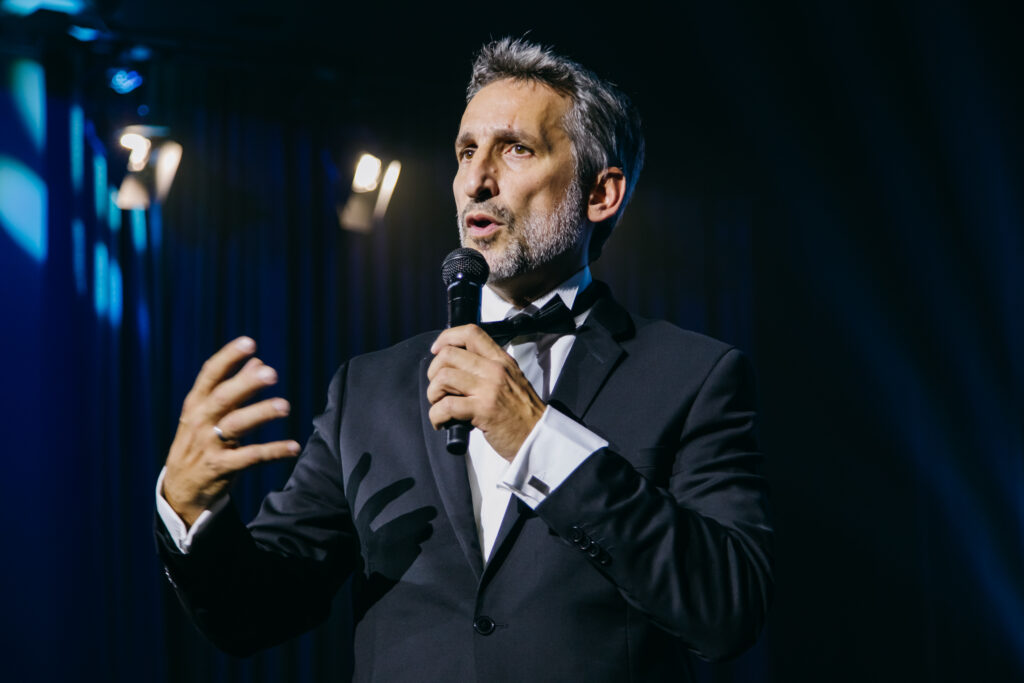
Jean-François Palus (H.84), president of the Foundation and successor to the seven-year tenure of Olivier Sevillia (MBA.90), continued with a call for commitment. “There are already strong commitments, foundational gifts that give us confidence. Now, it’s up to you, up to all of us, to rise to the occasion and stand behind this unique ambition in HEC’s history. It’s going to be a great match!” said this rugby aficionado and former number two at Kering.
The objective is clear: 230 million euros will be invested to transform the Jouy-en-Josas campus, offering students and faculty innovative learning spaces, redesigned living areas, and infrastructures that foster creativity and collaboration. This monumental project will be a historic milestone in the life of the School and will leave a lasting mark on HEC’s history.

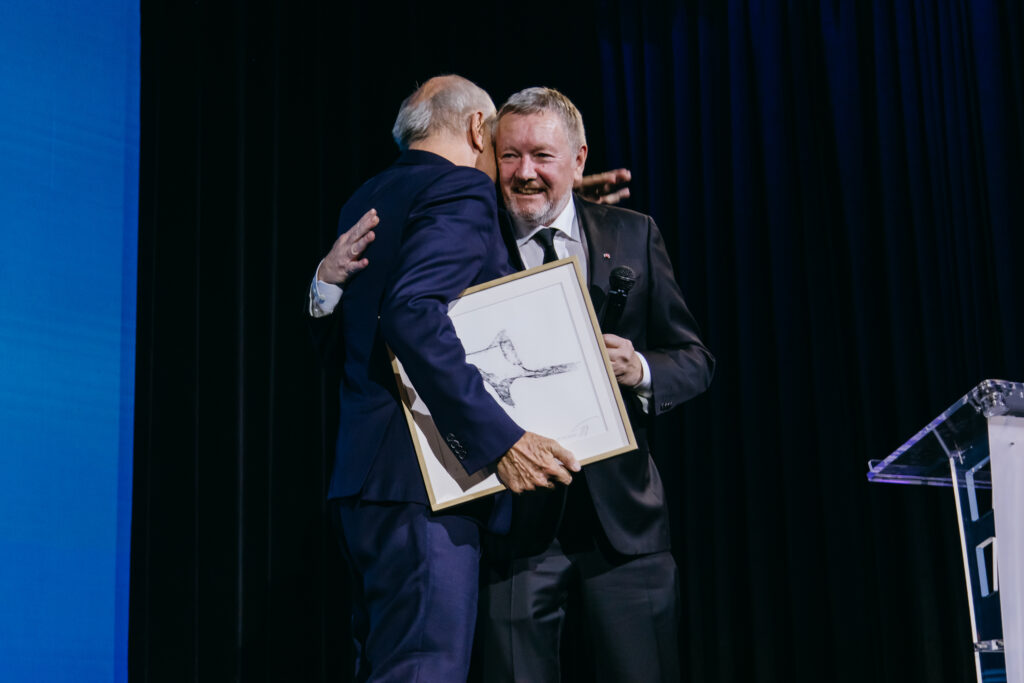
It was then Jean-Paul Agon (H.78), president of HEC Paris, who came to remind everyone of the importance of this project. “The reinvented Campus is the jewel box of our strategy; this rebuilding is a historic project, one we will not witness twice in our lifetime.” The mention of the architectural competition, which lasted two years, highlighted the quality and excellence of the project designed by the winning architects: Kjetil Thorsen Trædal (Snøhetta) for the Upper Campus and Lucie Niney (NeM) for the Lower Campus.
Guest of honor at the dinner, Kjetil Thorsen Trædal—warmly applauded by the audience—was invited to present his vision, blending architectural audacity, respect for heritage, and sustainable innovation. In an emotional speech, he described a project meant to link all elements of the campus: historical buildings, surrounding nature, and all communities—students, professors, researchers—evoking all the human, entrepreneurial, and even romantic stories that may bloom on the renovated campus.
A film projection revealed the first (digital) images of these future spaces, bright and open, designed to encourage exchange, reflection, and collaborative work.
Humor, relaxation, and generosity for dessert
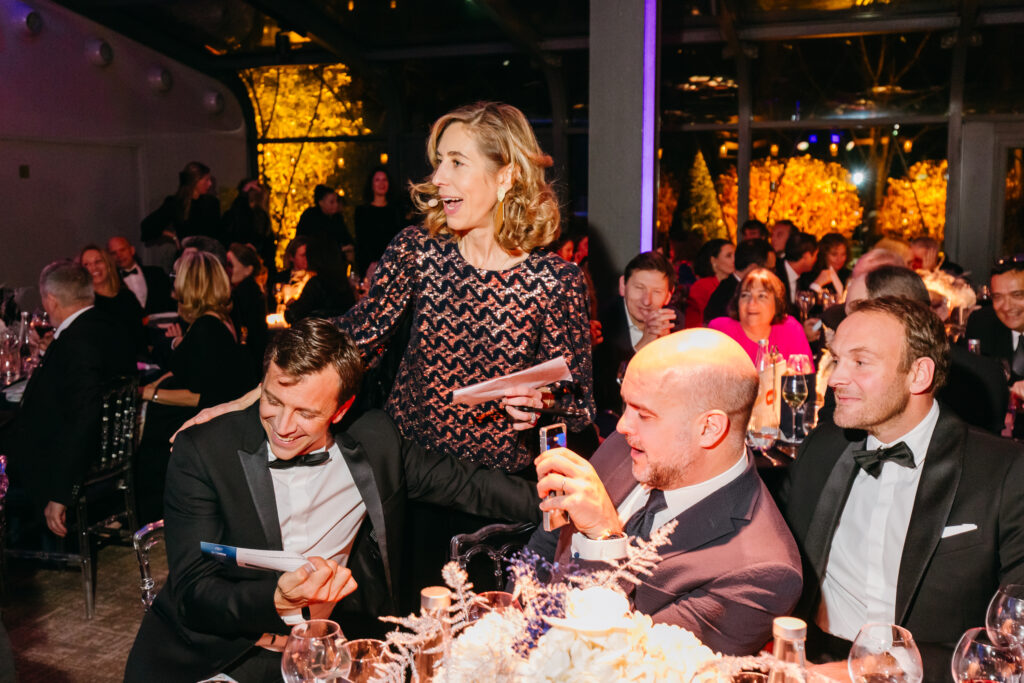
The evening was also a moment of conviviality and relaxation. Comedian Thomas Sii, whose real name is Thomas Simonet (H.09), accompanied Victoire Gineste (H.27) from Christie’s, who was in charge of recording donation pledges, with his sharp humor. A theatrical, humorous sequence that helped raise nearly one million euros for the HEC Foundation. A dozen raffle tickets allowed generous guests to leave with gifts graciously offered by brands such as Acqua di Parma or Bompard. Special mention to Jalil Benabbés-Taarji (H.83), who offered three winners a stay in Marrakech in one of his luxury hotels.
After dinner, it was in the lounge bar area that champagne, cocktails, and good spirits allowed guests to extend the celebration. Some, bolder than others, took to the dance floor, creating a joyful contrast with the refined elegance of the Pavillon Gabriel. Until 2 a.m., conversations continued, full of laughter and shared anecdotes, embodying the festive and communal spirit of HEC.
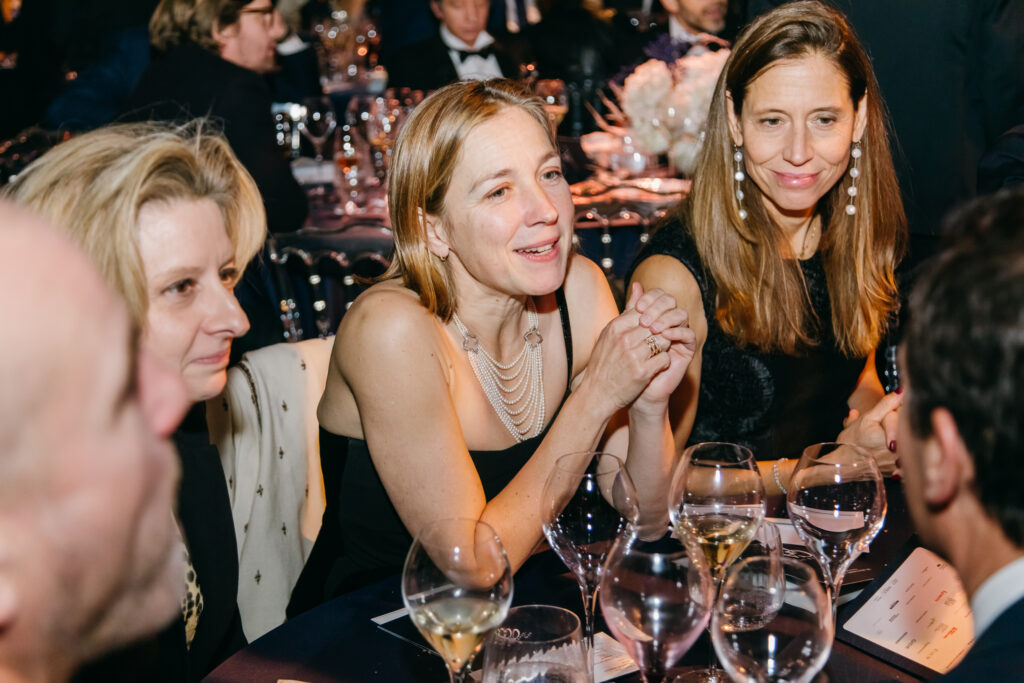
Blending elegance, emotion, and ambition, the 5th HEC Paris Gala Dinner reminded everyone that the School is not only a place of learning, but a home of lasting friendships, bold projects, and shared passions. Between nostalgic memories and forward-looking visions, this evening celebrated the strength of the HEC community: a community capable of dreaming, innovating, and building together.

Published by La rédaction